Founder of China’s Evergrande jailed for life after pleading guilty to fraud

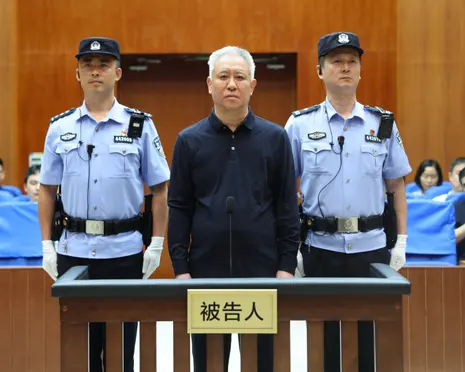
Table of Contents
Evergrande’s Architect Sentenced to Life Behind Bars as China Closes Its Property Boom Era
Wanderstayfinder.com – The man who built one of the People’s Republic’s most sprawling real-estate empires will now spend the rest of his days in a Chinese prison. Hui Ka Yan, the 67-year-old founder of Evergrande Group, received a life sentence on Thursday after pleading guilty in April to eight counts spanning financial manipulation, securities fraud, and bribery. The court also ordered the complete confiscation of his personal assets, ending the career of a figure who, at his peak in 2017, carried a Forbes-estimated net worth of $42.5 billion (£31.2 billion) and held the title of China’s wealthiest individual.
The Charges and the Verdict
The eight counts against Hui encompassed misuse of corporate funds, fundraising fraud, the illegal collection of public deposits, unlicensed lending operations, fraudulent issuance of securities, and bribery. The Shenzhen intermediate people’s court, located in southern China, delivered its judgment with language that left little ambiguity about the state’s view of his conduct. The ruling found that during the period from 2016 through 2021, Hui
“violated state laws by employing methods such as sustained, large-scale financial fraud to inflate assets and conceal liabilities.”
The court further determined that his conduct had
“severely disrupted the order of the socialist market economy” and “caused exceptionally heavy economic losses.”
The financial penalties extended well beyond the individual. Evergrande Group itself was assessed a fine of 8.8 billion yuan (approximately £950 million), while its dedicated property-development subsidiary received a separate penalty of 7 billion yuan. In total, more than 50 other individuals connected to the company received sentences on the same day, with custodial terms stretching from 20 months up to 18 years.
A Debt Collapse That Shook an Economy
Evergrande’s unraveling became the defining stress test of China’s post-pandemic economic landscape. The company, which was removed from the Hong Kong Stock Exchange listing last year, has failed to meet the majority of its roughly $300 billion in outstanding obligations. Its collapse arrived at a moment when Beijing was actively attempting to wean the world’s second-largest economy off its historic dependence on property development and construction lending.
The regulatory trigger came in 2020, when authorities introduced a set of rules capping the leverage ratios that developers could maintain. The move effectively severed the credit pipeline that had fuelled decades of hypergrowth in a sector traditionally responsible for somewhere between one-quarter and one-third of national GDP. Within months, building work ground to a halt across hundreds of unfinished residential projects. Developers scrambled for liquidity, suppliers went unpaid, and consumer confidence in the housing market eroded sharply during a period already weakened by pandemic-related demand shocks.
An academic study published earlier this year placed the aggregate cost of that regulatory shock at approximately $347 billion in sunk investment across the broader Chinese economy — a figure that underscores how deeply embedded property finance had become in the country’s growth model.
From Rural Poverty to the Top of the Forbes List
Hui’s personal trajectory made his downfall all the more conspicuous. Born into a destitute household in rural Henan province, he was raised primarily by his grandmother before founding Evergrande in 1996. Over the following two decades, the company expanded into one of the largest property developers in the country, backed by aggressive borrowing and a portfolio of thousands of residential towers across dozens of cities.
The relationship between Hui and the state had long been framed in terms of gratitude. In 2018, he publicly thanked the Chinese Communist Party for providing
“everything that Evergrande and I have.”
That era of mutual reinforcement has given way to a judicial reckoning that signals Beijing’s willingness to hold the architects of the property boom personally accountable.
What Comes Next for China’s Property Sector
The sentencing arrives as the sector continues to weigh on household wealth, municipal government revenues, and bank balance sheets. Hundreds of thousands of buyers who paid deposits for units that were never completed remain in limbo, and local governments that relied on land-sale income face persistent fiscal shortfalls. By imposing a life sentence and total asset forfeiture on the industry’s most visible founder, the judiciary has sent a message that the era of unchecked leverage in Chinese real estate is not merely over — it is being formally adjudicated.
For investors watching from abroad, the case also illustrates the speed with which Chinese courts can move from indictment to final judgment once a defendant pleads guilty. The eight charges, the corporate fines, and the batch sentencing of dozens of subordinates were all resolved within a single procedural window, a pace that contrasts sharply with Western litigation timelines and that underscores the state’s capacity to close out legacy financial disputes on its own schedule.
Related Reading
Frequently Asked Questions
What is Founder of China s Evergrande jailed?
Founder of China s Evergrande jailed is the main topic of this guide. The article explains the context, practical details, and next steps readers should understand.
Why does Founder of China s Evergrande jailed matter?
Founder of China s Evergrande jailed matters because readers are looking for a useful answer, not just a short summary. Good content should match search intent and help them decide what to do next.