More than 16 killed as Kyiv comes under intense Russian bombardment

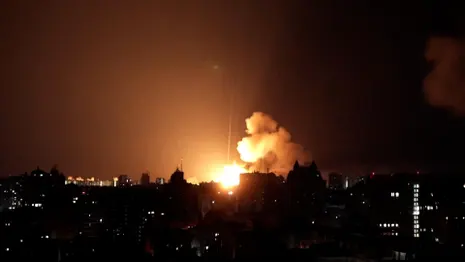
Table of Contents
Kyiv Endures One of Its Deadliest Nights of War as Russian Strike Force Targets Civilian Infrastructure
Wanderstayfinder.com – At least sixteen people lost their lives across and around Ukraine’s capital when a sustained barrage of missiles and drones rained down on Kyiv in what authorities described as one of the most devastating aerial assaults on the city since full-scale invasion began. The assault, which commenced shortly before midnight on Wednesday and persisted well into Thursday afternoon, struck residential blocks, a school, and a paediatric medical facility, leaving dozens wounded and entire neighbourhoods scarred by blast damage.
Mayor Vitali Klitschko confirmed overnight that homes, an educational institution, and a children’s hospital sustained structural harm during the multi-hour bombardment. City officials tallied sixteen fatalities within Kyiv proper, while separate authorities placed the injured count at thirty-three.
Scale of the Barrage
Ukraine’s air force detailed the composition of the overnight strike: dozens of ballistic, cruise, and hypersonic missiles alongside 168 drones were launched toward the capital. In its subsequent tally, the service reported intercepting forty-one of forty-six cruise missiles and one hundred forty-five drones. Notably, not a single high-speed ballistic missile was brought down — a gap that has grown increasingly acute as Ukraine’s stock of Patriot interceptor systems runs thin.
The first air-raid siren sounded at 11:51 p.m. on Wednesday, earlier than the typical window for Russian long-range strikes. Explosions were audible from the city centre within minutes. A second wave arrived after 6 a.m. Thursday, and drone threats lingered through the morning hours, keeping residents under shelter for extended periods.
Earlier in the month, the air force had quietly ceased publishing the number of ballistic missiles launched per salvo, citing operational-security concerns — a tacit acknowledgment that the speed and trajectory of these weapons leave defenders very little reaction time once a warning is issued.
President’s Assessment
Volodymyr Zelenskyy characterised the overnight operation as a carefully rehearsed effort to maximise civilian-infrastructure damage.
“It was a massive attack – the Russians had been preparing for a long time, combining different types of ballistic missiles, cruise missiles and drones, aiming to cause as much damage as possible to civilian infrastructure.”
The president went on to frame the strike within a wider diplomatic argument, posting on social media that Moscow’s continued investment in ballistic arsenals and escalation tactics was not being met with commensurate international pressure.
“While Moscow is investing in ballistic missiles and escalation, such strikes do not always receive the response they should. And as long as Ukraine does not have enough anti-ballistic defence, Russia will not consider peace seriously.”
Witnesses in the Solomianskyi District
Eight of the sixteen confirmed deaths occurred in the Solomianskyi district, west of the city centre. A multistorey apartment block in a residential quarter took a direct hit; flats on the top floor were obliterated, killing two occupants, rescuers stated.
In a separate strike at roughly midnight, an unoccupied building — informally used by nearby residents as a shelter — sat in the middle of a car park and was reduced to rubble. No fatalities were recorded there, though several parked cars were incinerated and masonry fragments scattered across the open space for several metres.
Oleksandr, a car-park attendant on duty at the moment of impact, escaped with minor lacerations. The following morning, still shaken, his shorts shredded and cuts visible across his body, he stood beside the wreckage of his booth and said he could not recall what happened to him in the seconds immediately after the blast.
Andriy, a fifty-seven-year-old driver, was inside his vehicle when the car-park structure was struck. He attributed his survival to a sheet of tinted plastic he had affixed to his windows.
“I was only scratched on the back of my head,”
he added. No military or industrial activity existed in the immediate vicinity; the car park served residents of adjacent apartment towers, and the non-residential structures nearby were largely disused.
Wider Regional Damage
The bombardment extended beyond the capital’s administrative boundary. In Brovary district, part of the greater Kyiv region, one man was killed and another wounded, according to regional governor Tymur Tkachenko. An industrial facility sustained damage, and all emergency services were deployed to extinguish the resulting fire.
Prime Minister Sergiy Koretsky confirmed that warehouses in Boryspil, east of the city, were also targeted, including a logistics facility operated by the Ukrainian Red Cross.
Strategic Context
The overnight barrage sits within a pattern of mutual long-range escalation that has intensified over recent weeks. Ukraine has been employing newly developed cruise missiles and drone swarms to strike oil refineries and storage depots in the vicinity of Moscow, while Russia has answered with heavier reliance on hard ballistic and hypersonic weapons aimed at Kyiv and other Ukrainian centres.
The air force identified the specific systems used in Wednesday’s salvo: Kinzhal and Zircon hypersonic missiles, Iskander and North Korean-supplied KN-23 ballistic missiles, sea-launched Kalibr cruise missiles, and Shahed-type drones. Earlier in the week, the service had issued warnings about Kalibr missiles transiting over the region, underscoring the multi-axis nature of the threat.
For Kyiv’s residents, the practical consequence of the Patriot shortfall is stark: high-speed ballistics can reach the city within minutes of an air-raid alert, leaving civilians with little time to reach hardened shelter. Each successive barrage of this kind deepens the question of whether Western partners will accelerate delivery of additional interceptor systems before the next wave arrives.
Related Reading
Frequently Asked Questions
What is More than 16 killed as Kyiv?
More than 16 killed as Kyiv is the main topic of this guide. The article explains the context, practical details, and next steps readers should understand.
Why does More than 16 killed as Kyiv matter?
More than 16 killed as Kyiv matters because readers are looking for a useful answer, not just a short summary. Good content should match search intent and help them decide what to do next.