South Korea president calls for military independence in wake of Trump call to cut joint drills

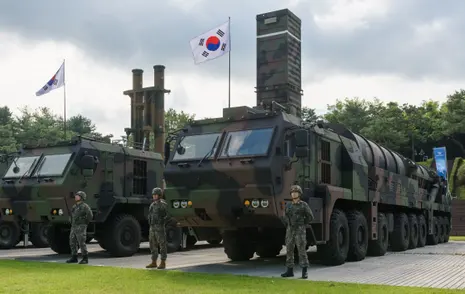
Table of Contents
South Korea President Calls for Military Independence
Wanderstayfinder.com – South Korea president calls for military autonomy at a moment when Washington is pulling back from the very exercises meant to prove Seoul’s readiness. President Lee Jae Myung instructed his cabinet on Tuesday that the transfer of wartime operational control (Opcon) from American to South Korean hands must be completed within his administration, regardless of shifts in the alliance’s training tempo. The directive landed hours after Donald Trump ordered the Pentagon to “substantially reduce” that week’s joint drills, citing what he described as a calm and respectful posture from Pyongyang.
Trump issued the order Sunday night, framing the cutback in diplomatic terms. In his account, the nuclear-armed North “has been unthreatening and respectful,” and Washington maintains a “very good relationship with Kim Jong-un.” Lee, by contrast, positioned the Opcon question not as a fracture in the alliance but as its natural maturation — a step that makes Seoul a more indispensable partner rather than a less dependent one.
“A strong alliance makes the foundation of security stronger, and strengthening our own capabilities increases our value and necessity as an ally,” Lee told ministers, presenting independent defence capacity and the US-South Korea partnership as mutually reinforcing pillars.
Opcon: The Sovereignty Question That Outlasts Every Administration
Since the Korean War erupted in 1950, wartime command of South Korean forces has rested with an American four-star general at the helm of the Combined Forces Command. The conflict concluded not with a peace treaty but with a 1953 armistice, meaning the two Koreas remain technically at war and US troops have stayed on the peninsula continuously. Camp Humphreys in Pyeongtaek now functions as the largest American military installation outside the continental United States.
Seoul regained peacetime command in 1994, yet the wartime authority has resisted every attempt to hand it over. Successive governments have named the Opcon transfer a stated objective only to see it deferred again and again. The drills Trump curtailed this week were specifically calibrated to validate South Korea’s operational preparedness for assuming that role — a process Lee has sought to accelerate since taking office.
Ulchi Freedom Shield: What Was Planned and What Changed
The ten-day Ulchi Freedom Shield exercise, set to begin Monday, was slated to field roughly 18,000 South Korean troops alongside US forces and personnel from eleven of the eighteen member states of the United Nations Command — the multinational body overseeing the 1953 armistice. Planners also intended to fold in lessons drawn from North Korea’s recent battlefield exposure, including drone-warfare tactics observed in Ukraine. Senior officers from both capitals had confirmed last week that those developments would shape the exercise’s scenarios.
Trump’s decision to scale back the operation arrived despite those warnings. During Oval Office questioning on Monday, he asserted that Kim had responded to his Pentagon order, though he supplied no specifics. Pressed on the state of bilateral talks, he called the tone “very positive” and then pivoted to personal rapport:
“You see, I’m actually making it much safer. Kim Jong-un has always treated me with great respect,” Trump said. “I understand him. He understands me.”
The pattern echoes 2018, when Trump’s inaugural summit with Kim prompted the outright cancellation of that year’s Ulchi Freedom Guardian exercise and the suspension of other drills. The programme was later redesigned under modified names and formats. The current episode repeats the same calculus: a diplomatic overture taking precedence over conventional deterrence signalling.
Nuclear Submarines and Integrated Joint Operations
Beyond Opcon, Lee used the cabinet session to press for accelerated progress on South Korea’s nuclear-powered submarine programme and on training officers for integrated joint operations in future conflicts. The submarine push reflects a broader strategic calculus: in a peninsula where undersea threats loom large, Seoul views an indigenous nuclear-propulsion capability as essential to credible independent deterrence.
Frequently Asked Questions
What is Opcon and why does it matter? Opcon (operational control) is the wartime authority to direct South Korean armed forces. It has been held by the United States since 1950 through the Combined Forces Command. Transferring it to Seoul would mark the final step in South Korea’s assumption of full sovereign command over its own military.
Why did Trump order the reduction in joint drills? Trump cited diplomatic considerations, stating that North Korea “has been unthreatening and respectful” and that Washington enjoys a “very good relationship with Kim Jong-un.” The order was issued Sunday night and directed the Pentagon to “substantially reduce” the week’s exercises.
How does this relate to the 2018 precedent? After his first summit with Kim in 2018, Trump cancelled the year’s Ulchi Freedom Guardian exercise and suspended other drills. The current episode follows the same pattern of prioritising a diplomatic overture over conventional deterrence signalling.
What is Ulchi Freedom Shield? It is one of two principal annual joint training events conducted by Seoul and Washington. The planned ten-day operation involved approximately 18,000 South Korean troops, US forces, and personnel from eleven UN Command member states, with scenarios incorporating lessons from North Korea’s exposure to drone warfare in Ukraine.