Lala weakens to tropical storm as it lashes Hawaii with heavy wind and rain

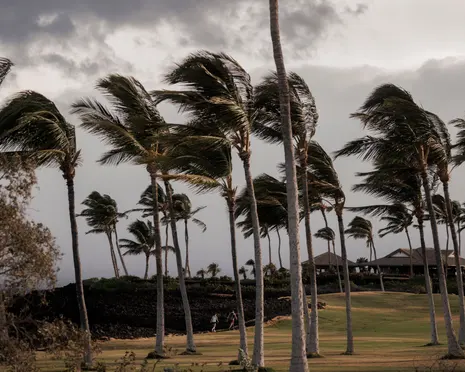
Table of Contents
- Hawaii Endures Hurricane-Force Winds as Lala Skirts the Big Island Without Landfall
- Grid collapse and infrastructure damage
- Rainfall totals and landslide risk
- A narrow escape from history
- Storm spreads westward; warnings remain in force
- Residents brace for a familiar ordeal
- Related Reading
- Frequently Asked Questions
Hawaii Endures Hurricane-Force Winds as Lala Skirts the Big Island Without Landfall
Wanderstayfinder.com – At least one resident lost his life in a vehicle collision near South Point on Hawaii’s Big Island, Governor Josh Green confirmed Sunday, as the remnants of what had been a category 1 hurricane battered the island chain with sustained gales and torrential downpours. The storm, now reclassified as Tropical Storm Lala, passed just south of the archipelago without touching down — sparing residents a direct eye-wall strike that forecasters had briefly feared could mark the first such event in over a century and a half.
Yet the absence of landfall did little to soften the blow. Hurricane-force gusts continued lashing elevated terrain well into Sunday evening, while nearly three feet (one meter) of rain was projected for the windward slopes of the Big Island’s volcanic interior. Rivers swelled into churning torrents, and emergency crews scrambled to coastal neighborhoods where flash flooding had torn occupied homes from their foundations.
Search-and-rescue operations launched
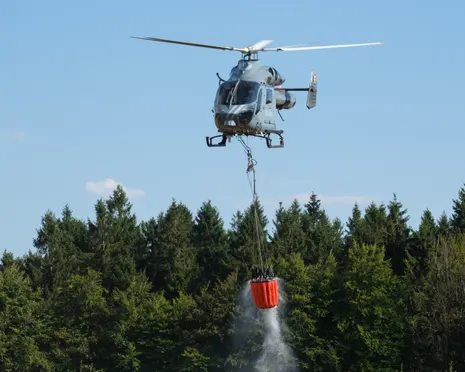
Hawaii County Mayor Kimo Alameda announced early Sunday that a coordinated search-and-rescue effort — involving civil defense units, the state National Guard, and the U.S. Coast Guard — was underway after several residences in the communities of Na’alehu and Wai’ohinu, situated near the island’s southernmost tip, were reportedly swept off their footings by sudden surges of water.
Green urged residents to remain indoors and avoid traveling on roads still slicked with debris and standing water.
“You definitely want to be home, do not be out on the roads,” Green told reporters, having earlier characterized Lala as an “enormous storm.”
Grid collapse and infrastructure damage
By Sunday morning, more than 130,000 households across Hawaii’s three largest islands were without electricity, according to the utility-tracking site poweroutage.us. At least three hospitals had shifted entirely to backup generator power. Green also disclosed that 19 roofs had been torn from structures in the storm’s path.
The scale of the outage underscores how fragile the island grid remains after years of aging infrastructure and repeated tropical-weather events. With solar panels and wind turbines contributing a growing share of Hawaii’s generation mix, sustained high winds can simultaneously knock out transmission lines while curtailing renewable output, compounding blackouts during peak evening demand.
Rainfall totals and landslide risk
The National Hurricane Center projected that higher elevations on the Big Island — dominated by the 13,803-foot Mauna Kea volcano — could accumulate as much as 35 inches (89 cm) of rain. Across Maui and the lower slopes of the Big Island, totals of eight to twelve inches (20.3 to 30.5 cm) were anticipated, while the remaining island chain faced four to six inches (10.2 to 15.2 cm).
Those figures carry particular danger for communities scattered across steep, volcanic terrain where roughly 210,000 Big Island residents live, some in off-grid improvised housing with limited drainage. Saturated soils at altitude can trigger mudslides that race downhill within minutes of peak rainfall, threatening roads, homes, and evacuation routes.
The agency also cautioned that wind speeds atop ridgelines and on both windward and leeward slopes frequently run up to 30 percent stronger than the near-surface measurements used in official storm categorization — meaning residents at elevation experienced gusts well above the headline figures.
A narrow escape from history
The possibility that Hawaii would record its first direct hurricane strike in 155 years evaporated as Lala’s eye tracked south of the island chain. National Weather Service meteorologist Joseph Clark stated that landfall was no longer expected at that point, though hurricane-force winds were forecast to persist into overnight hours, with the most violent gusts concentrated over higher terrain.
The last hurricane to make landfall anywhere in the archipelago was Hurricane Iniki in 1992, a category 4 storm that devastated Kauai. The Big Island itself had not been struck directly since 1871, when a category 3 system hit its north-eastern corner, according to atmospheric research conducted at the University of Hawaii.
Storm spreads westward; warnings remain in force
Tropical-storm conditions were migrating westward Sunday from Maui toward Oahu and then Kauai. Tropical storm warnings stayed active for Maui, Molokai, Lanai, Kahoolawe, Oahu, Kauai, and Niihau as Lala tracked west, raising the prospect of destructive flooding and even wind-ignited wildfires in dry brush.
Powerful surf continued pounding coastal zones, compounding erosion risks along already-vulnerable shorelines. Forecasters emphasized that heavy rain persisting into Sunday would sustain flood and mudslide hazards well after the strongest winds subsided.
Residents brace for a familiar ordeal
Many islanders were still recovering from devastating floods that struck in March, making this event feel less like an isolated weather episode and more like another chapter in a recurring cycle of tropical-weather disruption. Shelters opened ahead of the storm’s arrival, public events were canceled, and ranchers received advisories to leave cattle in open pastures rather than in barns vulnerable to collapse.
Bobby Camara, 75, a lifelong resident staying at a care home just outside Hilo, described his plan with wry resignation.
“I planned to hunker down, cross my fingers, [and] hope the lights don’t go out,” he said. He noted that gas stations were packed as neighbors fueled chainsaws and vehicles for post-storm cleanup. “I think stocking up is part of life over here. You learn to be self-reliant.”
Near Keaau on the Big Island’s east coast, Mike Caputo, 50, a local fire captain, said his standby generator was primed and a 10,000-gallon (37.8 kiloliter) household water tank had been filled to capacity before the storm arrived. His chief worry was flash flooding combined with fallen trees — particularly albizia, a species common in Hawaiian landscapes.
“They’re not very sturdy, but they grow extremely large,” Caputo explained. “They can make roads impassable.”
Lala had intensified from tropical-storm status into a category 1 hurricane early Saturday when its maximum sustained winds climbed to 75 mph (120 kph), per the hurricane center’s tracking data. By Sunday, however, the system had shed enough intensity to be downgraded back to tropical-storm strength as it skirted the southern edge of the archipelago and continued westward across open Pacific waters.
Related Reading
Frequently Asked Questions
What is Lala weakens to tropical storm as it?
Lala weakens to tropical storm as it is the main topic of this guide. The article explains the context, practical details, and next steps readers should understand.
Why does Lala weakens to tropical storm as it matter?
Lala weakens to tropical storm as it matters because readers are looking for a useful answer, not just a short summary. Good content should match search intent and help them decide what to do next.