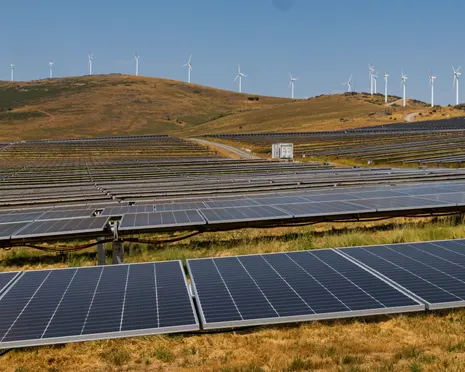
Spanish Households Save €10 a Month on Electricity Bills, Report Reveals
Wanderstayfinder.com – According to a recent analysis, Spanish households have experienced a monthly savings of €10 on their electricity bills, attributed to the expansion of renewable energy sources over the past five years. This shift has decoupled electricity costs from the volatile gas prices that dominated the market in 2021. Ember, a climate thinktank, estimated that typical energy bills would have been 19% higher in Spain if the country had not accelerated its renewable energy infrastructure. The report highlights how the nation’s strategic investment in wind and solar power has created a buffer against recent fossil fuel price surges, particularly those driven by the ongoing Iran war.
Renewables Mitigate Gas Price Volatility
Chris Rosslowe, an Ember analyst and lead author of the study, noted that the latest gas price spike—nearly 60%—has had minimal impact on Spain’s electricity bills. In April 2026, household costs actually dipped slightly, contrasting sharply with the previous gas crisis, when electricity prices rose in direct response to rising gas costs. “The connection between gas and electricity prices has weakened significantly,” Rosslowe said, emphasizing that the nation’s transition to renewables has provided stability in an otherwise unpredictable energy market.
Spain’s renewable energy surge began after Russia’s invasion of Ukraine in 2022, prompting a reevaluation of energy dependencies. The report underscores that this shift has allowed the country to avoid the sharp price increases seen in other European nations. For instance, in Italy, where wholesale electricity prices are the highest in the continent, gas continues to influence 75% of pricing decisions. However, Spain’s reliance on gas for electricity generation has dropped from 52% of hours in 2021 to just 9% in the first five months of 2026, according to the analysis.
The Cost of Fossil Fuels and Renewable Benefits
Generating electricity via fossil gas remains one of the costliest methods in Europe, with health expenses from carbon emissions compounding the financial burden. The report found that Spain’s electricity prices surged by approximately 50% in the first half of 2021, mirroring European gas price trends. However, in 2026, higher gas prices failed to translate into significant electricity cost increases, as renewable energy sources now provide a more stable alternative.
The analysis, which utilized data from March and April 2026, simulated what would have happened to electricity bills if the renewable energy installations of the last five years had not been implemented. It accounted for balancing costs—such as those incurred when renewable generation fluctuates—but excluded societal costs like health impacts from pollution. This approach allowed researchers to isolate the direct financial effects of renewables, revealing their transformative role in the market.
Spain’s Competitive Energy Advantage
Mar Reguant, an energy economist at Northwestern University, who independently validated the findings, called Spain’s renewable transition “a strategic move” that has capitalized on favorable geographic conditions. The Iberian peninsula’s natural resources—consistent wind patterns, “unbeatable” solar potential, and existing pumped hydropower storage—have given the country an edge over other European nations. “Spain and Portugal are clearly reaping the rewards of their early shift to renewables,” Reguant stated, adding that the region’s “privileged position” has enabled it to adapt swiftly to global energy dynamics.
Spain’s renewable share of electricity generation has grown from 33% in 2021 to 42% by 2025, a significant increase that has reshaped its energy landscape. In contrast, Germany, which also expanded renewables rapidly, saw a less pronounced impact on consumer savings. While Germany’s wind and solar capacity rose from 28% to 45% over the same period, its electricity prices remained more sensitive to gas price fluctuations, suggesting that the transition’s benefits are context-dependent.
Challenges in Sustaining Renewable Momentum
Despite the progress, challenges remain in fully leveraging renewable energy’s potential. Dr. Diego García Gusano, a senior energy planning researcher at Tecnalia, noted that gas-fired power plants still dictate prices during peak demand hours. “The current system is less exposed to gas shocks, but not entirely free from them,” Gusano remarked. He also pointed out that the underutilization of storage solutions and limited flexibility in electricity demand have hindered the system’s ability to absorb surplus renewable generation efficiently.
Gusano’s comments highlight a critical issue: while renewables have reduced price volatility, their full integration requires addressing gaps in infrastructure. For example, the slow deployment of storage facilities and the lack of demand-side management tools have kept the energy system reliant on gas during critical periods. This has created a situation where the benefits of renewables are temporary, dependent on external factors like gas market conditions and domestic investment.
Broader Implications for Europe’s Energy Transition
The report’s findings offer a compelling case for the role of renewables in stabilizing energy markets. Spain’s experience demonstrates how rapid expansion can shield consumers from fossil fuel shocks, even as global conflicts like the Iran war disrupt supply chains. However, the analysis also cautions that this success is not universal. Countries with less favorable geographic conditions or slower renewable adoption, such as those heavily dependent on coal or nuclear, have not seen the same level of price relief.
Ember’s data underscores the need for continued investment in renewable infrastructure. While Spain’s current system is resilient, the report warns that without expanding storage capacity and enhancing demand flexibility, the benefits of renewables could be undermined. “The shift to renewables is sound, but it needs to become structural rather than situational,” Rosslowe emphasized, calling for long-term policies to solidify Spain’s position as a leader in sustainable energy.
“There is no question that Spain and Portugal are greatly benefiting from their early transition,” said Mar Reguant. “The Iberian peninsula has a privileged position and has acted smartly.”
As the energy landscape evolves, Spain’s case serves as a model for other nations seeking to reduce their reliance on fossil fuels. The €10 monthly savings for households, combined with the decoupling of electricity prices from gas volatility, illustrates the tangible impact of renewable expansion. Yet, the report’s authors stress that this progress requires sustained effort to overcome existing limitations. “Spain’s success is a testament to the potential of renewables,” said Reguant, “but it also highlights the importance of strategic planning and infrastructure investment.”
The analysis also revealed that Spain’s energy transition has created a new dynamic in the European market. While gas prices remain a critical factor in many countries, their influence in Spain has diminished, allowing for more predictable pricing. This stability, however, is not without its trade-offs. The report notes that the reliance on gas during key hours means that the nation is still vulnerable to sudden price spikes, even if the overall impact is less severe than before.
Looking ahead, the findings suggest that Spain’s renewable expansion is a key driver of its energy resilience. But to maintain this momentum, the country must address its current limitations. As Gusano pointed out, the integration of renewables is a “winning bet,” but it requires more than just rapid deployment—it demands a holistic approach to energy systems that balances supply, storage, and demand. “The path forward is clear,” he said, “but it requires more than just policy; it requires action.”
In conclusion, Spain’s €10 monthly savings for households reflect a broader trend in the European energy transition. The country’s ability to insulate itself from fossil fuel price shocks offers a glimpse into what is possible when renewable energy is prioritized. Yet, the report’s authors caution that this success must be sustained through continued innovation and investment. As the Iran war and other geopolitical tensions continue to shape energy markets, Spain’s experience could serve as a blueprint for other nations aiming to build a more resilient and sustainable energy future.