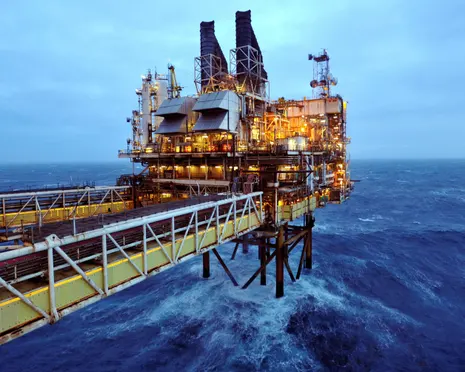
BP Announces Strategic Divestment of North Sea Operations
Wanderstayfinder.com – British energy giant BP has officially placed its North Sea oil and gas division on the market, marking a significant milestone in the company’s efforts to conclude more than sixty years of extraction activities in the region. The multinational corporation revealed on Friday morning that it has initiated a formal marketing procedure aimed at finding a buyer for its North Sea assets. This strategic decision aligns with the vision of Meg O’Neill, the newly appointed chief executive, who is working to streamline the organization’s operations while simultaneously reducing its financial obligations.
A Strategic Pivot Under New Leadership
O’Neill has articulated a clear rationale for the divestment, emphasizing that while the North Sea continues to serve as a crucial component of Britain’s energy infrastructure, the company’s focus is shifting toward higher-yield opportunities. She explained that repositioning the North Sea business under new ownership would strengthen its long-term prospects. The executive also highlighted BP’s ongoing commitment to the United Kingdom, noting the company’s pride in employment creation, economic contributions, and daily energy supply reliability.
“The North Sea remains integral to the UK’s energy system. However, as we focus our portfolio and direct capital to our highest-value opportunities, we believe our North Sea business will be better positioned as part of another company.”
Historical Significance and Resource Potential
BP’s relationship with the North Sea stretches back to 1964, when the corporation received its initial exploration license for the region. The company achieved its first major breakthrough with the discovery of the West Sole gasfield during the winter of 1965. This was followed by the identification of the Forties field in 1970, which remains the most substantial discovery in the basin to date.
Production statistics paint a comprehensive picture of the region’s output. Since extraction commenced in the 1960s, the UK continental shelf has yielded an impressive 47.7 billion barrels of oil equivalent by the conclusion of 2024. According to estimates from the North Sea Transition Authority, approximately 2.9 billion BOE of oil and gas reserves remain untapped. Additionally, the region contains an estimated 6.2 billion BOE of contingent resources—petroleum deposits that are recoverable but not yet commercially viable—and 4.6 billion BOE of prospective resources located in unexplored areas.
Stakeholder Reactions and Political Context
The announcement has generated varied responses from environmental advocates and political figures alike. Angharad Hopkinson, representing Greenpeace UK, characterized BP’s withdrawal as a signal of a declining industry, questioning whether the North Sea truly delivers the benefits claimed by fossil fuel proponents. Meanwhile, Greater Manchester Mayor Andy Burnham adopted a pragmatic stance, suggesting that government policy should acknowledge the region’s remaining energy potential.
“If the North Sea really were the saviour of jobs, opportunity and energy security that the fossil fuel lobby claims, its biggest beneficiaries wouldn’t be heading for the exit.”
Market analysts have also weighed in on the development. Chris Beauchamp from IG described the transaction as a watershed moment, noting that BP’s decision demonstrates limited confidence in waiting for governmental policy shifts. Energy Secretary Miatta Fahnbulleh confirmed ongoing dialogue with BP, emphasizing her commitment to protecting workers and local communities throughout the transition period.
Broader Corporate Restructuring
This divestment represents part of a wider strategy to reduce BP’s UK footprint. In May, the company announced intentions to sell portions of two major carbon capture and storage facilities situated in north-east England. Despite these reductions, BP will maintain its aviation fuel distribution operations, retail locations, domestic trading desk, and London headquarters.
O’Neill assumed the chief executive role on April 1, and her tenure has already been marked by significant governance changes. Within two months of her appointment, the company removed chair Albert Manifold following concerns regarding oversight standards and conduct—allegations that Manifold has contested.
“The North Sea is a vital national asset and we will take a pragmatic approach, recognising that oil and gas will be part of our energy mix for years to come.”
The timing of BP’s exit coincides with heightened climate challenges across Europe, including widespread wildfires and drought conditions. As the company evaluates whether remaining reserves warrant continued investment, the decision reflects broader tensions between energy security needs and the urgent transition toward sustainable power sources. Government approval will be required for any future extraction of the substantial reserves still lying beneath the North Sea floor.
Related Reading
Frequently Asked Questions
What is BP puts North Sea oil and gas?
BP puts North Sea oil and gas is the main topic of this guide. The article explains the context, practical details, and next steps readers should understand.
Why does BP puts North Sea oil and gas matter?
BP puts North Sea oil and gas matters because readers are looking for a useful answer, not just a short summary. Good content should match search intent and help them decide what to do next.