Pine-cone grenades and planet-baking carbon: the French fires 170 years in the making – a visual guide

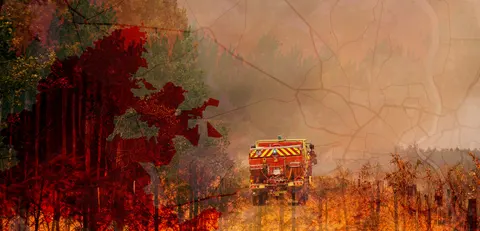
Table of Contents
When the Forest Turns: How a Single Spark Ignited France’s Worst Fire Season in Eight Decades
Wanderstayfinder.com – The summer of 2026 will be remembered in France not for its beaches or festivals, but for the smoke that rolled across the Gironde department and beyond. The fires that consumed vast tracts of woodland outside Bordeaux set a new national record for hectares burned, displaced more residents than at any moment since the Second World War, and produced what atmospheric scientists believe was the country’s first documented firestorm thundercloud. Limoges, a city sitting 200 kilometres (125 miles) upwind from the flames, recorded particulate levels exceeding those measured on Delhi’s worst smog day the previous year. The scale of the event has forced a reckoning with a landscape that has been engineered for fire since the mid-nineteenth century.
The Spark and the First Twenty-Four Hours
By mid-July, conditions across southwestern France had reached extremes that sat squarely outside the historical envelope: temperatures had climbed to record highs while soil moisture had plunged to record lows. Three consecutive weeks of sustained heat above 30 °C had preceded the ignition. Shortly after noon on 22 July, smoke columned above the tightly packed pine stands near Saumos, a small village roughly 32 kilometres west of Bordeaux.
The origin of that first flame remains under formal investigation. Workers hired by Enedis, the state-linked utility responsible for distributing electricity across France, were operating in the vicinity and reported that a malfunctioning piece of equipment produced a spark. The Bordeaux public prosecutor’s office has named the faulty machine as its principal line of inquiry. Enedis, citing the ongoing probe, declined to answer detailed questions. The prosecutor’s office did not respond to requests for comment.
Within hours the fire had swallowed several hundred hectares. Southerly winds drove the southern front toward Cap Ferret, the affluent peninsula nine miles distant that locals and visitors alike have long called the “Hamptons of France.” La Porge, a village caught in the fire’s path, lost roughly one in ten of its homes over the following days. A critical aggravating factor was the terrain itself: the area had been flattened by a severe storm in 1999 and replanted almost immediately, producing a stand of uniform tree height that offered an unbroken fuel ladder from ground to canopy.
A Forest Built by Decree
The Landes forest, which now covers roughly 1 million hectares in the Gironde and neighbouring departments, did not grow wild. In the eighteenth century the coastal lowlands of southwestern France were so waterlogged that winter shepherds crossed them on wooden stilts. In 1857, Napoleon III issued a decree compelling landowners to drain the marshes and replant the land with maritime pine. The result was Europe’s largest human-made forest, a project conceived as a land-reclamation and economic-development exercise.
Today that forest underpins a regional timber economy employing approximately 30,000 workers. It is also, by its very composition, a fire accelerant. Maritime pines account for roughly 90 percent of the trees in the Landes. Their bark exudes resin that ignites with the volatility of petrol; their fallen needles blanket the forest floor in a continuous layer of dry fuel; and their cones, dislodged by wind, travel through the air like small grenades, carrying embers across gaps in vegetation that were meant to serve as natural firebreaks. The absence of broad-leaved species—which retain greater internal moisture and cast shade that slows ground-level drying—means the monoculture, once ignited, burns with extraordinary ferocity.
The Climate Multiplier
Since that 1857 decree, humanity has emitted an estimated 1.85 trillion tonnes of carbon dioxide, warming the European continent by approximately 2.4 °C. The practical consequence is a widening of the window in which hot, dry extremes—once statistical outliers—become routine. This year’s sequence was textbook: a strikingly wet winter across western Europe encouraged vigorous spring growth, producing an unusually tall and abundant biomass. The subsequent relentless heatwaves then stripped that biomass of moisture, converting a year of excess growth into a year of excess fuel.
Arson, Negligence, and the Human Hand
The majority of wildfires in southern Europe are human-started: a dropped cigarette, a campfire left unattended, a barbecue not properly extinguished. Public-awareness campaigns are credited with contributing to a measurable decline in fire counts across the region since the 1980s. Arson, however, resists such soft interventions. French police have arrested nearly 500 individuals on suspicion of starting fires since the beginning of this summer, and roughly 70 percent of those cases are assessed as deliberate acts. Once a flame takes hold, though, it is meteorology and topography—not intent—that determine whether it dies quickly or metastasises into a catastrophe.
The 1949 Precedent
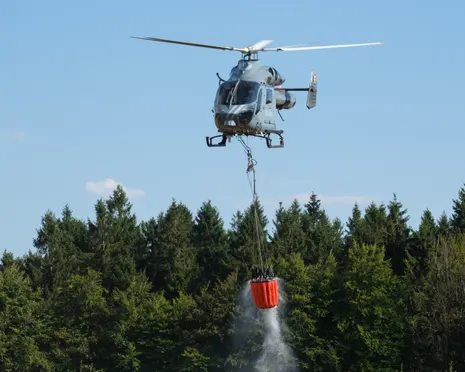
France’s worst wildfire on record predates modern firefighting by decades. In 1949 a blaze originating in a sawmill consumed 50,000 hectares of Landes forest. Eighty-two people died, most of them volunteers racing toward the flames to help contain them. The event remains Europe’s deadliest wildfire. Firefighting capacity has improved dramatically since then—helicopters, satellite monitoring, and coordinated interdepartmental response are now standard—but the underlying fuel architecture and the climate trajectory have continued to raise the stakes.
What Comes Next
The fires have already reshaped public discourse in France. Questions that were once academic—whether the Landes monoculture should be diversified with broad-leaved species, whether replanting after storm damage should stagger tree heights to break up continuous fuel loads, whether the economic model built on a single resinous pine can survive a hotter climate—are now urgent policy questions. The answer, for now, is written in ash and charred timber across the Gironde, a landscape that took a century to build and a few weeks to burn.
Related Reading
Frequently Asked Questions
What is Pine cone grenades and planet baking?
Pine cone grenades and planet baking is the main topic of this guide. The article explains the context, practical details, and next steps readers should understand.
Why does Pine cone grenades and planet baking matter?
Pine cone grenades and planet baking matters because readers are looking for a useful answer, not just a short summary. Good content should match search intent and help them decide what to do next.