Morocco not to blame for Ceuta border breach, says Spanish PM

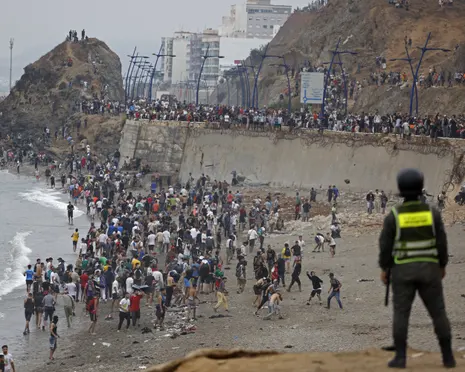
Table of Contents
Spanish PM Rules Out Moroccan Role in Ceuta Mass Crossing, Blames Foreign Disinformation Campaign
Wanderstayfinder.com – The political aftershock of the largest single-day border incursion into a Spanish territory in decades continues to shake Madrid’s governing coalition. Prime Minister Pedro Sánchez moved on Monday to shut down speculation that Rabat orchestrated the end-of-July surge of roughly 70,000 men, women, and children across the land and sea frontier into Ceuta, while simultaneously pointing fingers at foreign actors he believes were seeding false narratives to deepen Europe’s immigration divide.
At least 141 people are believed to have lost their lives attempting to reach the Spanish enclave during the chaotic crossing. The event triggered an immediate humanitarian emergency, fractured public order within the city, and reopened a bitter intra-EU debate over how member states should share the burden of migration flows from North Africa.
Sánchez: No Intelligence Points to Rabat
Speaking on Cadena Ser radio, the prime minister was categorical that no agency in Spain’s intelligence architecture had produced material suggesting Moroccan state involvement in organizing or encouraging the mass movement.
“There’s no information from any intelligence agency that raises doubts over the involvement of Moroccan authorities,” Sánchez told the broadcaster. “Cooperation with Morocco is frankly positive. I’d like to stress that we need to be aware that we need to be aware that this crisis can be resolved only through cooperation – and not through a lack of trust in Morocco, which would only further aggravate the already complex situation we have in Ceuta.”
The denial came despite widespread speculation in Spanish and European media that the crossing might have been timed to signal Rabat’s frustration over Madrid’s diplomatic warming toward Algeria, a move Morocco has long viewed as encroaching on its sphere of influence in the western Mediterranean. Sánchez dismissed that reading outright, framing the episode instead as the work of organized criminal networks that had exploited social media to spread a fabricated claim: that a recent Spanish supreme court ruling rendered it impossible to deport anyone who reached Ceuta by swimming.
Israel and Russia Push Back
Sánchez went further, accusing social media accounts “associated with Russia, Israel and the international far right” of pumping out fabricated stories designed to weaponize migration against Spain and, by extension, the European project. The remark landed with particular force in Jerusalem. Foreign Minister Gideon Sa’ar called the characterization a “brazen lie” and added:
“Continuing to spread defamatory lies will not distract from Sánchez’s disgraceful failure to manage his country’s affairs.”
In Moscow, the Kremlin’s press office rejected any link between Russia and the Ceuta episode, according to the state-run RBC daily. The Kremlin’s statement made no reference to Sánchez by name but dismissed the allegation as baseless.
Humanitarian Strain Persists in the Enclave
Although the overwhelming majority of those who crossed back into Morocco within weeks of the initial surge, the enclave still hosts at least 5,000 migrants, among them roughly 1,200 minors. Their continued presence on Ceuta’s streets has produced repeated friction with local residents and municipal police. In recent days, groups of migrants sleeping rough on the city’s beaches have had their personal belongings set ablaze. On Saturday, four Moroccan nationals were taken into custody after throwing stones at Spanish soldiers stationed near the border zone.
Sánchez assured listeners that the government would soon have “sufficient capacity” to house every person still remaining in the enclave, though he offered no specific timeline or funding mechanism for that commitment. Ceuta, a city of roughly 85,000 residents squeezed into a narrow strip of land and coastline, has no existing infrastructure capable of absorbing tens of thousands of additional occupants without severe strain on housing, healthcare, and sanitation services.
Domestic Opposition Escalates
Back in Madrid, Sánchez’s handling of the crisis has become the central battleground of Spanish domestic politics. Alberto Núñez Feijóo, leader of the conservative People’s Party, accused the government of paralysis on both prevention and resolution:
“It did nothing to avoid the invasion on 30 July and it’s doing nothing to stop the public order crisis that’s getting worse every day.”
Santiago Abascal, head of the far-right Vox party, went further, framing the episode in quasi-military terms. He described what happened in Ceuta as “an invasion and an act of war promoted by Morocco and allowed by Sánchez, who is incapable of responding because he is subservient to Morocco.” The language echoes a broader Vox narrative that casts Spain’s North African borders as fronts in a civilizational contest, a framing that has gained traction in polling since the summer.
Broader Context: Ceuta, the EU, and the Migration Question
Ceuta, along with its sister enclave Melilla, sits on Morocco’s northern coast and forms part of Spain’s sovereign territory. Both cities have long served as pressure points in the flow of migrants from sub-Saharan Africa seeking entry into the Schengen area. The July event, however, was unprecedented in scale: a single-day surge of tens of thousands through a frontier normally traversed by a few hundred people per week. The episode exposed gaps in EU border-management coordination, particularly the question of whether enclaves embedded in non-member states should trigger collective European response or remain a purely bilateral matter between Madrid and Rabat.
For Sánchez, whose coalition government has spent the past year navigating a fragile balance between maintaining strategic partnership with Morocco and courting Algeria’s energy and diplomatic value, the Ceuta crisis has become a test of whether Spain can manage its southern frontier without ceding ground to either domestic populists or foreign information operations. His Monday intervention was an attempt to close both fronts simultaneously — denying state-level Moroccan culpability while attributing the narrative chaos to external actors. Whether that framing will hold as the humanitarian situation in Ceuta continues to evolve remains an open question.
Related Reading
Frequently Asked Questions
What is Morocco not to blame for Ceuta?
Morocco not to blame for Ceuta is the main topic of this guide. The article explains the context, practical details, and next steps readers should understand.
Why does Morocco not to blame for Ceuta matter?
Morocco not to blame for Ceuta matters because readers are looking for a useful answer, not just a short summary. Good content should match search intent and help them decide what to do next.