Fur seal’s death marks first Australian mainland mammal fatality from spreading H5 bird flu strain

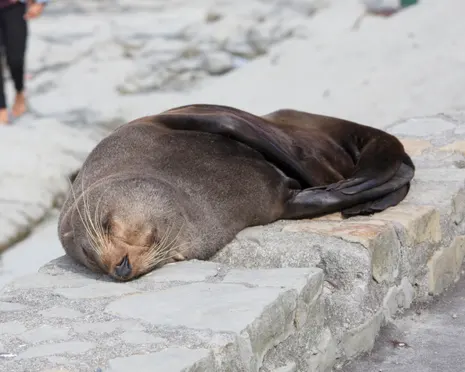
Table of Contents
Australia’s Bird Flu Crisis Reaches the Mainland’s Mammal Fauna
Wanderstayfinder.com – The death of a long-nosed fur seal on South Australia’s Limestone Coast has pushed the continent’s H5 avian influenza outbreak into a new and deeply concerning phase. Confirmed on Wednesday after a member of the public reported the carcass at Beachport, the seal showed no external signs of trauma before laboratory testing of tissue samples verified the presence of the highly pathogenic H5 strain. It is the first time the virus has been confirmed in a mammal on the Australian mainland, a milestone that officials had long feared would arrive as the pathogen continued its northward and eastward creep through coastal ecosystems.
A Government That Saw It Coming
Federal agriculture minister Julie Collins addressed reporters in Hobart on Sunday, framing the seal’s death as an anticipated consequence of a virus already entrenched in wild bird populations across multiple states. She described the confirmation as “distressing” but stressed that the outcome had been projected once the pathogen began moving through marine and coastal species.
“An infection of this individual animal is likely to have occurred due to exposure to infected wild birds or the environment that they share.”
Collins acknowledged the limits of intervention in open ocean habitats. Where surveillance teams encounter clusters of dead seabirds, she explained, rising numbers of marine mammal reports should follow as a natural epidemiological consequence.
“We can’t stop it spreading in terms of, particularly, in wild birds, and where we see more dead wild birds, we do expect to see increased reports of marine mammals.”
She added bluntly that avoiding substantial losses across wildlife populations was no longer a realistic objective.
“Not possible to avoid significant losses.”
The Scale of the Outbreak
By the time of Collins’ remarks, surveillance data recorded 298 discrete mortality events nationwide. South Australia bore the heaviest burden with 183 events, followed by Victoria at 86, New South Wales at 11, Western Australia at 10, Tasmania at seven, and a single event in Queensland. Days before the seal confirmation, South Australian premier Peter Malinauskas had disclosed three separate mass mortality incidents on offshore islands in which more than 1,000 greater crested terns were found dead, underscoring how rapidly the virus was saturating coastal bird colonies.
Species at the Brink
The federal government’s risk assessment places long-nosed fur seals and the endangered Australian sea lion in the very-high-risk category for H5 infection. The latter species already exists in small, fragmented populations along southern coasts, making any sustained viral pressure potentially catastrophic. Jack Gough, chief executive of the Invasive Species Council, used stark language to describe the stakes.
“We are still just at the early stages of this devastating virus, and the bad news is going to keep coming for our wildlife as it spreads around the continent and between species.”
Gough characterised the prospect of sustained transmission into sea lion colonies as an “extinction level event,” a phrase that has since entered public discourse about the outbreak’s long-term trajectory.
Further Detections and the Tasmanian Question
South Australia’s environment ministry also confirmed this week that a little penguin recovered on Kangaroo Island tested positive for the H5 strain, adding another species to the list of confirmed mainland mammal-adjacent detections. In Tasmania, authorities announced that 51 little penguins found on King Island were “assumed to” have perished from the virus, though the deaths were not formally classified as a mass mortality event. A tissue sample from one bird recovered at the Port of Grassy returned a positive result, while a second sample yielded an inconclusive reading. Both were forwarded to the Australian Centre for Disease Preparedness for confirmatory analysis.
Wes Ford, the state’s incident controller overseeing the bird flu response, explained the evidentiary gap.
“The little penguin mortality event is not considered a mass mortality event, and the condition of the remaining deceased birds meant they were unsuitable for testing.”
He noted that while the cause of death could not be definitively confirmed for the full cohort, the available evidence made avian influenza the most plausible explanation. Surveillance teams continued monitoring reports of sick and dead birds across the island, with results feeding directly into the state’s response protocols.
Vaccine Prospects and Advocacy Pressure
South Australia’s environment minister Emily Bourke said the state would collaborate with Canberra to evaluate whether an experimental vaccine developed in the United States could be adapted for Australian mammals. She cautioned that the product had not received regulatory approval and that any vaccination programme would require careful risk-benefit analysis given the species involved.
“It is not an off-the-shelf vaccine that’s been approved, and we have to be taking into consideration the risk [of undertaking] the vaccination program in our mammals.”
Meanwhile, Alexia Wellbelove, campaign director of the Australian Marine Conservation Society, called on the federal government to establish a dedicated $200 million wildlife resilience fund aimed at threatened species facing mass mortality or local extinction from the virus. She argued that existing preparedness budgets were structured for contingency planning rather than for managing an active, multi-species, multi-state epidemic.
“Government preparedness funding got us this far, but it was never designed to manage active spread across multiple species and states.”
What the Public Should Know
Authorities continue to assess the risk of human-to-human or animal-to-human transmission as low. Nonetheless, residents are advised to avoid handling sick or dead birds and to report sightings through the national reporting portal at birdflu.gov.au. The seal’s carcass, found without visible wounds and reported by a passerby, illustrates how ordinary citizens remain a critical layer of the surveillance network as the virus probes new ecological niches along the continent’s coastline.
Related Reading
Frequently Asked Questions
What is Fur seal s death marks first?
Fur seal s death marks first is the main topic of this guide. The article explains the context, practical details, and next steps readers should understand.
Why does Fur seal s death marks first matter?
Fur seal s death marks first matters because readers are looking for a useful answer, not just a short summary. Good content should match search intent and help them decide what to do next.