Judge dismisses Trump lawsuit that claimed Harvard failed to protect Jewish students

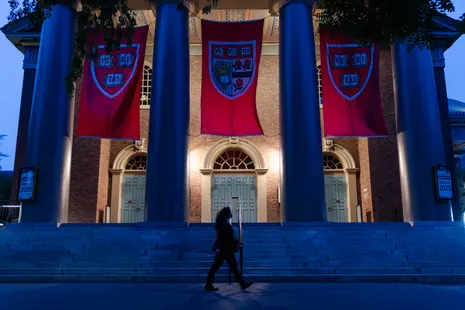
Table of Contents
Harvard Escapes Federal Lawsuit Over Alleged Failure to Shield Jewish Students
Wanderstayfinder.com – A federal judge in Boston has thrown out a lawsuit brought by the Trump administration against Harvard University, finding insufficient evidence that the prestigious institution violated federal civil rights protections for Jewish and Israeli students following the Gaza conflict. The dismissal, delivered on Thursday morning by US District Judge Richard Stearns, represents a significant setback for the administration’s efforts to compel the Ivy League school to address what it characterized as inadequate responses to campus harassment. The legal challenge, initially filed in March 2025, centered on claims that Harvard neglected its obligations under Title VI of the 1964 Civil Rights Act. This landmark legislation prohibits discrimination based on race or national origin in programs receiving federal funding. Judge Stearns concluded that the administration’s complaint did not adequately demonstrate a continuing pattern of violations on the Cambridge campus.
Isolated Incidents Fall Short of Legal Threshold
In his analysis, Stearns noted that the administration’s case relied heavily on a limited number of events documented in March 2025. The judge characterized these occurrences as “too isolated and episodic” to establish the kind of sustained civil rights breach required for legal action. Rather than showing a systemic failure, the evidence pointed to discrete incidents that did not necessarily reflect institutional neglect. The original complaint presented by Department of Justice attorneys depicted a troubling scene at Harvard. According to the filing, Jewish and Israeli students experienced harassment, physical assaults, stalking, and verbal abuse during a period of heightened tensions. The DoJ contended that Harvard’s leadership responded with inaction, essentially allowing the problems to persist without meaningful intervention.
Legal Framework Shapes the Ruling
Stearns’ four-page decision emphasized that Title VI was designed with a forward-looking purpose. The legislation aimed not to punish institutions that had fallen short, but rather to encourage them to achieve compliance with federal standards. This distinction proved crucial to the judge’s reasoning. The court found that the examples of alleged discrimination cited by the Trump administration were predominantly confined to the 2023-24 academic year. These events occurred in the wake of Hamas’s October 7, 2023 attack on Israel, which triggered widespread demonstrations and counter-demonstrations across American university campuses. Furthermore, the judge observed that the administration’s subsequent amended complaint lacked substantive factual allegations demonstrating noncompliance after Harvard received formal notice under Title VI in June 2025. This timing element proved important, as the law focuses on whether institutions respond appropriately to identified problems rather than merely acknowledging their existence.
Broader Context of Federal-Educational Relations
This ruling carries implications beyond Harvard’s immediate circumstances. The Trump administration has pursued multiple strategies to influence elite universities on issues ranging from admissions policies to diversity initiatives. The lawsuit reflected a broader effort to use federal civil rights enforcement as leverage in these ongoing disputes. Title VI enforcement represents one tool among many available to the government. The statute allows for various remedies when violations are found, including the potential withholding of federal funds. However, the legal threshold for such action requires more than isolated incidents—it demands evidence of a pattern that suggests institutional failure to address discrimination. The judge acknowledged that concerns arising from campus events following the Hamas attacks were legitimate. What distinguished this case was whether those concerns rose to the level of a Title VI violation warranting federal intervention. Stearns characterized the administration’s position as “the government’s fevered forewarning of potential havoc,” suggesting that the complaint overstated the severity of the situation.
What Comes Next for Harvard
With the lawsuit dismissed, Harvard now faces continued scrutiny over its handling of campus climate issues. The university must demonstrate that it maintains appropriate mechanisms for addressing discrimination complaints from all student populations. The ruling does not preclude future legal challenges if new evidence emerges or if the administration identifies additional violations. The decision also signals to other educational institutions that federal civil rights enforcement requires careful attention to both the nature of incidents and the timing of responses. Institutions must show not only that they recognize problems when they arise, but that they take meaningful steps to resolve them in a manner consistent with federal requirements. As debates over campus free speech, diversity initiatives, and institutional accountability continue nationwide, this case provides a framework for understanding how courts will evaluate claims of discrimination in educational settings. The emphasis on forward-looking compliance rather than backward-looking punishment may influence how universities approach similar challenges in the future.
Related Reading
Frequently Asked Questions
What is Judge dismisses Trump lawsuit that claimed?
Judge dismisses Trump lawsuit that claimed is the main topic of this guide. The article explains the context, practical details, and next steps readers should understand.
Why does Judge dismisses Trump lawsuit that claimed matter?
Judge dismisses Trump lawsuit that claimed matters because readers are looking for a useful answer, not just a short summary. Good content should match search intent and help them decide what to do next.