Are teens on ebikes the ‘new Hells Angels’? Not so fast, boomers

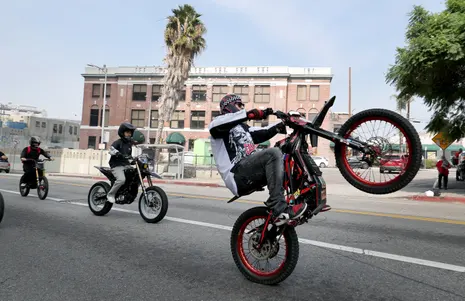
Table of Contents
Electric Two-Wheelers Spark Debate Over Teen Safety and Regulation
Wanderstayfinder.com – Across American neighborhoods and coastal highways, a new generation of riders has captured public attention—and not always for positive reasons. Young people navigating streets on powerful electric vehicles have become the subject of heated discussions about safety, regulation, and generational attitudes toward risk. While some media outlets have painted these riders as reckless troublemakers, the reality is more nuanced than sensational headlines suggest.
Social media platforms have been flooded with videos showing teenagers performing wheelies, weaving through traffic, and racing along beach paths. The Los Angeles Times characterized this phenomenon by dubbing these riders the “new Hells Angels,” while other publications labeled them “motorized menaces” causing disruption in local communities. These descriptions certainly sound alarming to parents and policymakers alike.
What These Riders Actually Are
Contrary to the dramatic portrayals, these young people are not members of any federally designated violent criminal organization. Instead, they are teenagers and young adults riding electric two-wheeled vehicles—e-motorcycles, e-scooters, and e-mopeds—that have frequently been illegally constructed or modified to exceed standard speed limits. Many of these vehicles have been designed to reach velocities significantly higher than those permitted for regulated electric bicycles.
The surge in these vehicles has been particularly visible in California, where favorable weather conditions keep riders on the road year-round. Predominantly male riders have dominated headlines for both dangerous behavior and tragic accidents. The visibility of these incidents has prompted government responses ranging from local ordinances to state-level legislation.
California’s Crackdown on Illegal E-Motorcycles
In May, Orange County District Attorney Todd Spitzer announced the creation of a specialized enforcement unit aimed at “juveniles and adults, including parents who knowingly allow their children to ride illegal E-Motorcycles.” This initiative followed several high-profile cases earlier in the year involving crashes and injuries.
One particularly notable case involved a teenager on an e-motorcycle who fatally struck a pedestrian. In another instance, a father faced charges after modifying his twelve-year-old son’s e-motorcycle to achieve speeds of sixty miles per hour. The young rider sustained serious injuries after running a red light and colliding with a car.
These incidents have galvanized local authorities to take action. The media spotlight and subsequent government interventions have extended well beyond California’s borders, prompting similar responses in other states.
National Regulatory Response
New Jersey’s state legislature recently enacted comprehensive legislation requiring registration, licensing, and in certain circumstances, insurance for anyone operating an electric bicycle. Similar laws already exist in several other states, while comparable proposals have been introduced in California and New York among others.
These regulatory efforts reflect a broader challenge: local and state governments are attempting to catch up with inexpensive, high-speed vehicles that have proliferated through largely unregulated online retail channels. Many of these vehicles are marketed as ebikes despite exceeding the speed and power specifications established for genuine electric bicycles.
“It is clear what an ebike is, but it’s not clear what it isn’t,” said Kendra Ramsey, director of the California Bicycle Coalition.
The Broader Ebike Revolution
Looking past the hyperbolic headlines reveals a familiar pattern: young people making risky decisions as they experience the independence that comes with growing up. This generational constant coincides with a technological shift that has transformed urban transportation.
The United States and numerous other countries witnessed dramatic growth in electric bicycle sales during the pandemic. Millions of people sought open spaces and mobility options while following stay-at-home orders. Electric bikes provided an alternative for local errands, school transportation, and daily commutes, offering relief from the frustrations of traditional car travel.
As battery technology and manufacturing costs improved, new categories of two-wheeled vehicles entered the market. Many originated from China and carried the ebike label despite having frames more similar to motorcycles and dirt bikes than conventional bicycles. The most significant distinction involves speed capability—electric motorcycles can match the velocities of automobiles, even though many of their riders remain too young to obtain driver’s licenses.
Under federal regulations, legitimate ebikes must meet specific criteria: battery power cannot exceed seven hundred fifty watts, vehicles must feature operable pedals capable of powering the motor, and maximum speeds are limited to twenty miles per hour for throttle-operated models and twenty-eight miles per hour for pedal-assist configurations.
Kendra Ramsey of the California Bicycle Coalition argues that these mis-marketed, inexpensive vehicles have damaged the reputation of genuine ebikes. Her organization champions policies that highlight the advantages of bicycle riding while ensuring rider protection on public roads.
Biking advocates emphasize that most ebike users are not adrenaline-seeking speed enthusiasts but rather commuters who value convenience and environmental sustainability as alternatives to local car journeys. Dillon Fitch-Polse, co-director of the BicyclingPlus research collaborative at the University of California, Davis, has expressed concerns about how current regulatory approaches may inadvertently harm the broader electric bicycle movement.
Experts, advocates, and industry retailers warn that many officials are choosing broad, indiscriminate measures rather than precise targeting when addressing illegal vehicles. This approach, combined with insufficient investment in education and infrastructure, could jeopardize the promising future of electric bicycle adoption across the nation.
Related Reading
Frequently Asked Questions
What is Are teens on ebikes the new Hells?
Are teens on ebikes the new Hells is the main topic of this guide. The article explains the context, practical details, and next steps readers should understand.
Why does Are teens on ebikes the new Hells matter?
Are teens on ebikes the new Hells matters because readers are looking for a useful answer, not just a short summary. Good content should match search intent and help them decide what to do next.