British Authorities Intercept Far-Right Activist Upon Return from Russia
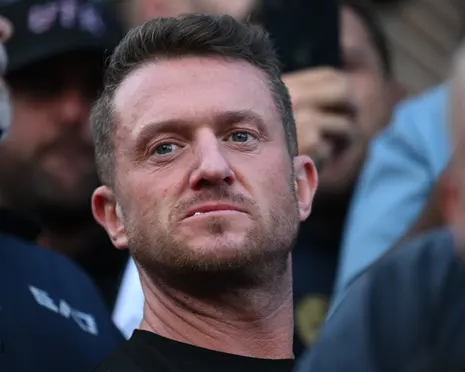
Wanderstayfinder.com – Tommy Robinson, a well-known far-right figure in the UK, was detained by police at Heathrow Airport as he returned to London from a recent trip to Russia. The Metropolitan Police confirmed the incident occurred on June 13, 2026, after Robinson disembarked from a flight that had originated in Moscow via Istanbul. His communication devices were seized under the Counter-Terrorism and Border Security Act 2019, which allows authorities to act against individuals suspected of engaging in activities that could threaten national security. The Guardian reports that the phones will be analyzed to determine their relevance to potential risks posed by foreign states.
Meetings in Moscow and Political Context
During his time in Russia, Robinson met with Elon Musk’s father, which has sparked speculation about his connections to the country. The UK, along with most Western allies, views Russia as a strategic adversary, with intelligence officials warning of a possible military operation by Vladimir Putin’s government as early as 2030. This perception has fueled increased scrutiny of individuals with ties to the Russian regime, particularly those whose rhetoric aligns with the nation’s political narratives.
Robinson, whose full name is Stephen Yaxley-Lennon, has long been associated with far-right movements in Britain. His social media accounts, while in Russia, were linked to calls for demonstrations following a knife attack in Belfast the previous week. Critics argue that his public statements about the Russian government could be seen as endorsing or amplifying its influence in the UK’s political landscape. The Royal United Services Institute, a London-based think tank, highlighted Russia’s reputation as a leading actor in hybrid warfare, which combines cyber operations, disinformation campaigns, and real-world actions to shape foreign policy.
Legal Framework and Robinson’s Claims
Under Schedule 3 of the Counter-Terrorism and Border Security Act 2019, the police have the authority to detain individuals if they are suspected of being involved in “hostile activity” on behalf of a foreign state. A Home Office code of practice explains that this provision applies when a person is “engaged in hostile activity… if the person is or has been concerned in the commission, preparation, or instigation of a hostile act that is or may be carried out for, or on behalf of, a state other than the United Kingdom.” Importantly, the law does not require the individual to be aware of the hostile intent, making it a broad tool for preemptive action.
Robinson has claimed he was held for approximately three hours during the stop. In a statement, he asserted that the detention was part of a broader effort to suppress his political views. “I’ve come to see how this country got itself so well on to the straight and narrow and see the beauty of a civilised society here,” he said during a press interview in Moscow. “Russia is not the enemy of Britain. That narrative has long since died a natural death.” His remarks suggest a belief that the UK’s hostility toward Russia is politically motivated, and that his own actions are misunderstood in the context of global tensions.
Despite his defense, the Hope Not Hate monitoring group has labeled Robinson as the “best-known far-right extremist in Britain.” They argue that his advocacy for Russian policies could contribute to radicalization efforts within the country. The group’s concerns are amplified by the fact that Robinson’s speeches and online content have historically targeted minority communities, framing them as threats to national identity.
Rallies and Public Influence
Robinson’s ability to mobilize large crowds has underscored his influence. In September 2025, his rally drew over 150,000 participants, with demonstrators marching through central London. A smaller gathering of 60,000 attendees took place in May 2026, further demonstrating his reach. These events have often focused on issues like immigration, multiculturalism, and national security, themes that resonate with his political base.
While the police stop was brief, it has reignited debates about the balance between security measures and civil liberties. Critics argue that the use of Schedule 3 could be applied broadly, potentially targeting individuals for their political affiliations rather than concrete evidence of wrongdoing. The Metropolitan Police, however, emphasized that the detention was based on concerns about a potential threat linked to Russian interests.
The incident also raises questions about the UK’s relationship with Russia. Although the country has officially designated Moscow as a hostile state, some analysts note that public opinion on this matter remains divided. Robinson’s comments, which downplay the Russian threat, reflect a segment of the population that believes the UK’s stance is overly aggressive. His presence in Russia, however, has been interpreted by others as a strategic move to align with the nation’s geopolitical goals.
Implications for Counter-Terrorism Strategy
The Royal United Services Institute has warned that Russia’s hybrid campaigns are becoming increasingly sophisticated. By leveraging figures like Robinson, the Russian government may seek to amplify its message in the UK, blending ideological influence with real-world actions. This approach could help undermine trust in democratic institutions and foster divisions among the population.
Robinson’s detention highlights the UK’s proactive stance in combating foreign influence. The Home Office’s code of practice underscores that the focus is on preventing hostile acts, regardless of whether the individual is aware of their role. This flexibility allows authorities to act swiftly, but it also invites scrutiny over the criteria used to justify such interventions.
Supporters of Robinson have since rallied around his case, urging him to seek legal funds through donations. His public defense of Russia has positioned him as a political figure who challenges the UK’s narrative on international relations. However, the police stop serves as a reminder of the government’s ability to monitor and control the spread of ideas that could be deemed subversive.
As the UK continues to navigate its complex relationship with Russia, incidents like this underscore the role of far-right activists in shaping public discourse. Robinson’s activities, both in the UK and abroad, illustrate the interconnected nature of political movements and the potential for cross-border influence. The analysis of his communication devices may reveal insights into his network’s intentions, further informing the UK’s counter-terrorism strategies.
Broader Context and Future Concerns
The Belfast knife attack, which occurred last Monday, has been cited by Robinson’s supporters as a catalyst for his social media activity during the trip. This event has been used to frame discussions about security and immigration, with some arguing that it highlights the need for stricter controls. Others, however, see it as an opportunity to critique the UK’s focus on external threats while neglecting domestic issues.
As the police investigation proceeds, the case will likely be scrutinized for its adherence to legal standards. The use of Schedule 3 has been controversial in past instances, with some claiming it is used to target individuals with political disagreements. Nonetheless, the UK government maintains that the provision is essential for safeguarding national interests against foreign-backed activities.
Robinson’s experience underscores the challenges faced by activists in a climate of heightened security awareness. His detention, though short-lived, has become a symbol of the government’s willingness to act against perceived threats. The broader implications of this action may influence how far-right figures navigate international engagements, ensuring their rhetoric aligns with domestic security priorities. As the world watches, the UK’s approach to counter-terrorism continues to evolve, balancing the need to protect its citizens with the rights of individuals to express their political views.