
Shares in humanoid robot firm Unitree surge 600% on Chinese stock market debut

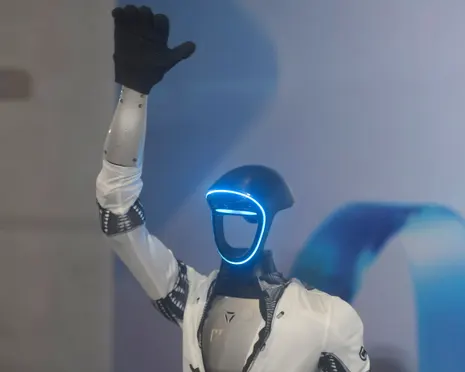
Table of Contents
Unitree Shares Surge 600% on Chinese Stock Debut
Wanderstayfinder.com – Shares in humanoid robot firm Unitree rocketed past 600% on their first day of trading in China, capping a dramatic public-market debut for what is now the world’s largest maker of human-like machines. The company, formally registered as Yushu Technology Co, opened at an IPO price of 150.8 yuan and briefly touched 1,100 yuan (£120.39) on Wednesday before settling into a gain of roughly 500% by the close.
The frenzy was fueled by years of viral internet clips showing Unitree robots executing martial-arts routines, sprinting at Olympic-track speeds, and dancing alongside pop stars. Those videos turned the Hangzhou-based startup into a household name long before it ever filed for a listing, building a consumer curiosity base that translated directly into trading-day demand.
Investor Demand and Market Context
Chinese retail investors piled into the offering with extraordinary enthusiasm; the tranche reserved for non-professional buyers was oversubscribed by thousands of times. Unitree, founded in 2016 by Wang Xingxing, shipped more than 5,500 humanoid units last year and remains one of only a handful of publicly listed humanoid-robot companies worldwide. The sheer depth of retail appetite signaled that domestic investors view robotics as the next major wealth-creation frontier alongside semiconductors and electric vehicles.
Analysts project the global human-like-robot market will expand from roughly $2 billion in 2025 to $300 billion by 2035—a 150-fold increase in a single decade.
That growth trajectory explains why shares in humanoid robot firms are commanding premium valuations across Asian exchanges. At least six other Chinese robotic companies, including Deep Robotics and Leju Robotics, are reportedly preparing their own IPOs, while Unitree’s closest rival, AgiBot, remains private and smaller competitor UBTech trades in Hong Kong. The pipeline of upcoming listings suggests the sector’s public-market window will stay open through at least the next two years.
Geopolitical Headwinds
The listing coincided with the opening of the World Robot Conference in Beijing, where hundreds of firms—predominantly Chinese—unveiled new hardware and software demos over several days. The timing sharpened attention on a growing regulatory friction: last month the US Federal Communications Commission barred imports of forthcoming foreign-made humanoid and quadruped robots on national-security grounds, and earlier this summer the Pentagon placed Unitree on its roster of Chinese military-linked enterprises, calling it a “contributor to the Chinese defence industrial base.” Unitree has maintained that its robots are designed exclusively for civilian applications and that no military contracts exist.
Wang Xingxing, who still serves as chief executive, retains approximately one
Related Reading
Frequently Asked Questions
What is Shares in humanoid robot firm Unitree?
Shares in humanoid robot firm Unitree is the main topic of this guide. The article explains the context, practical details, and next steps readers should understand.
Why does Shares in humanoid robot firm Unitree matter?
Shares in humanoid robot firm Unitree matters because readers are looking for a useful answer, not just a short summary. Good content should match search intent and help them decide what to do next.


