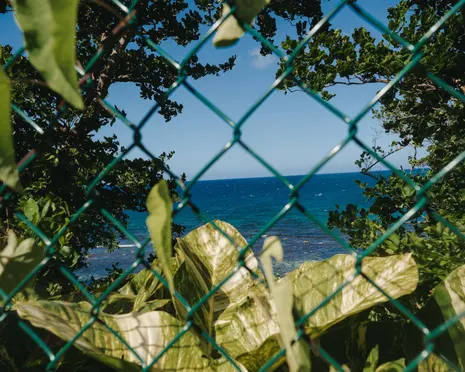
Jamaican Beach Access Campaigners Launch Legal Battle Against Coastal Privatisation
Wanderstayfinder.com – A new wave of legal action is set to begin in Jamaica as local advocates push back against government plans to privatise public beaches. The dispute centers on the proposed cession of shoreline areas to private developers, a move that campaigners claim threatens the livelihoods and cultural ties of Jamaicans to the ocean. With five cases scheduled to be filed later this month, the conflict has intensified as community groups demand greater control over coastal spaces that have long been shared by residents and tourists.
Roots of the Movement: A 2020 Spark
The Jamaica Beach Birthright Environmental Movement (Jabbem) emerged from a heated clash between residents and law enforcement in 2020, when violent protests erupted over the closure of Mammee Bay in St Ann. At the time, the beach—a vital resource for local families—was restricted to commercial use, sparking outrage and galvanising a grassroots effort to protect public access. Jabbem’s formation marked a turning point, as activists began to frame the issue as a fight for fundamental rights rather than just a local grievance.
The group has since expanded its focus to include other coastal areas, such as Little Dunn’s River, Bob Marley Beach, and Flankers/Providence Beach, all of which are critical to nearby communities. These locations, while attracting tourists, also serve as essential gathering spots for fishermen, artisans, and families who rely on the sea for sustenance and recreation. The upcoming court cases aim to challenge the legal framework that allows private entities to claim these spaces, arguing that it creates an imbalance in who benefits from Jamaica’s natural assets.
Voices of the Community: Impact on Daily Lives
Roseroy Gay, a fisherman at the Blue Lagoon in Portland, has seen his way of life disrupted by changes to fishing zones and beach closures. “I’ve been working these waters since 1979,” he said, highlighting how the restrictions have forced him to seek financial support from relatives abroad. For many, the beach is not just a resource but a lifeline, and its privatisation risks severing that connection.
“Jamaicans have been cut off from the sea, which is our only source of wild food,” said Devon Taylor, founder of Jabbem. “When you deny access, you’re not just limiting recreation—you’re starving people.”
Clive “Up Up” Ivy, a craftsman at Little Dunn’s River, echoed similar concerns. His business, which sells painted woodcarvings and bead necklaces, has suffered as beach closures reduce foot traffic and opportunities for sales. “The uncertainty has made it harder to plan,” he explained. “If the government keeps control, it’s like they’re deciding who can use the beach and who can’t.”
Historical Context: The 1956 Beach Control Act
The legal battle is rooted in the 1956 Beach Control Act, a piece of legislation that granted the state ownership of Jamaica’s foreshore and seabed. Under this law, private development requires government approval, effectively allowing the government to regulate access to coastal areas. Critics argue that this act, originally enacted during the British colonial era, has perpetuated inequities by prioritising commercial interests over the rights of local populations.
Taylor accused the government of maintaining a system that enriches a minority while sidelining the majority. “The Beach Control Act has been a tool for landlessness,” he said. “It’s not just about beaches—it’s about who gets to call Jamaica their home.” He pointed to the long-standing political inertia as a key issue, noting that successive administrations have failed to repeal the law despite its outdated nature.
Government Defenses: Economic Benefits and Public Access
Matthew Samuda, the minister of environment and climate change, defended the current system, stating that the government must balance access with economic development. “We need to ensure that the country’s natural assets translate into tangible benefits for all citizens,” he said. He cited figures showing that between 112,000 and 116,000 people are employed in tourism, with an additional 300,000 to 350,000 benefiting indirectly through related industries like agriculture and transportation.
Samuda also highlighted recent developments, such as the requirement for developers to create access corridors to the sea. “This shows our commitment to sharing the coast,” he said. However, campaigners argue that these measures still fall short of guaranteeing unrestricted public use. Taylor warned that the proposed policy would further entrench a system where access is conditional on permits and fees, limiting the rights of ordinary citizens.
Expanding the Fight: The Narra Act Concerns
In addition to the Beach Control Act, activists have raised alarms about the National Reconstruction and Resilience Authority (Narra) Act, passed in March 2026 to expedite recovery efforts after Hurricane Melissa. They fear this law will weaken the 1882 Prescription Act, which allows communities to claim land or pathways used continuously for 20 years. “The Narra Act threatens our last tool for securing public access,” said Coombs, Jabbem’s director of community engagement. “Without it, we’ll lose even more ground.”
The Prescription Act has historically empowered local groups to assert rights over coastal areas they’ve used for generations. By fast-tracking redevelopment, the Narra Act could enable private interests to claim these spaces more easily, bypassing the need for lengthy legal processes. This has alarmed activists, who view the legislation as a direct attack on their ability to safeguard the ocean as a shared resource.
A Policy in Question: Modernisation or Further Restriction?
In March, Prime Minister Andrew Holness introduced a beach access and management policy aimed at modernising the legal framework. While the proposal includes provisions for expanded public access, campaigners argue it still allows too many restrictions. Taylor described it as a “qualified rights” model, where access is contingent on developer licensing. “This means the government can grant or deny use at will,” he said. “It’s not about giving people freedom—it’s about controlling them.”
Coombs added, “We’re fighting for rights that are permanent and unchallengeable, not temporary concessions.” For him, the struggle is not just about land or tourism revenue but about preserving the cultural and social fabric of Jamaican coastal communities. “The sea is part of our identity,” he said. “If we lose access, we lose a piece of who we are.”
The legal cases now underway represent a critical moment in Jamaica’s history. By challenging the status quo, the campaigners hope to spark a broader conversation about land rights, equity, and the future of public access to natural resources. Their arguments underscore a growing divide between the interests of tourists and the needs of local residents, a tension that could reshape how Jamaica’s coast is managed in the years to come.
Broader Implications: A Nation at a Crossroads
As the courts weigh the merits of the case, the dispute highlights deeper issues about how Jamaica’s natural wealth is distributed. The Beach Control Act, once a symbol of colonial governance, now stands as a point of contention in a modern economy increasingly driven by tourism. Campaigners insist that the fight for beach access is a fight for the soul of the nation, ensuring that the sea remains a shared space rather than a commodity for the privileged few.
With the legal battle set to unfold, the outcome could determine whether Jamaica continues to prioritise private development or reclaims its coastline for the benefit of all. The stakes are high, and the voices of those who have long called the shore home are demanding a fairer share of the ocean’s bounty.