British corporation continued trafficking of enslaved Africans to Guyana 40 years after abolition

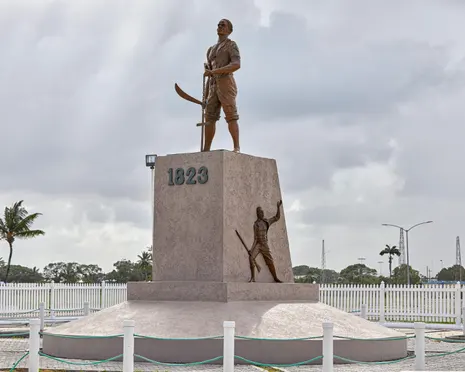
Table of Contents
A 1847 Letter Exposes Decades of Illicit Slave Trafficking by a British Sugar Empire
Wanderstayfinder.com – Four decades after Parliament formally ended slavery across most of the British Empire, a Liverpool-based trading house was still loading human beings onto its own vessels and shipping them across the Atlantic to its sugar plantations in Demerara, now Guyana. The revelation, drawn from a single surviving letter dated 1847, upends the tidy narrative that abolition marked a clean break between the era of chattel bondage and the post-1833 world.
The document was uncovered by Malik Al Nasir, a family-history researcher whose findings are published in his book Searching for My Slave Roots. Al Nasir’s work has also catalysed a new academic initiative called Overwriting-Underwriting, which sets out to map the financial architectures that sustained enslavement and its afterlives. The project launches this month.
The Letter and the Ship Called “the Parker”
The correspondence was written by Peter Miller Watson, who administered the company’s Demerara operations, and addressed to the Liverpool office of Sandbach, Tinne and Company. It describes the arrival of a vessel from the firm’s own fleet bearing what Watson unflinchingly calls a “cargo of negroes,” including dozens of very young children. The manifest he records reads:
“115 adult males, 86 adult females, 82 under 14 years, and 41 under 4 years.”
Watson adds that only three people died during the crossing — one adult man and two children — and relays the captain’s explanation:
“There have been only three casualties during the passage – 1 man and 2 children – which Captain R. says may be attributed to the wretched state in which they had lived ashore.”
Why “Cargo” Matters
Al Nasir argues that the language of the letter is decisive. Liberated Africans — those freed by Royal Navy patrols — were never described as cargo. Enslaved people, bought and sold as property, were. Watson’s choice of word, combined with his framing of deaths as a “loss of property,” points to people who had been forcibly taken from Africa and transported without legal sanction.
“Slavery had been abolished, so how do we know the people on the Parker weren’t indentured, or Africans liberated by the Royal Navy? Firstly, Watson specifically refers to them as cargo, and not passengers, when liberated Africans were not regarded as cargo, enslaved people were called cargo.”
Al Nasir further notes that Watson’s remark about the “wretched state” in which the captives had “lived ashore” implies they were shipped directly from land and held responsible for their own condition. Had they been former slaves, blame would have fallen on their previous masters, and sick individuals would not have been purchased in the first place.
The Men Behind the Company
Sandbach, Tinne and Company was the commercial vehicle of two interlinked merchant families — the Sandbachs and the Tinnes — who, together with collaborators and relatives in the Gladstone family, controlled much of the Demerara sugar trade. The firm was not dissolved until 1975. By the time of the 1847 letter, the patriarch Samuel Sandbach had already exited the partnership (he left in 1833), but his son William Robertson Sandbach and his son-in-law Charles Stuart Parker Jr remained principal shareholders.
Peter Miller Watson himself was a distant cousin of William Gladstone, the British prime minister, and the father of Andrew Watson, who captained Scotland in the 1880s and became the first Black player to represent a national football team internationally.
Compensation, Taxpayers, and the Architecture of Debt
The Slave Trade Act of 1807 ended the transatlantic trade in human beings within British territories. The Slavery Abolition Act of 1833 then prohibited slavery itself across most of the empire. Yet the financial settlement that accompanied abolition was enormous: plantation owners from powerful families received vast sums funded by taxpayers, while the enslaved received nothing.
By 1847, Sandbach, Tinne and its subsidiaries had already collected compensation equivalent to millions of pounds in today’s terms for the “loss” of the people they had held in bondage. John Gladstone — father of the prime minister, owner of plantations in Guyana and Jamaica — received the largest single individual payout. Sandbach, Tinne and Company took the second-largest aggregate sum. Both families, Al Nasir stresses, were among the architects of the compensation scheme itself. The British state did not finish paying off that debt until 2015.
The Wider Machinery of Enslavement After 1807
The Parker was not an isolated incident. An 1847 missionary account, cited by Al Nasir, describes unregulated trading in enslaved people continuing “south of the line” — a phrase meaning enslavers below the equator, in regions such as Angola, were evading the Royal Navy’s blockade and still moving captives northward.
The West Africa Squadron had been tasked with intercepting slavers’ vessels from 1808. Over its operational life, roughly 1,600 sailors lost their lives in the effort. Yet estimates suggest fewer than ten percent of ships engaged in the trade were ever stopped. Even when a vessel was boarded and its human cargo freed, those “liberated Africans” frequently faced military conscription or were funneled into apprenticeship and indentured-labour systems that imposed hard, unpaid work under conditions little different from bondage.
The 1823 Demerara uprising, staged by enslaved abolitionists on a plantation owned by John Gladstone, had been a pivotal catalyst in the parliamentary push toward abolition. That the very family whose estate sparked the revolt was also among the largest beneficiaries of the post-abolition compensation scheme underscores how tightly intertwined the politics of emancipation and the economics of enslavement remained, long after the formal date of liberation had passed.
What the Letter Changes
For historians of the British Empire, the Parker episode complicates the assumption that 1833 drew a firm line. It shows that a major commercial house, already enriched by state-funded compensation, could continue to operate as though the trade were still lawful — loading children under four onto a ship and recording their deaths in the same ledger language used for broken sugar barrels. The Overwriting-Underwriting project now aims to trace how many other such transactions slipped through the financial channels of the post-abolition period, and how the wealth generated by them shaped British politics, industry, and global trade for generations afterward.
Related Reading
Frequently Asked Questions
What is British corporation continued trafficking of enslaved?
British corporation continued trafficking of enslaved is the main topic of this guide. The article explains the context, practical details, and next steps readers should understand.
Why does British corporation continued trafficking of enslaved matter?
British corporation continued trafficking of enslaved matters because readers are looking for a useful answer, not just a short summary. Good content should match search intent and help them decide what to do next.