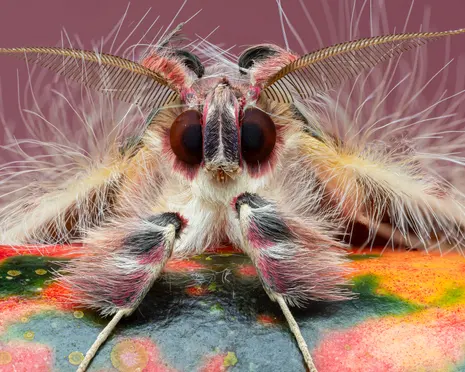
The 20-year search for a vanishing custard-and-chocolate coloured moth

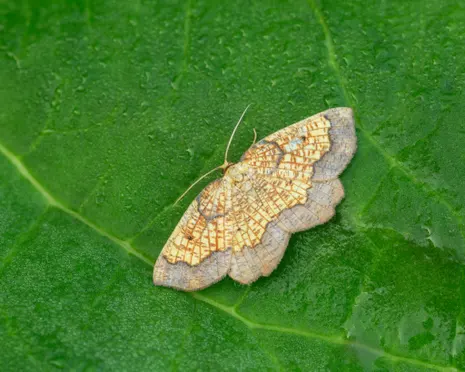
Table of Contents
After Two Decades, a Vanishing Moth Returns to Northumberland’s Hidden Habitat
Wanderstayfinder.com – For twenty years, Dave Wainwright has carried a quiet hope that the dark bordered beauty moth still lurked somewhere in the rolling landscapes of northern England. That hope finally materialized this summer when he walked the same Northumberland estate where he had first searched in 2004, this time accompanied by project officer Charlotte Rankin and National Trust rangers. What he discovered was a thriving population of the custard-and-chocolate colored moth, the first confirmed sighting at Wallington since 1952.
The dark bordered beauty is one of England’s most elusive lepidopterans, distinguished by its lemon-yellow wings edged in deep chestnut. Until this season, Strensall Common in Yorkshire stood as the sole remaining stronghold for the species across the country. Even there, numbers have been steadily declining, battered by climate disruption and a devastating wildfire that consumed much of the reserve. Where hundreds of moths were once documented two decades ago, recent counts have barely climbed into double figures.
The Long Search Begins
Wainwright’s initial expedition to Wallington in 2004 was marked by frustration rather than triumph. He parked two miles from the target area, dragged his moth trap across the terrain, and endured what he later recalled as a million fly bites. That evening yielded nothing. The ground had been heavily grazed by sheep, and the creeping willow—the essential food source for the moth’s caterpillars—had been “quite well plucked” by the livestock.
“I always felt the dark bordered beauty would be there,” Wainwright reflected. “I had a sneaking suspicion, but whether or not I’d actually find it, I didn’t know.” His determination never wavered despite the empty trap that first night. Looking back now, he suspects the moths may have been present all along, simply hidden in plain sight within willow scrub that had been too severely grazed to support a viable population.
“It was a pretty amazing feeling,” he says. “That particular site had been recorded before, but 74 years ago. I surveyed the site about 20 years ago and couldn’t find it … actually finding it after that much effort was really fulfilling.”
Habitat Transformation
The Wallington landscape has undergone remarkable transformation since Wainwright’s fruitless 2004 visit. Where creeping willow once stood cropped nearly bare, lush vegetation and wildflowers now carpet the estate’s 20 square miles—approximately 5,200 hectares. This ecological recovery stems from years of collaborative effort between the National Trust and Fiona Goodfellow, a tenant farmer who manages the land through a comprehensive nature recovery project.
The discovery emerged from a £300,000 grant awarded to Butterfly Conservation last year by the Elgol Fund for Nature. This funding supports research into how rare species throughout northern England are adapting to mounting climate and human pressures. For Wainwright, who serves as head of conservation in England at Butterfly Conservation, the finding transcends mere scientific documentation.
“Because I thought we were going to lose [dark bordered beauties] as a species,” he explains when asked why he considers this discovery a career highlight. “You don’t want a species to go extinct on your watch … you feel really powerless. It’s gratifying just knowing that the species isn’t as far down the road to extinction as we feared.”
Caution in Conservation
One of the primary challenges in protecting the dark bordered beauty lies in its dietary specificity. The caterpillars feed exclusively on two plant species: aspen and creeping willow. Despite the encouraging discovery, Wainwright advocates for measured conservation approaches. The moths have persisted at Wallington for more than seventy years without human intervention, and he prefers to understand precisely why the current habitat succeeds before implementing changes.
“We wouldn’t want to rush into major changes,” he cautions. “You could do more harm than good by modifying it without knowing what you’re doing.” Current efforts focus primarily on observation and monitoring. Butterfly Conservation has also initiated early-stage captive breeding programs, developed in partnership with Yorkshire Wildlife Trust at Strensall Common. The long-term vision includes potentially introducing the moth to additional sites once suitable conditions can be established.
Wainwright’s career has been defined by this patient, forensic approach to understanding what species truly need to survive. He describes his work as “putting dots on maps” in locations that rarely receive attention. This meticulous research ensures that conservation funding reaches areas of genuine need rather than being distributed based on assumption.
The dark bordered beauty’s return to Wallington represents more than a single species’ survival—it signals that careful habitat management, combined with sustained scientific inquiry, can reverse even the most concerning population declines. As invertebrate of the year, the moth’s story offers hope that extinction is not inevitable when conservation efforts are both patient and precise.
Related Reading
Frequently Asked Questions
What is The 20 year search for a vanishing?
The 20 year search for a vanishing is the main topic of this guide. The article explains the context, practical details, and next steps readers should understand.
Why does The 20 year search for a vanishing matter?
The 20 year search for a vanishing matters because readers are looking for a useful answer, not just a short summary. Good content should match search intent and help them decide what to do next.