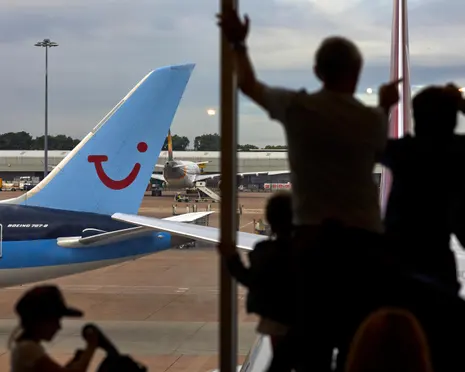
Virgin Trains gets go ahead to run services to Europe in new blow to Eurostar monopoly

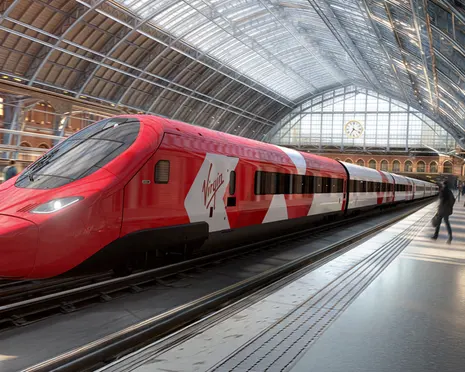
Table of Contents
Virgin Trains Gets Go Ahead for Cross-Channel Rail
Wanderstayfinder.com – Virgin Trains gets go ahead to operate passenger services through the Channel tunnel, ending a monopoly that has persisted since the tunnel’s 1994 opening. The Office of Rail and Road has formally granted track-access permission, paving the way for up to 20 daily return trains between London and Paris, Brussels, and Amsterdam from 2030 onward. For travellers who have had a single rail option for over three decades, the regulatory decision marks the most consequential structural change in cross-Channel passenger transport in more than thirty years.
The access agreement covers a period from 1 October 2030 through 31 December 2040. It permits the rail division of Sir Richard Branson’s Virgin Group to run services over High Speed 1, the dedicated high-speed corridor linking London to the tunnel’s northern portal. The approval builds on a sequence of incremental clearances: in October of last year, the regulator already allowed the new entrant to share Eurostar’s Temple Mills maintenance depot in east London — the only facility reachable from High Speed 1 where trains can be stored and serviced overnight.
What Ends and What Remains
Eurostar, now wholly owned by France’s SNCF after the UK state’s stake was wound down, has been the sole passenger carrier through the tunnel since launch. Its unchallenged position has drawn sustained criticism over premium pricing relative to short-haul flights and a visible contraction of the network: services calling at Ashford and Ebbsfleet in Kent were discontinued, narrowing geographic reach. Separately, Eurotunnel — the entity managing the vehicle shuttle LeShuttle — continues to carry cars and freight under its own commercial arrangements, unaffected by this passenger-rail decision.
Branson has framed the venture in explicitly competitive terms, declaring:
“It is time to end this 30-year monopoly and bring some Virgin magic to the cross-Channel route.”
The planned services would depart London St Pancras International and terminate at the same continental stations Eurostar currently serves. The company has committed roughly £700 million to the project and projects approximately 400 UK jobs. Virgin Trains previously operated domestic intercity routes in Britain, including London-to-Glasgow, before restructuring its domestic portfolio.
Regulatory Pathway and Remaining Hurdles
The ORR characterised the ruling as a milestone while stressing that operational readiness remains distant. Martin Jones, the regulator’s deputy director of access and international affairs, placed the decision within a broader competitive agenda:
“This is an important next step in bringing competition and growth to the market for international rail services, and we welcome the progress Virgin Trains and London St Pancras High Speed have made. While there is still more work to do, we are supporting Virgin and the wider industry to grow international services.”
Before any train departs, the new entrant must still negotiate access agreements with continental rail networks, secure safety certifications from both the ORR and relevant EU member-state authorities, and complete rolling-stock procurement and crew training. None of these steps has been finalised, meaning the 2030 start date remains contingent on a substantial further programme of regulatory and engineering work.
The approval lands amid a wider reorientation of UK rail policy toward cross-border passenger connectivity. Eurostar itself announced last year that it would introduce double-decker trainsets through the tunnel to increase capacity on existing services. A joint UK-German taskforce is separately examining the feasibility of direct London-to-Berlin rail services, a project requiring new infrastructure and cross-border coordination far beyond the existing tunnel corridor. Demand signals from passengers, airlines, and governments have collectively pushed international rail back onto the strategic agenda after years of stagnation.
For commuters and leisure travellers, the practical implication is straightforward: by 2030, choosing a cross-Channel rail operator will no longer be a single-brand decision. Pricing pressure, service-frequency competition, and differentiated customer experience will enter a market that has operated without meaningful rivalry for over thirty years. Whether that competition translates into lower fares, higher frequency, or both will depend on how quickly the remaining regulatory and engineering hurdles are cleared.
Frequently Asked Questions
When will Virgin Trains begin operating cross-Channel services? The earliest permitted start date under the access agreement is 1 October 2030, subject to completion of continental access negotiations, safety certifications, rolling-stock delivery, and crew training.
Which cities will the new service connect? London St Pancras International to Paris, Brussels, and Amsterdam — the same continental termini Eurostar currently serves.
Does this affect Eurotunnel vehicle shuttle services? No. Eurotunnel’s LeShuttle car and freight operations run under separate commercial arrangements and are not impacted by the passenger-rail access decision.
How much investment is committed to the project? Virgin has committed approximately £700 million and projects around 400 UK jobs associated with the cross-Channel operation.