Half of homes in Great Britain taking longer to sell than last year amid mortgage volatility

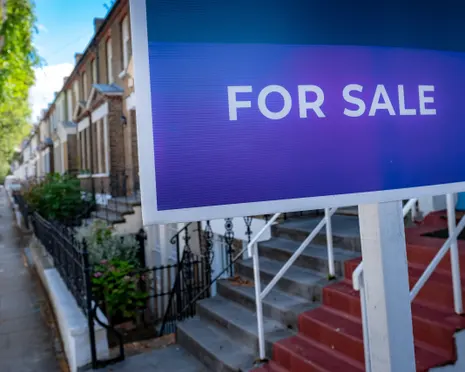
Table of Contents
UK Housing Market Fractures Along Regional Lines as Mortgage Uncertainty Deepens
Wanderstayfinder.com – Buyers across England, Scotland, and Wales are facing a sharply bifurcated property landscape. In roughly half of all local authorities spanning the three nations, homes now require more time to reach completion than they did twelve months ago. The driver behind this slowdown is not a single factor but a compounding effect: the ongoing military conflict with Iran has injected sustained volatility into mortgage pricing, sending prospective purchasers into a prolonged state of hesitation. Rather than committing to a purchase at today’s loan cost, many are adopting a “wait and see” posture, hoping rates will retreat before they lock in a deal.
The Numbers Behind the Split
Data compiled by property platform Zoopla reveals that 180 of the 363 local authorities across Great Britain recorded longer-than-usual selling periods compared with the same period last year. Yet the headline national average time to sell remained flat at 42 days, a figure that obscures what is happening underneath. In high-demand areas, buyers moved quickly to close transactions before further rate increases could erode affordability. In other regions, the opposite dynamic took hold: fear of overpaying on a mortgage kept buyers on the sidelines, stretching completion timelines well beyond the norm.
The contrast is starkest in Scotland. All ten of the country’s fastest-selling markets sit within Scottish borders. Falkirk, in the central belt, posted the shortest average completion time at just 11 days. Moving south of the border, Carlisle in Cumbria and Barnsley in South Yorkshire tied for the quickest non-Scottish markets at 23 days apiece. At the other extreme, eight local authorities recorded average selling periods of two months or longer. Melton in the East Midlands topped the slowest list at 76 days, followed by Westminster in London and Teignbridge in Devon’s south-west corner.
Mortgage Rates Under Siege
The turbulence in lending costs traces directly to the Middle East conflict. When hostilities escalated at the end of February, lenders moved swiftly to pull existing deals in March, reassessing their risk exposure. The cost of a typical home loan surged as markets priced in the possibility that renewed global inflationary pressure would compel the Bank of England to tighten monetary policy further.
Financial data provider Moneyfacts tracks the average two-year fixed residential mortgage rate. As of Monday, that benchmark stood at 5.61 percent — a substantial jump from the 4.83 percent prevailing before the conflict erupted. The spike was sharper still in April, when the rate briefly approached 6 percent before easing modestly. For a household borrowing £250,000, the difference between the pre-war rate and the April peak translates into roughly £200 per month in additional interest payments over the fixed period, a sum that can tip a borderline affordability calculation into rejection territory.
The knock-on effect on buyer behaviour is straightforward. When the price of borrowing can swing by nearly a full percentage point within weeks, rational purchasers delay decisions until the direction of travel becomes clearer. That delay, multiplied across thousands of transactions, is what stretches selling timelines in the affected regions.
What Threadneedle Street Faces Next
The macroeconomic picture complicates any quick resolution. Official inflation data due Wednesday this week are expected to show the consumer price index climbing from 2.6 percent in June to 2.9 percent in July, driven largely by soaring energy costs linked to the conflict. That trajectory would strengthen the case for the central bank to raise borrowing costs. Conversely, labour-market figures released Tuesday are anticipated to reveal a deceleration in hiring, a signal that could encourage the Bank to hold steady and allow the jobs data to speak before acting.
Financial markets currently price in two quarter-point increases to the Bank’s base rate — from its present level of 3.75 percent — before the close of next year. Each 25-basis-point hike typically pushes fixed mortgage rates up by a similar margin within a few weeks, meaning buyers who delay now may face meaningfully higher costs by autumn or winter.
“While the national time to sell has barely moved, that stability is masking a real divide opening up between local markets.” — Richard Donnell, executive director at Zoopla
Implications for Prospective Buyers
The regional divergence carries practical consequences. A buyer in Falkirk or Carlisle can expect a transaction to conclude within weeks, with sellers competing for limited demand. A buyer in Melton, Westminster, or Teignbridge faces a market where sellers have already absorbed months of delay and may be more willing to negotiate on price or contribute toward stamp duty. For those in between, the calculus is less clear: waiting for rates to fall risks missing a property entirely in a thinner market, while acting now locks in a cost that could prove above market within a quarter.
What remains certain is that the Iran conflict, in its stop-start form, continues to rattle financial markets and, by extension, the pricing of home loans. Until the geopolitical situation stabilises and the Bank of England’s path becomes legible, the bifurcation between fast and slow markets is likely to persist — and in some areas, to widen.
Related Reading
Frequently Asked Questions
What is Half of homes in Great Britain?
Half of homes in Great Britain is the main topic of this guide. The article explains the context, practical details, and next steps readers should understand.
Why does Half of homes in Great Britain matter?
Half of homes in Great Britain matters because readers are looking for a useful answer, not just a short summary. Good content should match search intent and help them decide what to do next.