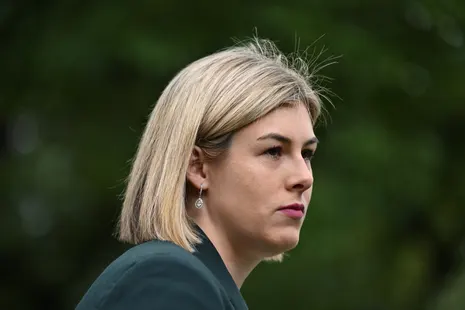
Hanson forced to intervene after One Nation MP says party’s migration target ‘not too different’ from Labor’s

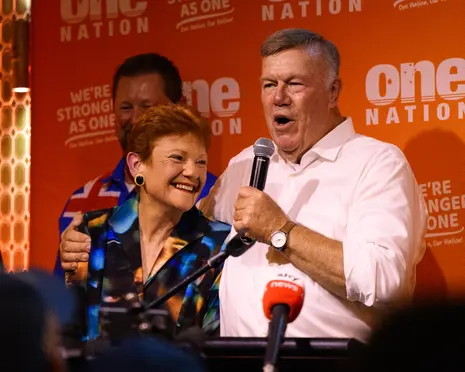
Table of Contents
One Nation’s Migration Message Collapses Again as Hanson Steps In to Correct Her Own MP
Wanderstayfinder.com – Pauline Hanson was forced back to her social media accounts on a Sunday afternoon to issue what amounted to a public correction of her own party’s member for Farrer, after David Farley appeared on national television and described One Nation’s immigration stance as broadly aligned with the Albanese government’s approach. The episode marks the second occasion in recent weeks that Hanson has had to intervene and clarify her party’s position following remarks from Farley that appeared to undermine the minor rightwing party’s long-standing restrictive immigration platform.
The Sunday Morning Contradiction
Speaking on the ABC’s Insiders program, Farley argued that skilled labourers and short-term backpackers are indispensable to keeping Australian households supplied with food and to staffing critical sectors such as aged care. He contended that these workers should be treated as a distinct category, separate from what he called migration “in its true form.” In his framing, One Nation’s headline figure of 130,000 for net overseas migration (Nom) would remain intact, but a further minimum of 100,000 additional workers—roughly 40,000 arriving through the Pacific Australia Labour Mobility (Palm) scheme and around 70,000 skilled migrants including aged-care nurses—would sit outside that number.
“A minimum of 100 [thousand additional migrant workers], but the 130,000 [target] is what we call the true Nom,” Farley told the program. “I think the big difference is [that] we’re focusing on: what are the skills we need as a nation, where do we need these migrants to be. The raw number is not too different [to the government’s], but the reality is, where do we need them? We don’t need them in the great urban metroplex. We need them out to be productive, working in agriculture, engineering, mining.”
The language was striking for a party whose entire electoral identity rests on opposing large-scale immigration. By suggesting the underlying volume of arrivals was comparable to the government’s, Farley effectively neutralised the central policy distinction One Nation has drawn between itself and the major parties.
Hanson’s Afternoon Rebuke
By Sunday afternoon, Hanson had posted a pointed clarification insisting that “One Nation’s policy is to cut net overseas migration to 130,000.” She added that short-term seasonal agricultural workers who do not satisfy the Australian Bureau of Statistics residency test are excluded from the Nom calculation. In practice, however, seasonal workers who reside in Australia for twelve months within a rolling sixteen-month window are counted in the Nom. The statistic measures the difference between people entering and leaving the country who have lived inside or outside Australia for that twelve-month threshold. It captures Australians relocating overseas and returning, while excluding short-term visitors such as tourists.
The Nom is a separate metric from permanent migration, which tracks longer-term visas granted to skilled workers and family-sponsored migrants. For the current financial year, the government has allocated 185,000 permanent places. Conflating the two measures has been a recurring source of confusion in One Nation’s public messaging, and Farley’s remarks compounded the problem by implying that the party’s effective intake could exceed 230,000 people annually once the additional categories were included.
Opposition and Government Reactions
Shadow home affairs minister Jonno Duniam seized on the episode to question the coherence of One Nation’s platform. He observed that the party has “somehow managed to turn one headline number (130,000) into at least half a dozen different immigration policies” and pressed the question of how many migrants would actually arrive under its rules.
“One Nation is having extraordinary difficulty answering the most basic question of all: how many migrants would actually come to Australia under its policy?” Duniam said.
Energy minister Chris Bowen took a more conciliatory tone, suggesting the confusion might signal convergence rather than contradiction. He remarked that, based on Farley’s comments, One Nation appeared to agree with the government’s approach and that he would “welcome” such alignment.
Where the Numbers Actually Stand
The Nom plunged below zero during the pandemic years when borders were effectively closed, then rebounded sharply as travel resumed. Last financial year the figure was forecast at 295,000 but ultimately reached 301,000. The government now projects a decline to 245,000 in 2026-27 and a further fall to 225,000 in 2027-28, with changes to the migration system expected to be announced in coming weeks to bring actual flows in line with those targets.
The Coalition has declined to publish a precise Nom figure, though opposition leader Angus Taylor has signalled its target will sit “well below 200,000.” One Nation’s official policy document lists a hard visa cap of 130,000 per year—a ceiling that, applied strictly, would likely produce a negative Nom given current departure flows. Barnaby Joyce, the former Nationals MP who crossed the floor to join One Nation last December, has publicly suggested the 130,000 figure was always intended as a Nom target rather than a visa cap, adding yet another layer of ambiguity to an already tangled message.
The Local Stakes in Farrer
For Farley’s own electorate in south-western New South Wales, the debate is not abstract. The region’s slaughterhouses, meat-processing plants, and aged-care facilities depend heavily on migrant labour. Farley stated that more than two-thirds of workers in his seat’s processing units are migrants, and he framed his television appearance as an attempt to inject “dexterity and flexibility” into a system he said functions well when managed properly.
The tension between that local reality and the party’s national brand of immigration restriction is now playing out in public, with Hanson’s repeated interventions underscoring how difficult it has become for One Nation to articulate a single, internally consistent position on one of Australia’s most consequential policy questions.
Related Reading
Frequently Asked Questions
What is Hanson forced to intervene after One Nation?
Hanson forced to intervene after One Nation is the main topic of this guide. The article explains the context, practical details, and next steps readers should understand.
Why does Hanson forced to intervene after One Nation matter?
Hanson forced to intervene after One Nation matters because readers are looking for a useful answer, not just a short summary. Good content should match search intent and help them decide what to do next.