Egyptian queen’s 673-diamond necklace stolen in Vienna smash-and-grab raid

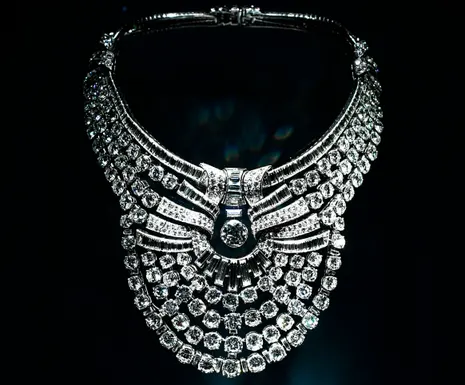
Table of Contents
Vienna Museum Heist Targets Egyptian Royal Necklace Worth Millions
Wanderstayfinder.com – A platinum necklace set with 673 diamonds and weighing 200 carats vanished from a glass case inside the Museum of Applied Arts (MAK) in Vienna on Thursday afternoon, adding the latest chapter to a troubling wave of brazen thefts sweeping European cultural institutions. Two unmasked men walked through the front entrance, purchased exhibition tickets like ordinary visitors, and then struck the display case with a hammer before walking out with the jewel. No visitors or staff were injured, though several witnesses were present in the gallery at the time.
Austrian police released surveillance photographs of the pair and fanned officers across the city centre, deploying a tracking dog in an attempt to locate the suspects. In a public appeal, investigators noted that the men had fled in an unspecified direction with the jewellery still in their possession. The Kronen newspaper reported that detectives suspected the pair were executing a “contract job” commissioned by an organized criminal network, suggesting the theft was planned rather than opportunistic.
The Necklace’s Royal Provenance
The stolen piece carries a storied pedigree. Exhibition documentation identified it as once belonging to Queen Consort Nazli of Egypt, who wore the necklace at the 1939 wedding of her daughter, Princess Fawzia, to Mohammad Reza Pahlavi, then crown prince of Iran and later shah. The marriage was a high-profile diplomatic event of the era, linking two royal houses at a moment of shifting geopolitical alliances in the Middle East.
The necklace later entered the commercial market. In 2015, Sotheby’s in New York sold the piece for $4.3 million, a figure that underscores both its rarity and the financial stakes now at play in Vienna’s investigation.
Exhibition Context and Museum Response
The necklace had been on display since June as part of a jewellery exhibition at the MAK featuring more than 300 works by the French maison Van Cleef & Arpels. According to the museum, the show assembled roughly 200 “unique and rarely seen objects” drawn from its own holdings alongside pieces spanning the 120-year history of the Parisian jewellery house, sourced from the Van Cleef & Arpels patrimonial collection. The exhibition was scheduled to run through 27 September but has been temporarily closed following the robbery. A guided tour that had been listed for Friday afternoon was marked “cancelled” on the museum’s website.
A Pattern Across Europe
The Vienna incident lands amid a string of high-profile museum heists that have rattled curators and security planners across the continent. Last October, thieves broke into the Louvre in Paris during daytime hours and escaped within minutes with crown jewels valued at €88 million. On the same Thursday as the MAK robbery, thieves struck the Treasure of Villena in Spain, a collection of Bronze Age gold artefacts widely regarded as one of Europe’s most significant prehistoric hoards. Earlier this month, four major works by the 15th-century Renaissance painter Antonello da Messina were lifted from a museum in the Sicilian port city of Messina during a national holiday, when staffing and visitor traffic patterns shift.
Italian police also announced the recovery of three paintings by Paul Cézanne, Pierre-Auguste Renoir, and Henri Matisse, which had been taken earlier this year from a private museum near the northern Italian city of Parma. The partial recovery offered a rare note of progress in an otherwise grim tally.
Escalating Violence and Method
A report published this month by Europol found that robberies targeting European museums are growing increasingly violent. Investigators documented cases in which thieves brandished firearms, assaulted museum staff, and used sledgehammers, axes, and even explosives to breach display cases and reach targeted objects. The Vienna hammer strike fits squarely within that pattern: a focused, physically destructive approach aimed at a single high-value item rather than a broad sweep of the gallery.
For institutions like the MAK, the implications extend beyond the immediate loss. Insurance valuations, loan agreements with houses such as Van Cleef & Arpels, and public trust all come under pressure when a piece of royal provenance disappears from a locked case during opening hours. The temporary closure of an exhibition that had drawn collectors and scholars since June compounds the disruption, while the question of whether the necklace will ever re-enter a museum vitrine remains, for now, unanswered.
“The perpetrators fled with the jewellery in an unknown direction.”
Police have not indicated a timeline for resolution and have continued to urge members of the public to contact authorities with any information about the two men or the direction of their escape. The investigation remains active as of the latest available reporting.
Related Reading
Frequently Asked Questions
What is Egyptian queen s 673 diamond necklace?
Egyptian queen s 673 diamond necklace is the main topic of this guide. The article explains the context, practical details, and next steps readers should understand.
Why does Egyptian queen s 673 diamond necklace matter?
Egyptian queen s 673 diamond necklace matters because readers are looking for a useful answer, not just a short summary. Good content should match search intent and help them decide what to do next.