Chris Bowen to Override States on AI Datacentre Rules
Wanderstayfinder.com – Chris Bowen vows to override Queensland and the Northern Territory to implement federal energy standards for artificial intelligence datacentres. The Australian government will exercise its constitutional authority to mandate renewable energy usage for new AI facilities, even as state governments push back against the proposed framework. Energy Minister Bowen confirmed that Commonwealth legislation will require AI datacentres to operate on clean energy sources while limiting reliance on natural gas. This intervention follows strong opposition from Queensland and the Northern Territory during a recent energy ministers’ meeting.
Constitutional Power for Federal Action
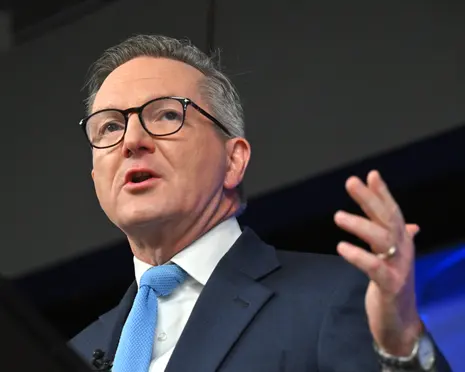
Speaking at the National Press Club, Bowen emphasized that the Constitution provides clear grounds for federal intervention in energy policy. He acknowledged that Queensland and the Northern Territory would likely resist the federal approach, but stressed that the Albanese government remains committed to aligning AI sector growth with renewable energy goals.
“We will legislate as a commonwealth. The constitution is clear about the power of commonwealth legislation. I respectfully disagree with Queensland and the Northern Territory,” Bowen stated.
The federal government’s stance addresses concerns that without uniform national standards, states might engage in a “race to the bottom,” offering relaxed regulations to attract datacentre investment. Such competition could potentially increase household electricity costs, reduce grid reliability, and undermine Australia’s emissions reduction targets.
State Opposition and Technical Requirements
Queensland and the Northern Territory were the only jurisdictions to oppose the federal proposal during last week’s meeting, despite support from all other Australian states and territories. Queensland’s energy representative, David Janetzki, characterized the federal approach as containing “underdeveloped ideas that hand increased power to Canberra.” He further indicated that his state would not mandate investments that prove uneconomic for the broader energy system.
The Northern Territory’s position is particularly significant given its plans to develop a major datacentre facility powered by natural gas extracted from the Beetaloo basin. This basin has been the subject of considerable controversy due to environmental concerns and debates surrounding its development timeline. While Bowen acknowledged that gas has a “role to play” in providing firm power to support datacentre operations, he made clear that facilities relying solely on gas would fail to meet minimum national standards and would be unable to register or proceed with development.
Prime Minister Anthony Albanese previously committed to establishing binding standards for AI datacentres, covering multiple dimensions including geographic location, energy consumption patterns, water usage, and grid contribution. The proposed framework requires new facilities to rely on renewable energy sources, minimize water consumption, maximize energy efficiency, cover their own grid connection expenses, and contribute at least as much energy back to the national grid as they consume.
During a question-and-answer session following his address, Bowen clarified that while the federal government would engage constructively with states, Commonwealth legislation would ultimately take precedence. He outlined that new datacentres would need to demonstrate the origin of their renewable energy, quantify their power offsets, maintain backup power systems, and operate flexibly during peak demand periods to help stabilize grid operations.
The Australian Energy Market Commission has recommended that datacentres provide renewable energy certificates to verify their claims. This requirement aims to prevent grid connection from disrupting the supply-demand equilibrium and driving up wholesale electricity prices for other consumers. AEMC chair Anna Collyer emphasized that datacentre expansion need not burden existing consumers, provided the regulatory framework is properly calibrated from the outset.
Consumer Impact and Infrastructure Challenges
The AEMC has warned that without regulatory adjustments, the costs associated with connecting large datacentres to the electricity grid would be distributed across all consumers rather than being borne by technology companies. This concern is particularly relevant given the scale of anticipated growth. Transgrid, the eastern Australian transmission network operator, has reported an unprecedented surge in connection requests from western Sydney, with approximately 8 gigawatts of capacity preparing to join the grid. This volume represents roughly 40 times the current connection pipeline, highlighting the urgency of establishing clear regulatory frameworks.
Frequently Asked Questions
What is Chris Bowen’s position on AI datacentres? Chris Bowen vows to override state opposition by implementing federal legislation that requires new AI datacentres to operate on renewable energy sources and meet minimum national standards.
Which states oppose the federal energy standards? Queensland and the Northern Territory are the only jurisdictions to oppose the federal proposal, with Queensland’s energy representative criticizing the approach as giving too much power to Canberra.
How will the new rules affect consumers? The AEMC has warned that without proper regulation, grid connection costs for datacentres would be distributed across all consumers. The new framework aims to ensure technology companies bear these costs rather than households.
What happens to gas-powered datacentres? While Bowen acknowledged that gas has a role to play in providing firm power, facilities relying solely on gas would fail to meet minimum national standards and would be unable to register or proceed with development.
When will the legislation take effect? The federal government plans to introduce Commonwealth legislation that will take precedence over state laws, with new datacentres needing to demonstrate renewable energy origins and maintain backup power systems from the outset.