Resilience and Grief: Personal Accounts From Japan’s Recent Tremor
Survivors Share Their Experiences
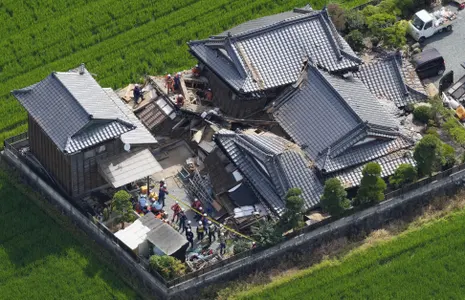
Wanderstayfinder.com – Among the rubble of a completely flattened residence in Hikawa, a volunteer firefighter named Tomohide Nagata heard something remarkable. “There was a voice coming from the collapsed house, and I could see a hand,” he recounted to the Kumamoto Nichinichi Shimbun. “One of our senior members crawled in and pulled him out. He was bleeding from the head, but I’m so glad he survived.” This dramatic rescue occurred in the rural town situated near Tuesday’s epicenter, where the 6.8-magnitude earthquake caused extensive damage to numerous older structures.
Many frightened residents chose to spend the night outside Hikawa’s town hall, sleeping in their vehicles rather than risking aftershocks indoors. Municipal staff worked tirelessly to distribute food and beverages to those displaced by the disaster. The tremor that struck Kyushu island claimed at least thirteen lives and left hundreds more injured.
Historical Echoes of 2016
The timing of this earthquake carries particular significance for Kumamoto residents. In April, the prefecture marked the tenth anniversary of the devastating 2016 earthquake that killed more than 275 people and caused widespread destruction. That earlier disaster began with a 6.2-magnitude foreshock, followed two days later by the catastrophic 7.0-magnitude main event. This pattern will undoubtedly weigh heavily on tens of thousands of people throughout the coming week.
Suemi Nagata, seventy-nine years old, experienced the recent shaking firsthand. Unable to escape Hikawa by car because her garage had been destroyed, she made her way to the town hall with her husband and older sister. “The lateral shaking was worse than the Kumamoto earthquake 10 years ago, and it was terrifying,” she told the town’s local newspaper. “Just to have survived with my life is something to be grateful for.”
Heat and Uncertainty
For elderly couples like Iwaoka Shigemi, seventy-nine, and his wife Michiyo, seventy-seven, the immediate danger of aftershocks gave way to concerns about rising temperatures. According to the Mainichi Shimbun, the couple had escaped their home and spent the night sleeping in their car. With temperatures expected to reach 35C on Wednesday, they worried about the risk of heatstroke.
Prime Minister Sanae Takaichi addressed the nation on Wednesday, emphasizing the urgency of rescue operations. “There are people who are still waiting to be rescued, and it’s a race against time,” she declared. “We will go all out to find and rescue as many people as we can.”
Tragedy at the Shopping Mall
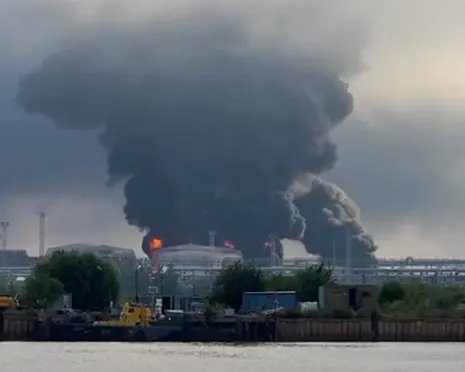
At the Kumamoto Aeon mall, which suffered severe damage from what is believed to have been a gas explosion triggered by the earthquake, several employees had returned inside after evacuating customers and were caught in the blast. Up to thirty employees were initially reported trapped inside, with four remaining missing.
A sixteen-year-old girl who escaped with other shoppers moments before the explosion told the Asahi Shimbun she “felt completely safe once she was outside,” only to be left struggling to breathe by dust and smoke. A seventy-four-year-old man who frequently shopped at the mall told the Nikkei newspaper that he had just learned an acquaintance who worked there was hurt. “I could have been caught up in it myself,” he said.
Heartbreaking Rescue Attempts
In nearby Uki City, which experienced shaking ranked at the maximum 7 on the Japanese shindo scale, residents shared stories of both fortunate escapes and unsuccessful rescue efforts. In the Asakawa district, neighbors discovered one house completely flattened, with roof tiles scattered across the ground where it had once stood.
As family members watched, volunteer firefighters attempted to rescue an elderly man trapped inside. “The man is a childhood friend of mine,” the visibly shaken seventy-year-old head of the local district told the Kumamoto newspaper. “We tried to pull him out, but the aftershocks came one after another, so we had no choice but to give up.”
A woman in her forties had managed to reach an evacuation shelter with three generations of her family after positioning herself between falling furniture and her children. “I was pinned under a chest of drawers at home. I protected my children and then hurried to evacuate,” she told the Kumamoto Nichinichi Shimbun from Toyono elementary school, which served as an evacuation shelter after the ceiling of the local disaster facility collapsed.
Adapting to New Circumstances
In Yatsushiro, south of Hikawa, one man’s life may have been saved by his work schedule when his workplace, a single-storey wooden structure, collapsed. “It was a day off and I wasn’t at work, so I escaped with my life,” said the self-employed sixty-three-year-old, who spent the night in a tent pitched in his garden. “Though I have no idea what I’ll do starting tomorrow.”
As in Hikawa, many Uki residents slept in their cars while local government workers handed out water and food. Unable to use the damaged disaster facility, the city established a makeshift response headquarters in a car park, demonstrating the community’s determination to support one another through this challenging time.
Related Reading
Frequently Asked Questions
What is The shaking was terrifying?
The shaking was terrifying is the main topic of this guide. The article explains the context, practical details, and next steps readers should understand.
Why does The shaking was terrifying matter?
The shaking was terrifying matters because readers are looking for a useful answer, not just a short summary. Good content should match search intent and help them decide what to do next.