LA Firefighters Tackle Persistent Warehouse Fire Amid Growing Health Concerns
Wanderstayfinder.com – Residents in parts of Los Angeles continue to grapple with thick smoke and lingering dangers as a warehouse fire enters its fifth day. The blaze, which originated in Boyle Heights, has forced authorities to declare a state of emergency, signaling the severity of the situation. Governor Gavin Newsom has directed state resources to support local efforts, emphasizing the need for coordinated action and preparedness. “We are deploying specialized teams and stockpiling essential supplies to ensure communities have the tools they need for immediate response and long-term recovery,” Newsom stated, highlighting the state’s commitment to mitigating the crisis.
Fire Emerges in Cold Storage Facility
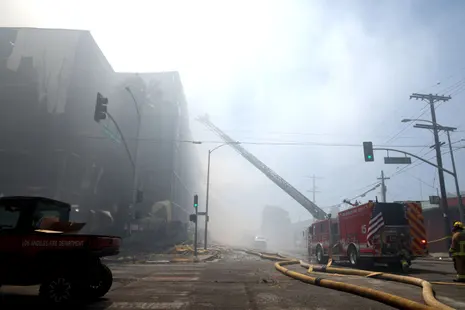
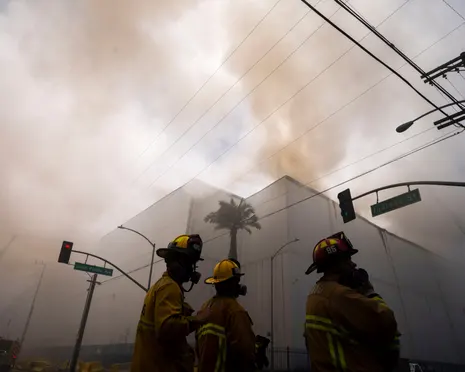
The fire began on Wednesday when a 500,000-square-foot cold storage warehouse in Boyle Heights caught fire. Initial efforts by firefighters quickly subdued the flames, but the threat within the structure has persisted. According to the Los Angeles Fire Department, the blaze has been contained to one side of the massive building, though crews remain on high alert as the fire continues to burn. Smoke has spread beyond the immediate area, carried by winds into other parts of the county, creating a haze that has affected visibility and air quality in the city.
Residents’ Fears and Business Disruptions
While no formal evacuation orders have been issued, concerns about the fire’s impact on public health have grown. Local businesses, including cafes and shops, report disruptions due to the smoke. Leo Miguel, a manager at Yia Caffe, described the situation to the Los Angeles Times, stating that the air smells “like chemicals and plastic” and that conditions appear to be worsening. “I don’t think it’s getting better,” Miguel said, underscoring the anxiety among residents.
“This emergency declaration is crucial because Boyle Heights is not just responding to a fire. Residents have lived through days of smoke, shelter-in-place orders, disruptions to daily life, and ongoing questions about what this means for their health and wellbeing.”
Councilmember Ysabel Jurado, representing Boyle Heights, echoed these worries. She noted that the area’s residents face more than just the immediate threat of flames. “The smoke has been a constant presence, and people are starting to ask how long this will last,” Jurado said. The situation has also raised alarms about the potential for toxic fumes, particularly after an ammonia line ruptured during early firefighting operations. Ammonia, a common refrigerant, is both flammable and capable of releasing harmful gases, adding complexity to the emergency response.
Smoke Reliefs and Community Efforts
In response to the ongoing haze, Los Angeles city and county officials have set up smoke relief centers to assist affected residents. These centers aim to provide clean air and support for families struggling with respiratory issues. Mayor Karen Bass, who previously issued an emergency declaration, reiterated the city’s focus on containing the fire and protecting public health. “We are working around the clock to extinguish the flames completely and ensure the safety of all residents,” Bass said.
Firefighters have adapted their tactics, retreating to safer distances and relying on helicopter air drops to suppress the blaze. Inside the warehouse, foam continues to burn slowly, complicating efforts to fully extinguish the fire. Meanwhile, community groups have mobilized to support local residents. Centro CSO, a grassroots organization in Boyle Heights, shared images of a mask distribution drive on social media, offering respiratory protection to those most vulnerable to the smog.
Health Risks and Evacuations
Residents with pre-existing health conditions have taken proactive steps, with some leaving the area altogether. Ashley Campos, 18, recounted how her family evacuated after detecting fumes in their home, located just two blocks from the fire. “We could smell the smoke before it started affecting our lungs,” Campos said. The family’s decision came as the air quality index (AQI) in the region remained in the moderate range, though the persistent haze has raised fears about prolonged exposure.
The fire’s impact extends beyond immediate safety concerns. Officials warn that once the flames are out, they will face the daunting task of removing approximately 85 million pounds of rotted food from the warehouse. This process will involve addressing biohazard risks from spoiled items such as bread, poultry, pork, and beef. “The challenge now is not just about extinguishing the fire, but also about ensuring the area is safe for rebuilding,” said a spokesperson for the city’s environmental agency.
Impact on Iconic Landmarks
Even iconic landmarks like Dodger Stadium have not been spared. A video posted to X (formerly Twitter) showed the stadium shrouded in a thick, acrid haze, with fans and players affected by the poor air quality. Ben Bolch, a reporter for the California Post, described the scene as “a nasty blanket of smoke covering the field, making it hard to imagine sitting in a stadium or even playing a game under these conditions.” The fire’s reach has underscored the broader environmental and health implications, prompting calls for long-term solutions to prevent similar crises.
Collaboration and Challenges Ahead
Newsom’s declaration of a state of emergency follows the mayor’s earlier initiative, reflecting a unified effort to tackle the disaster. State agencies are expected to provide additional support, including equipment and personnel, to aid in the containment and cleanup. However, the situation remains volatile, with the fire’s unpredictable nature posing ongoing challenges. “We’ve confined the blaze to one side, but the building’s structure is still unstable,” said a fire department update, emphasizing the need for continued vigilance.
As the situation unfolds, residents and officials remain focused on managing the immediate dangers while preparing for the long-term effects. The smoke relief centers, combined with community efforts, aim to provide a lifeline to those affected. Yet, the road to recovery will require sustained action and collaboration between local, state, and federal agencies. For now, the city braces for the next phase of the crisis, with the hope that the fire will finally subside and the air will clear, allowing life to return to normal in Boyle Heights.
The incident has also sparked discussions about emergency preparedness and infrastructure resilience. Experts are analyzing the role of aging buildings and industrial facilities in exacerbating such events, suggesting that future planning must account for these risks. While the immediate danger has not passed, the combined efforts of firefighters, officials, and the community offer a glimmer of hope in the face of adversity. The focus remains on containing the fire, safeguarding public health, and restoring the neighborhood to its former state.