Ukrainian Drones Target Tyumen Refinery in Russia, Over 2,000 km from Border, Announces Zelenskyy
Wanderstayfinder.com – President Volodymyr Zelenskyy revealed that Ukrainian aerial systems had hit a critical infrastructure site in Russia’s Tyumen region, located more than 2,000 kilometers from Ukraine’s borders. The attack, which struck an oil refining complex in western Siberia, marks a significant escalation in the conflict, as the Ukrainian military showcased its ability to project power deep into enemy territory. Zelenskyy highlighted the success of the operation in a televised address, crediting the development of advanced long-range drones by the Ukrainian defense firm Fire Point.
Long-Range Drones: A New Dimension in Warfare
Zelenskyy praised the capabilities of Fire Point’s drones, which can traverse distances exceeding 3,000 kilometers. He emphasized that these systems had been “successfully deployed” in operations targeting Russian assets, with the Tyumen refinery being a notable example. The president’s remarks underscored the strategic shift in Ukraine’s military strategy, focusing on long-distance strikes to disrupt supply lines and energy infrastructure in occupied regions.
“Today, our forces have reached Tyumen Region in Russia, including an oil refining facility. More than 2,000 km from our state border. This is effective work,” Zelenskyy stated in his nightly address, expressing confidence in the technological advancements of Ukrainian defense capabilities.
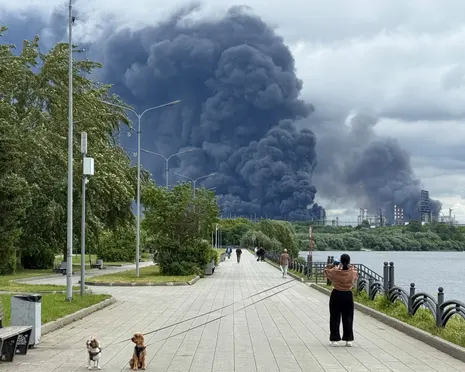
Unconfirmed footage circulating online depicted smoke and flames rising above the Antipinsky refinery, a key facility in Tyumen. While the images provided visual evidence of the attack, they were not officially verified by Ukrainian authorities. The Tyumen governor, Alexander Moor, described the incident as a “fallen [drone] debris” event, a common Russian tactic to minimize the perceived impact of Ukrainian strikes.
Crimea: A Broader Offensive Unfolds
Separately, Ukrainian forces launched a series of attacks in Crimea, with one strike targeting the Kerch seaport. According to Ukrainian media, the assault on the oil terminal there occurred during the early hours of Saturday. Satellite imagery from NASA confirmed a fire at the site, suggesting the operation disrupted critical energy supplies in the Black Sea region.
Reports indicated that the attacks extended beyond Kerch, with an electrical substation in Bilohorsk also reportedly ablaze. Similar strikes were observed in Yevpatoria and Sevastopol, Ukraine’s main city in Crimea. These coordinated assaults highlighted the ongoing efforts to weaken Russian control over the peninsula, which has been occupied since 2014.
Eastern Ukraine: Russian Attacks Claim Lives
In the eastern regions of Dnipropetrovsk and Poltava, Russian strikes caused casualties among civilians and military personnel. Oleksandr Ganzha, head of the Dnipropetrovsk regional military administration, confirmed that a drone attack in Nikopol resulted in the death of a 70-year-old woman and injured others. Meanwhile, Vitali Dyakivnych from Poltava reported that a missile strike on Saturday evening killed two individuals and wounded 13, including six children.
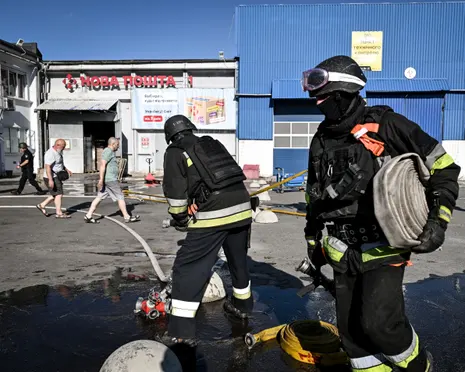
The attacks in Dnipropetrovsk and Poltava followed a wave of Russian bombings in Zaporizhzhia, where Ivan Fedorov, the regional governor, described the destruction as severe. Fedorov stated that nine strikes had targeted the city, leaving residents at risk of being trapped in collapsed structures. The strikes, which included glide bombs, killed five people and injured 10, raising concerns about the ongoing civilian toll in the region.
Sumy and Kherson: Additional Strikes in the South
Near the Russian border, a bomb attack on the outskirts of Sumy claimed the life of one civilian. Local officials noted the incident as part of a pattern of violence in the region, with the city serving as a strategic point for Ukrainian military movements. In the southern Kherson area, a drone strike targeted a village north of the regional capital, resulting in one fatality. Oleksandr Prokudin, Kherson’s regional governor, confirmed the attack, which struck an apartment building in Kharkiv, Ukraine’s second-largest city.
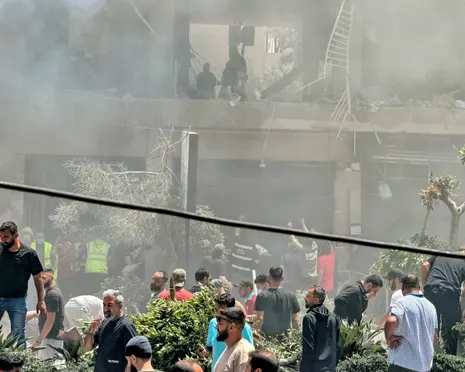
The Kharkiv strike, occurring during Saturday’s operations, left at least one person dead and nine others injured, including a young child. Authorities described the attack as a direct hit on residential structures, underscoring the dual nature of the conflict—targeting both military and civilian infrastructure. The incident in Kharkiv added to the growing list of casualties attributed to Russian bombings, as the war continues to impact urban centers across the country.
Strategic Implications and Military Response
Zelenskyy’s announcement of the Tyumen strike signals a broader campaign to target Russian energy and logistics hubs, which are vital to sustaining the war effort. By using drones capable of traveling vast distances, Ukraine is demonstrating its ability to strike with precision, even in regions far from its frontlines. This development has forced Russia to adapt its defenses, with officials like Moor attempting to downplay the effectiveness of Ukrainian operations by framing them as isolated incidents.
Despite the challenges, Ukrainian forces remain committed to expanding their reach. The recent strikes in Crimea and eastern Ukraine reflect a coordinated strategy to weaken Russian positions and disrupt supply chains. As the conflict enters its third year, the ability to conduct long-range attacks is increasingly critical, allowing Ukraine to apply pressure across multiple fronts without requiring large-scale troop movements.
The broader implications of these strikes extend beyond immediate casualties. Targeting oil refineries like Tyumen and energy terminals in Crimea could have long-term economic effects, reducing Russia’s capacity to fuel its military operations. At the same time, the attacks highlight the growing sophistication of Ukrainian military technology, which is now capable of striking deep into Russian territory with minimal risk to frontline forces.
Global Attention and War Impact
As the war intensifies, international observers are closely monitoring the evolving tactics of both sides. The Tyumen strike, in particular, has drawn attention to Ukraine’s technological advancements and the potential for a new phase of aerial warfare. While the exact scale of damage remains unclear, the incident underscores the changing dynamics of the conflict, where drones and precision strikes play a pivotal role in shaping the battlefield.
For residents in affected areas, the war continues to disrupt daily life, with attacks targeting both industrial and residential sites. The combined toll of casualties in Dnipropetrovsk, Poltava, Zaporizhzhia, and Kharkiv highlights the human cost of the conflict. Meanwhile, the success of Ukrainian drones in reaching Tyumen suggests that the war is no longer confined to Ukraine’s borders, as the conflict expands into new regions and challenges the Russian military’s logistical capabilities.
With each passing day, the war in Ukraine grows more complex, blending conventional warfare with technological innovation. The recent strikes illustrate the resilience of Ukrainian forces and their ability to strike with accuracy, even in the face of overwhelming Russian firepower. As the conflict enters a new phase, the focus on long-range attacks and strategic targets will likely continue, reshaping the landscape of modern warfare in Europe.