Could ‘King in the North’ Become Britain’s New Prime Minister?
Burnham’s Political Journey and the Rise of a Regional Champion
Wanderstayfinder.com – Andy Burnham, the Labour politician known for his robust advocacy of the north of England, has long been a figure of intrigue in British politics. With a career spanning over two decades, he has navigated the corridors of Westminster and the streets of Manchester, building a reputation as a dynamic leader. His latest move, however, has sparked fresh speculation about his potential to ascend to the nation’s highest office. The recent byelection in Makerfield, a post-industrial constituency in northwest England, has delivered a decisive victory for Burnham, potentially paving the way for his return to the national stage.
The result, which saw Burnham secure 55% of the votes, has been hailed as a significant shift in the political landscape. Reform UK, a rightwing party that gained traction following the 2024 general election, managed to win 35%, but it was Burnham’s commanding lead that reshaped the narrative. This triumph, which nearly doubled the majority of his predecessor, has positioned him as a formidable contender for the Labour leadership and, by extension, the prime ministership. The outcome underscores a growing sentiment among northern voters that their interests have been sidelined for too long, and Burnham has become the face of that movement.
A Rebirth in the Shadows of Westminster
For years, Burnham’s political career was defined by his tenure in Parliament, where he rose through the ranks of the Labour Party. His early years as a junior minister under Tony Blair’s New Labour government were followed by a cabinet role under Gordon Brown, where he oversaw both culture and health portfolios. Yet, his path took a dramatic turn in 2016 when he stepped down from Westminster to become mayor of Greater Manchester. This decision, driven by a desire to reconnect with the people of his region, marked the beginning of a new chapter in his political life.
As mayor, Burnham cultivated a distinct identity, earning the nickname “king of the north” for his unwavering support of the area’s economic and social challenges. His grassroots campaign highlighted the frustrations of communities like Ashton-in-Makerfield, where former coalmining villages now grapple with declining opportunities. This local focus has translated into national resonance, with his image as a reformer and outsider resonating strongly with voters disillusioned by traditional politics. The Makerfield byelection, in many ways, has served as a referendum on this vision.
The Power of a Personal Connection
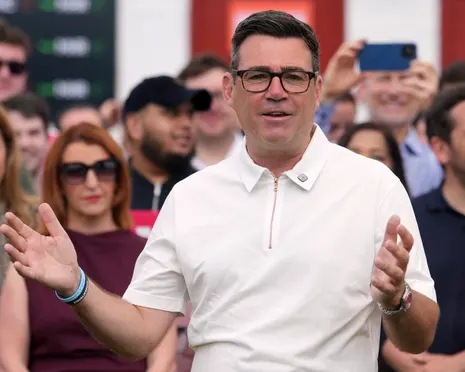
Burnham’s campaign strategy relied heavily on personal engagement, a tactic that proved pivotal in the race. Unlike conventional political messaging, his approach emphasized direct interaction with constituents, often appearing in folksy video clips that showcased his relatability. These clips, filmed with handheld cameras, underscored his commitment to the north and his belief that Westminster had failed to represent the working-class heartlands of the UK. This emotional appeal, combined with his experience in governance, has made him a compelling figure in the eyes of many voters.
“This is a final chance to change,” Burnham declared in his victory speech. “This is what people said directly to me on the hundreds of doorsteps that I stood on. We must hear it, we must act upon it and we must get it right. There will be no second chance.”
The byelection’s significance extends beyond its immediate result. For Burnham, it was a long-awaited opportunity to reenter the national spotlight and challenge the current Labour leadership. His ambitions, which had been tempered by previous setbacks, now appear within reach. In 2010, after Labour’s defeat, he briefly considered a leadership bid but finished fourth. Again in 2015, he lost to Jeremy Corbyn, a veteran leftwinger. However, his departure from Westminster allowed him to rebuild his image as a champion of the people, a narrative that has gained momentum in recent months.
A Symbol of Industrial Heritage
Burnham’s attire during the campaign—casual yet polished, with a dark suit and black T-shirt—was deliberate. He wore a pin badge featuring the worker bee, a symbol deeply rooted in the industrial history of Manchester and the north. This emblem, representing both his roots and his political mission, reinforced his connection to the working-class communities he has long advocated for. The worker bee, once a totem of labor and resilience, now stands as a metaphor for his aspirations to revitalize the northern regions and restore their influence in national politics.
His return to Parliament has not only reinvigorated his career but also reignited debates about the future of Labour. With a majority of 55%, Burnham’s victory signals a shift in voter priorities, favoring leaders who can bridge the gap between central government and local concerns. This result has created a sense of urgency, as he now stands at the threshold of a potential leadership race. The challenge will be formidable, with Keir Starmer, the current Labour leader, having already established himself as a key figure in the party’s direction.
FromJunior Minister to Regional Leader
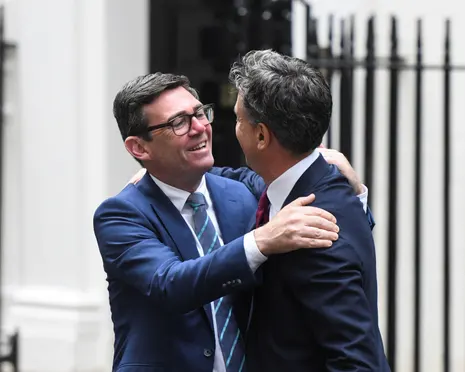
Burnham’s political evolution is a story of reinvention. After serving as a junior minister in the Blair government, he transitioned into cabinet roles under Gordon Brown, gaining experience in diverse policy areas. Yet, his move to the mayorship of Greater Manchester in 2016 marked a deliberate shift toward a more localized, community-focused approach. Steve Rotheram, his close political ally and mayor of the Liverpool city region, noted that the role allowed Burnham to reconnect with the grassroots, a strategy that has paid dividends in the recent election.
While his time away from Westminster may have seemed like a detour, it has instead positioned him as a vital player in the Labour Party’s future. With over a year of political maneuvering, Burnham has emerged as a candidate who balances experience with a fresh perspective. His ability to articulate the needs of the north while appealing to a broader electorate has set him apart. This blend of local insight and national vision has made him a credible contender for the prime ministership, particularly in a political climate where public discontent with the status quo is growing.
Burnham’s win in Makerfield has also highlighted the changing dynamics of British politics. The byelection, billed as a tight race between Labour and Reform UK, became a referendum on the importance of regional representation. His success suggests that voters are increasingly looking for leaders who can address the concerns of underrepresented areas, a theme that resonates across the UK. As Burnham prepares for the next phase of his career, the question remains: can this charismatic figure, once dismissed as an outsider, become the next prime minister of Britain?
The path to power, however, will not be without obstacles. Burnham’s journey from a junior minister to a potential leader of the Labour Party has been marked by both triumph and setbacks. His ability to adapt, whether by embracing social media or focusing on local issues, has been key to his resurgence. The Makerfield result, while a significant milestone, is just the first step in a broader campaign to challenge the current leadership and reshape the political landscape. For now, the northern regions have spoken, and their choice may soon influence the nation’s direction.