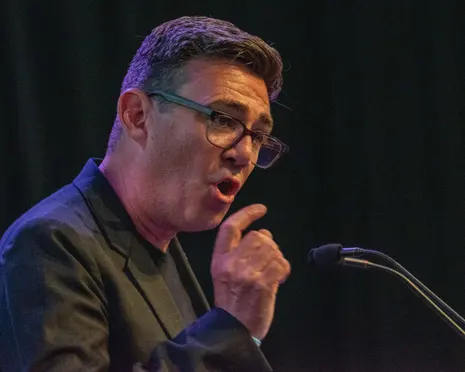
What Would ‘Change’ Look Like if Andy Burnham Becomes Prime Minister?
Wanderstayfinder.com – The recent win by Andy Burnham in Makerfield has sparked a contest for the leadership of Downing Street. His allies are pushing for a swift transition to the top job, while those aligned with Keir Starmer advocate for a prolonged campaign. If Burnham secures the role, his administration will face the challenge of fulfilling the “change” he promised after his Thursday night victory. The question remains: how will this transformation manifest, and what policies might his government prioritize?
Public Sector Takeover: Energy and Water in Focus
Burnham’s supporters envision a 10-year initiative to transition significant portions of Britain’s water and energy sectors into public ownership. However, the immediate steps may begin with Thames Water, a utility currently embroiled in financial turmoil. Earlier this week, Environment Secretary Emma Reynolds voiced her resistance to a £10bn rescue plan, signaling the possibility of nationalization. This could set a precedent, with companies like South East Water potentially following suit due to repeated service failures. The long-term goal, though, includes energy transmission and supply firms, such as National Grid, which could be brought under state control. Yet, this process may require substantial compensation for investors, raising concerns about financial implications.
Burnham’s allies emphasize the need to address the cost of living for constituents, a priority they believe will resonate with voters. They propose bold state interventions, including a temporary rent freeze and shifting levies from energy bills to general taxation. However, these measures could necessitate tax hikes, conflicting with Burnham’s earlier pledges to avoid raising income tax, national insurance, or VAT. During his byelection campaign, he even suggested cutting some employers’ national insurance contributions and reducing business rates for pubs. This leaves limited room for alternative revenue sources, though capital gains tax increases, as proposed by Wes Streeting, could become a viable option.
Reforming the Whipping System: Autonomy for MPs
One of Burnham’s most transformative potential moves could be a reevaluation of the Westminster whipping system. The current framework ensures MPs vote along party lines, but Burnham has hinted at dismantling it to allow more flexibility. Scrapping the system entirely might create uncertainty, as the government could struggle to pass key legislation without consistent party alignment. Voters, too, may find it harder to understand the implications of their choices if MPs diverge from party directives. However, Burnham might adopt a more measured approach, modifying the whipping system without eliminating it. This could enable more votes of conscience while reducing the rigidity of “three-line whips,” which mandate attendance and voting behavior.
Burnham has long argued for ending the first-past-the-post (FPTP) system, which he claims centralizes power in London. His experience as Greater Manchester mayor in 2017, under a transferable-vote system, reinforced his belief that FPTP undermines regional representation. “It made every vote count,” he remarked in an interview last month, highlighting the importance of proportional representation. While his allies are eager to implement sweeping reforms, Burnham has not yet specified his preferred alternative. A fully proportional system could reshape political dynamics, but it may also weaken the accountability of individual constituencies.
Potential Shifts in Governance: A New Political Landscape
Burnham’s leadership could mark a significant realignment of power, with regional leaders gaining greater influence. His campaign rhetoric, which emphasized empowering the north and regions neglected by Westminster, suggests a broader ambition to decentralize authority. Starmer’s government has already initiated steps in this direction, such as allocating business rate revenues to mayors. Burnham’s allies, however, may push further, advocating for mayors to oversee major public services like schools and hospitals. This would require a redefinition of local governance, potentially blurring the lines between national and regional responsibilities.
Another key policy area involves reducing the constraints on MPs during media appearances. Burnham plans to decrease the number of briefing notes provided before public statements, encouraging ministers to express personal views rather than rigid party positions. While this approach could foster a more dynamic political discourse, it might also lead to inconsistencies in messaging. Voters accustomed to predictable government communication may need time to adapt to a system where disagreements are openly aired. Nevertheless, this could create a more transparent and engaging political environment.
Policy Priorities and Challenges: Balancing Ambition and Reality
Burnham’s vision for change is likely to center on addressing systemic issues in public services and economic management. His focus on nationalizing struggling utilities like Thames Water reflects a desire to stabilize essential sectors through state intervention. Yet, the transition may not be immediate, as financial negotiations and political pushback will shape the process. Similarly, his proposals to ease the cost of living could face hurdles if they require tax increases or public spending adjustments. The challenge will be to balance these initiatives without alienating key voter demographics or straining the budget.
While Burnham’s allies are optimistic about his leadership, there are risks associated with his agenda. The whipping system overhaul, for instance, could lead to internal party conflicts if MPs prioritize personal convictions over collective goals. Additionally, the shift toward proportional representation may face opposition from traditionalists who favor the FPTP system. Despite these challenges, Burnham’s track record as a mayor demonstrates his commitment to reform, and his ability to navigate these complexities will determine the success of his premiership.
As the political landscape shifts, Burnham’s leadership could redefine the role of the prime minister. His emphasis on regional empowerment and public ownership aligns with a broader movement toward decentralization. Yet, the path to implementing these changes will depend on his capacity to manage party dynamics, financial constraints, and public expectations. Whether his vision of “change” translates into tangible policy reforms remains to be seen, but his candidacy has already ignited a debate about the future of British governance.
“People here have voted for change, they have voted for more power for the north and everywhere forgotten by Westminster. Now let’s give that back to them.”
Burnham’s statement captures the essence of his campaign, which seeks to address regional disparities and restore public trust. His victory in Makerfield is not just a personal triumph but a symbolic shift in political power. As he moves closer to the prime ministerial role, the nation will watch to see how his leadership reshapes policy priorities and governance structures. The coming months will be critical in determining whether his promises translate into a new era of political transformation.