Sydney’s ‘Unbuildable Motorway’ to Be Completed After Two-Year Delay Caused by Sinkholes
Government and contractors reach agreement to resolve financial dispute
Wanderstayfinder.com – After two years of delays caused by unexpected sinkholes, the M6 motorway project in Sydney is set to restart. The state government and the private consortium overseeing the construction have agreed to a resolution that will allow tunnelling to continue, marking the end of a prolonged stalemate. This decision comes as the project, which has long been labeled a potential “unbuildable motorway,” faces its final phase of work. Despite the agreement, motorists remain in for a wait, as the M6 is now projected to be completed by 2028, according to the latest timeline.
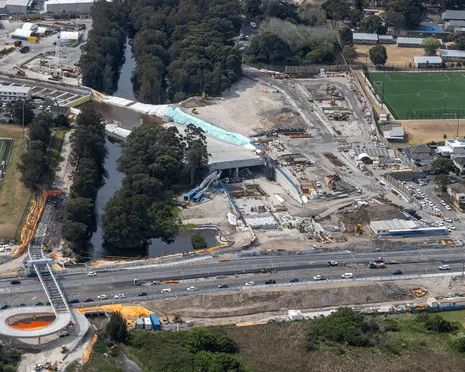
The M6 project, valued at $3.1 billion, is designed to connect Sydney’s south with the broader road network through twin 4km tunnels. Initially approved in 2019 under the Coalition government, the project was originally expected to open in 2024. However, its completion date was pushed back to 2025, and now the timeline has been extended further. The delay has sparked frustration among residents and officials, who argue that the project’s complexities have been underestimated.
The crisis began in March 2024 when two significant sinkholes appeared above the tunnel alignment in Rockdale. These sinkholes, located beneath an industrial estate, disrupted construction and forced a temporary halt. The discovery of a “high-angle reverse fault” in the bedrock—where rock layers shifted upward—added to the challenges, prompting the consortium to suspend underground works in June 2025. The fault was identified as a critical geological issue that could compromise the stability of the tunnels.
The breakthrough in Friday’s agreement settled the two-year dispute between the New South Wales government and the CPB Contractors-led consortium, known as CGU. The deal ensures that the consortium will absorb the additional costs of finishing the tunnels, protecting taxpayers from financial strain. Camilla Drover, CEO of NSW Motorways, confirmed that the consortium has committed to completing the remaining 250 metres of excavation under the existing contract. “CGU will resume work on the project immediately, and we will provide an updated timeline for expected completion once we have it,” she stated.
“Our priority has always been to complete this project under the existing contract,” said Jenny Aitchison, the NSW roads minister. “Unlike the Liberals, we will not hand out blank cheques when contractors try to take NSW taxpayers for a ride.”
The agreement also includes a key provision: CGU will not pursue contractual claims against the state for costs tied to the 2024 sinkholes. This decision was reportedly made after the government explored abandoning the project during the standoff. Josh Murray, the Transport for NSW secretary, emphasized that the consortium is now responsible for addressing the “subsidence issue that originally paused the contract.” “While there has been a regrettable delay, the contract for the M6 Stage 1 has clear dispute resolution processes and these will be used,” he said in a statement.
Contractors will employ an engineering method known as “jet grouting” to complete the remaining work. This technique involves injecting high-speed fluid into the soil to erode and stabilize it, creating a composite material that can support the tunnel’s structure. Grahame Campbell, an engineer who previously oversaw the successful completion of the M4 motorway ahead of schedule, praised the resolution but noted that the delay could have been avoided. “It’s good to read that they have finally decided to sort out the contract after this protracted delay,” Campbell remarked.
“[Jet grouting] is used to solidify the rock so it can be drilled and tunnelled,” Campbell added. “However, the two-year pause highlights a systemic failure by governments to conduct necessary preliminary geological work before signing major infrastructure contracts.”
The project’s complications have drawn criticism from industry experts, who argue that insufficient geological surveys contributed to the setbacks. Campbell, who authored a research paper for the Centre for Independent Studies on “bungles” that drive up project timelines and costs across Australia, pointed to the lack of thorough pre-construction analysis. “They should have done more investigation into the geology under the road system,” he said on Friday. “That’s the main reason it went over budget. Disputes are common because the government doesn’t do the preliminary work necessary to fully define the terms of the contracts.”
The M6 project, a flagship infrastructure initiative, aims to alleviate traffic congestion and improve connectivity between Sydney’s southern suburbs and the city’s main arterial roads. Its twin tunnels would create a direct link between Kogarah and Arncliffe, bypassing existing bottlenecks. However, the delay has raised questions about the project’s feasibility and the government’s oversight. While the agreement ensures that tunnelling will resume, the extended timeline underscores the challenges of managing large-scale engineering ventures in complex geological conditions.
CPB Contractors, a key player in the consortium, was contacted for comment. Terry Sleiman, the executive project director, told the Sydney Morning Herald that the agreement offers the “opportunity to continue tunnelling works.” The consortium’s commitment to resolving the issue has been welcomed by officials, who now see the project moving forward without further financial complications. Nonetheless, the delay has left some stakeholders questioning whether the government will learn from the mistakes that led to this crisis.
As the M6 project resumes, attention will turn to the remaining tasks. The 250 metres of excavation needed to finish the main tunnel will be a test of the consortium’s ability to adapt to the challenges posed by the sinkholes. The use of jet grouting, while effective, may also introduce new complexities. For now, the government and contractors have agreed on a path forward, with the hope that the tunnels will be completed by the end of 2028. However, the incident serves as a reminder of the risks involved in large-scale infrastructure projects and the importance of meticulous planning.
Public sentiment remains mixed. While some residents appreciate the government’s decision to keep the project alive, others are concerned about the prolonged delays and increased costs. The agreement may prevent further taxpayer burden, but it also highlights the need for better risk management in future projects. As the consortium prepares to resume work, the M6’s completion will be closely watched as a case study in infrastructure resilience and adaptability.
The M6’s journey from being called “unbuildable” to its eventual completion reflects the evolving nature of urban development. With the current agreement, the project’s fate has been secured, but the lessons learned from this delay will be critical in shaping the approach to future infrastructure initiatives. The success of the final phase will depend on the consortium’s ability to execute the remaining work efficiently, while the government continues to support the endeavor without additional financial strain.