Sierra Leone’s First Lady Faces FGM Controversy
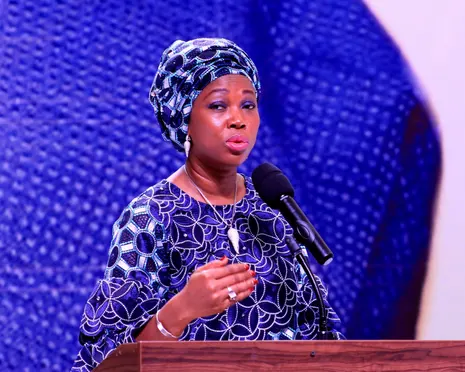
Wanderstayfinder.com – Sierra Leone’s First Lady, Fatima Maada Bio, has ignited debate by delaying her public condemnation of female genital mutilation (FGM) until “reliable data” on its health risks is available. Her stance, which has sparked controversy, highlights a growing tension between traditional practices and modern advocacy in the West African nation. Bio, who is married to President Julius Maada Bio, recently clarified her position in a statement to *The Guardian*, stating that her comments were not an endorsement of FGM but an effort to promote informed dialogue. Critics, however, argue that her hesitation risks weakening efforts to combat the practice, which remains deeply rooted in Sierra Leone’s cultural fabric.
International Pressure and Domestic Concerns
A coalition of activists, medical experts, and former government officials has pressed Oaflad, the Organisation of African First Ladies for Development, to address Bio’s remarks. The group, led by Amy Smythe, a former Sierra Leone gender and children’s affairs minister, and Isha Dyfan, a UN specialist, warned that her position could create confusion about the First Lady’s commitment to women’s rights. “Without clear leadership, the message to girls and women becomes ambiguous,” said one signatory, emphasizing that her words might inadvertently signal support for FGM. This debate underscores the critical role of high-profile figures in shaping public opinion on gender-based practices.
FGM Prevalence and Cultural Context
FGM is a widespread tradition in Sierra Leone, with historical data showing that 90% of women were subjected to the practice in 2013, according to a national survey. By 2019, this rate had slightly declined to 83%, but 71% of girls still underwent the procedure before age 15. The ritual, often performed by sowei women in Bondo and Sande societies, is typically justified as a cultural necessity. Despite its deep social roots, FGM is associated with severe physical and psychological consequences, including infertility, chronic pain, and complications during childbirth. Bio’s insistence on data before taking a firm stand reflects her cautious approach to policy-making.
While Sierra Leone has yet to criminalize FGM, international organizations like the UN have condemned it as a human rights violation. In 2012, the UN General Assembly called for a global ban, but the country has not fully integrated this into national law. Bio’s position has drawn sharp reactions from advocates, who argue that data alone cannot justify inaction when the practice causes irreversible harm. “Requiring proof before action delays progress,” said a prominent activist, “and leaves girls vulnerable to lifelong suffering.”
Public Reactions and Personal Accountability
Statements from Bio have become a focal point of public discourse, with some accusing her of undermining her own advocacy work. A viral clip of her addressing FGM practitioners—where she said, “Don’t be afraid of anything… I stand with you”—has been widely shared, prompting accusations of tacit approval. “It’s a slap in the face for survivors,” remarked Ranya Kargbo, a UN representative and FGM survivor, “when a leader’s words seem to validate the pain we’ve endured.” Meanwhile, Bio defends her remarks, stating they were meant to foster understanding rather than endorsement. She insists her comments do not support FGM but aim to bridge the gap between tradition and modernity.
Her defense has been met with mixed responses. Some supporters praise her for prioritizing evidence-based decision-making, while others argue that her words have confused public sentiment. The First Lady’s stance also raises questions about her advocacy for women’s rights, particularly in a country where FGM persists despite its well-documented harms. As the debate continues, her position remains a key point of discussion in both national and international forums, reflecting the complex interplay between cultural heritage and human rights progress.
Forging a New Narrative
Sierra Leone’s First Lady has been challenged to reconcile her advocacy with her reluctance to label FGM as harmful without empirical support. While her comments have been seen as a step back by some, others view them as a strategic move to encourage broader consensus. “We need to build trust with communities,” she said in a recent interview. “If we condemn FGM without understanding its cultural significance, we risk alienating those who need support the most.” This perspective has led to calls for a more inclusive dialogue, where data and tradition are both considered in the fight for gender equality.
As the discussion evolves, Bio’s role as a national leader continues to be scrutinized. Her statements have become a microcosm of the broader debate on how to address FGM in Sierra Leone. With the country at a crossroads, the First Lady’s approach may shape future policies, illustrating the delicate balance between tradition and reform in the nation’s efforts to eradicate the practice.