Rising microplastics in soil a threat to UK food security, MPs and campaigners say

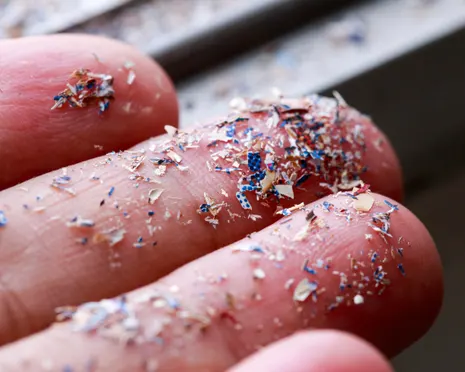
Table of Contents
UK Farmland Faces a Silent Contaminant as Microplastic Levels Climb
Wanderstayfinder.com – British agricultural soils now rank among the most heavily contaminated by microplastics anywhere in continental Europe, a finding that has alarmed scientists, parliamentarians, and environmental advocates who warn the trend poses a direct challenge to national food security. The contamination stems largely from decades of spreading sewage sludge — a by-product of water treatment works — onto fields as a fertiliser, layering tiny plastic fragments into the ground year after year.
The warning comes from a report produced jointly by the all-party parliamentary group (APPG) on microplastics, the Revolution Plastics Institute at the University of Portsmouth, and the Women’s Institute. It builds on an earlier collaborative study that examined plastic microfibres shed by synthetic textiles. With climate-driven extreme weather already straining crop yields and growing seasons, the authors argue that shielding soil from yet another, poorly understood stressor has become a matter of urgency rather than academic interest.
What Exactly Are Microplastics, and Where Do They Come From?
Microplastics are fragments of polymer ranging from one micrometre to five millimetres in size. They are released continuously as everyday items degrade: synthetic clothing, food packaging, paints, cosmetics, and vehicle tyres all shed particles over their lifetimes. Below the one-micrometre threshold, particles are classified as nanoplastics — small enough to cross biological membranes and enter cells directly.
Prof Cressida Bowyer, director of the Revolution Plastics Institute and senior author of the report, described the ubiquity of the problem in stark terms:
“Everywhere we look, we find them. Doesn’t matter how deep, how high, how obscure the sampling site, we will find microplastics. And similarly we’re finding microplastics now throughout the human body.”
Bowyer emphasised that exposure is not confined to manufacturing plants or landfill sites. It occurs throughout the entire plastics lifecycle — including the mundane act of wrapping oneself in a soft blanket or slicing vegetables on a plastic chopping board.
How Plastic Fragments Disrupt Living Soil
Submissions of evidence to the report highlighted particular alarm over microplastics accumulating in arable land. Bowyer explained that these particles interfere with the biological, chemical, and physical functioning of soil and with soil fertility itself. Specifically, they alter soil structure and water-holding capacity, disrupt the microbial communities — bacteria and fungi — that underpin nutrient cycling, and cause physiological changes in soil fauna such as earthworms that ingest the fragments.
“Soil is not an inert material. It’s a complex living ecosystem; it’s very finely balanced. [It is a] complex ecosystem that supports the growth of crops that feed us. The second thing to remember that’s really important is that microplastics, they’re not just polymer particles … they’re basically chemical cocktails.”
The “chemical cocktail” point carries significant weight. More than 16,000 distinct chemicals are used in plastics manufacturing. Roughly 4,000 of those are already known to be harmful to human health, while the vast majority of the remainder have never undergone formal safety testing, the report notes. Beyond their own chemistry, microplastic particles also act as vectors, adsorbing additional contaminants from the surrounding environment — bacteria, heavy metals, viral particles, and other toxic compounds — effectively becoming microscopic sponges that concentrate pollutants wherever they settle.
Political Response and Policy Recommendations
Alberto Costa, MP for South Leicestershire and chair of the APPG on microplastics, criticised the pace of governmental action:
“Despite the evidence, the UK’s response remains limited. Existing measures tackle only a tiny proportion of microplastic emissions. We urgently need a preventative approach focused on reducing microplastic releases at source to protect human health and food security.”
The report sets out five concrete policy recommendations aimed at closing that gap:
First, establish legally binding national targets for reducing microplastic pollution. Second, regulate the largest identified sources of microplastic release. Third, implement extended producer responsibility schemes that push manufacturers to minimise emissions across the full plastics lifecycle. Fourth, strengthen protections for wastewater systems, sewage sludge handling, and agricultural soils. Fifth, build a coordinated national monitoring and evidence-gathering framework to track contamination levels and policy effectiveness over time.
Dr Antaya March, director of the Revolution Plastics Institute’s Global Plastics Policy Centre and co-author of the report, framed the recommendations as a chance for the UK to shift from a piecemeal, reactive posture to a unified strategy that addresses microplastics across the entire production, use, and disposal chain.
Why This Matters for the Plate and the Planet
For farmers and food-system stakeholders, the implications are practical and immediate. Soil that loses microbial diversity and structural integrity becomes less productive, more vulnerable to erosion, and less capable of buffering against the increasingly erratic rainfall and heat events that climate change is already delivering. Adding a persistent, chemically complex contaminant to that equation compounds risk in ways that current regulatory frameworks were never designed to manage.
The report’s timing also reflects a broader shift in how policymakers think about plastic pollution. Attention has moved beyond oceanic debris and single-use packaging toward the less visible, harder-to-reverse contamination of terrestrial ecosystems — the very medium from which the majority of the UK’s calories originate. Whether parliament acts on the five recommendations, or continues to address microplastics through fragmented, voluntary measures, will shape both the health of British soils and the resilience of its food supply for decades to come.
Related Reading
Frequently Asked Questions
What is Rising microplastics in soil a threat?
Rising microplastics in soil a threat is the main topic of this guide. The article explains the context, practical details, and next steps readers should understand.
Why does Rising microplastics in soil a threat matter?
Rising microplastics in soil a threat matters because readers are looking for a useful answer, not just a short summary. Good content should match search intent and help them decide what to do next.