‘Like smoking a cigarette’: Indonesia chokes on haze as blazes intensify amid super ‘El Niño’

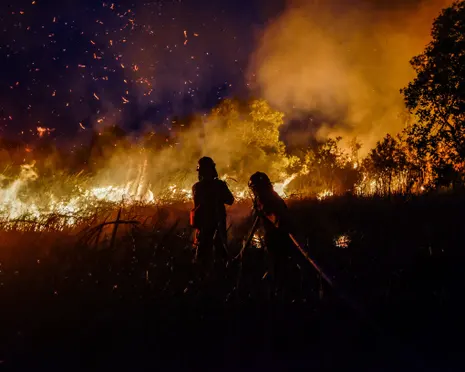
Table of Contents
Smoke Wall: Kalimantan’s Fires Turn Into a Regional Crisis Under Super El Niño
Wanderstayfinder.com – The air quality index in Kuala Lumpur hit its lowest recorded level on Tuesday, making the Malaysian capital the most polluted city on the planet, with Indonesia’s own capital Jakarta trailing just behind, according to monitoring firm IQAir. The cause is not local industry but a wall of smoke drifting south and west from tens of thousands of hectares of burning land in Kalimantan, the Indonesian portion of Borneo. Singapore has placed its emergency services on heightened alert, and Brunei has joined Malaysia in formally raising the trans-boundary haze at the next ASEAN foreign ministers’ meeting. What began as seasonal clearing fires has escalated into a multi-nation public-health emergency.
A Week in the Haze: What Residents Are Experiencing
In West Kalimantan, hospital emergency departments have seen a dramatic surge. Health ministry figures show roughly 5,000 patients presenting with respiratory complaints every week since July, compared with about 500 per week across the first half of the year. Schools have not stopped operating entirely, though some classes have been suspended and parents are pressing administrators to shift to remote instruction. Adults continue commuting to workplaces, children to classrooms, all breathing thick particulate-laden air hour after hour.
Suwadi, who lives near a factory in Kalimantan, describes stepping outside his front door and being unable to see more than five metres ahead.
“Each breath feels like smoking a cigarette,” he says.
He points out the groups most at risk in his neighbourhood: infants, older adults, and expectant mothers who cannot simply stay indoors indefinitely.
“What about babies, the elderly, and pregnant women who are exposed to this?” he asks.
Scale of the Burning
The Indonesian forestry ministry tallied nearly 94,000 hectares — approximately 232,000 acres — of land consumed by fire across the archipelago in July alone. Blazes have been reported not only in Kalimantan but also in Sumatra, West Papua, and on the island of Lombok, where a weekend fire destroyed a traditional Sade village. On social media, Indonesian citizens have been posting footage of the flames to draw national and international attention to what many see as a recurring, under-addressed disaster.
On Monday, President Prabowo Subianto directed authorities to revoke the operating licences of corporations suspected of orchestrating the land-clearing burns, according to state news agency Antara. Indonesian police have arrested 72 individuals across Borneo and Sumatra, most charged with deliberately igniting vegetation to prepare plots for plantation agriculture.
Why This Year Looks Different: Super El Niño
Authorities attribute the unusual intensity of the current fire season partly to what they are calling a “super” El Niño — a strengthened warm-phase oceanic oscillation expected to reach its peak in September. Meteorologists caution that the dry spell will likely persist through October, with reliable rainfall not forecast before November. That window means the worst of the smoke may still lie ahead.
The pattern echoes 2015, another El Niño year in which more than six million acres burned across Indonesia and the resulting haze again blanketed Malaysia and Singapore for weeks. Regional climate scientists warn that as global warming lengthens dry seasons, such episodes will grow more frequent and more severe unless land-use practices change.
The Root Cause: Slash-and-Burn and Peatland Drainage
Indonesia remains the world’s largest producer of palm oil. Each year, a significant share of Kalimantan’s fires is traced to “slash and burn” clearing methods used to open land for oil-palm and pulp plantations. The practice strips vegetation, then sets it alight — a cheap shortcut that, in dry conditions, escapes containment and spreads into surrounding forest.
But the deeper problem lies beneath the surface. Much of Kalimantan’s lowland is peatland, a carbon-rich soil formed over millennia from accumulated plant matter. When water tables are high, peat stays saturated and resists ignition. Decades of canal-digging to drain these areas for agriculture have lowered the water table, leaving the soil parched and highly combustible.
Justin Sentian, a climate-change professor at Universiti Malaysia Sabah, explains that fires in degraded peat do not merely burn on the surface; they smoulder metres underground, making them far harder to extinguish and producing dense, acrid smoke that lingers for days.
“If authorities only act after hotspots appear, they will forever be playing catch-up,” Sentian says. “True prevention must address the soil itself by halting the conversion of peatlands and actively restoring degraded areas.”
Government Response and Public Frustration
During a recent regional visit, Prabowo pledged additional resources to fight the blazes, including helicopter water-bombing and mobile pumping units. Yet many Indonesians voiced scepticism online, arguing that the state has long tolerated the corporate actors behind the fires and only reacts once the smoke crosses a border. The permit-revocation order and the 72 arrests represent a sharper tone than in previous seasons, but critics note that enforcement has historically been uneven.
In Sarawak, the Malaysian state on Borneo’s western coast, almost 600 schools shut their doors as temperatures climbed and humidity dropped. The closure underscored how quickly a fire event on one side of the island can disrupt daily life on the other.
Back to Suwadi’s Front Door
On Monday, another fire broke out near the factory where Suwadi works. Houses were burning within sight; smoke filled every street.
“The fire is getting dangerously close to homes,” he says. “People are in panic now.”
For Suwadi and his neighbours, the abstract statistics — hectares, arrest counts, ASEAN communiqués — collapse into a single, immediate question: will the next gust of wind carry the flames to their rooftops before the rain, if it ever comes, finally arrives?
Related Reading
Frequently Asked Questions
What is Like smoking a cigarette?
Like smoking a cigarette is the main topic of this guide. The article explains the context, practical details, and next steps readers should understand.
Why does Like smoking a cigarette matter?
Like smoking a cigarette matters because readers are looking for a useful answer, not just a short summary. Good content should match search intent and help them decide what to do next.