Man leaves young son on Mount Fuji before ascending Japan’s highest peak

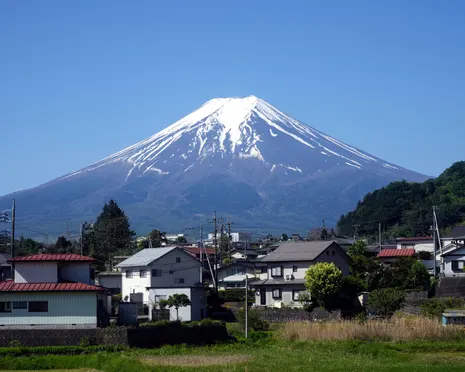
Table of Contents
Seven-Year-Old Found Alone at 2,000 Metres on Mount Fuji After Father Continued Ascent
Wanderstayfinder.com – A maintenance worker patrolling one of Japan’s most heavily trafficked hiking routes made an unsettling discovery on Thursday: a small boy sitting by himself on a wooden bench, more than 2,000 metres above sea level, with no adult in sight. The child was near the sixth station marker along the Fujinomiya trail, one of four principal paths leading to the summit of Mount Fuji, the country’s tallest peak at 3,776 metres. The worker, whose duties include checking trail infrastructure at various altitudes, invited the boy into the station shelter and immediately contacted local police. Officers arrived to take the child into protective custody and began tracing his family.
Within hours, the full sequence of events became clear. The boy’s father, a resident of Nagoya — Japan’s fourth-largest city — had been leading a family hike up the mountain in the pre-dawn hours, when his seven-year-old son told him he was exhausted and could not keep climbing. Rather than turn around or wait for the child to recover, the man handed his son a handful of snacks and a bottle of soft drink, instructed him to stay put, and walked on. His older son had already broken ahead up the trail, and the father proceeded with the elder child toward the summit, a climb that would consume roughly five more hours. The round trip back to where he had deposited the younger boy would have required approximately eight hours of walking.
Reunion at the Eighth Station
By the time officers finally reached the father by phone, he had pushed past the seventh station and arrived at the eighth — a point roughly three hours’ hiking above the bench where his seven-year-old had been sitting alone. Police instructed him to reverse course immediately. When the two were reunited at the lower station, officers delivered a firm reprimand, noting that Mount Fuji is not merely a high mountain but an active stratovolcano whose slopes carry genuine hazards for unaccompanied children.
“Even if it means having to give up on climbing the mountain together, leaving a child behind is unacceptable,” the officers stated.
The father, visibly shaken, offered an apology to the responding officers.
“I made a rash decision, and I deeply regret it,” he said.
A Peak With Its Own Weather
The incident underscores a reality that many first-time visitors to Mount Fuji underestimate: the mountain operates under a microclimate distinct from the valleys below. Temperatures at altitude can plunge within minutes, and sudden cloud cover, wind gusts, or rain can strip warmth from a hiker even during the warmest weeks of August. Hypothermia is a documented and recurring cause of emergency evacuations on Fuji’s trails, and the risk does not diminish simply because the calendar reads summer. At the sixth station, where the boy was found, the air is already thin enough to accelerate fatigue in children and older adults, and the terrain shifts from packed dirt to loose volcanic gravel that slows every step.
Mount Fuji receives millions of hikers each year, with the summer climbing season (roughly early July through early September) drawing particularly dense crowds. The Fujinomiya trail, the most popular of the four routes, is well signposted and equipped with numbered station shelters roughly every 30 to 40 minutes of walking. Those shelters exist precisely so that hikers can pause, regroup, and assess conditions — a function the father in this case bypassed entirely, opting instead to leave his youngest child unattended at a remote waypoint.
Guidance for Families Planning an Ascent
In the wake of the incident, local police issued a public reminder aimed at families and groups attempting the climb. Officers urged hikers to evaluate the stamina, experience, and physical limits of every member of their party before setting out, and to adjust their pace so that no individual is forced to lag dangerously behind. The guidance also stressed that a parent’s role on the trail is not to complete the summit objective at all costs but to ensure that every child in the group remains within sight and reach at all times.
For a mountain that draws families from across Japan and abroad each summer, the episode serves as a pointed caution. The summit of Mount Fuji is a cultural milestone, a spiritual destination, and a bucket-list achievement for countless visitors. Yet the path to that summit crosses terrain where a tired seven-year-old, separated from his guardian by three hours of volcanic trail, faces real and immediate danger from exposure, disorientation, and the simple inability to call for help. The worker who found the boy on that bench did what any responsible adult would have done — sheltered him, called for help, and kept him calm until officers arrived. What remains to be addressed is the decision that placed him there in the first place.
Related Reading
Frequently Asked Questions
What is Man leaves young son on Mount?
Man leaves young son on Mount is the main topic of this guide. The article explains the context, practical details, and next steps readers should understand.
Why does Man leaves young son on Mount matter?
Man leaves young son on Mount matters because readers are looking for a useful answer, not just a short summary. Good content should match search intent and help them decide what to do next.