Senior Russian banker fired after scathing speech on wartime economy

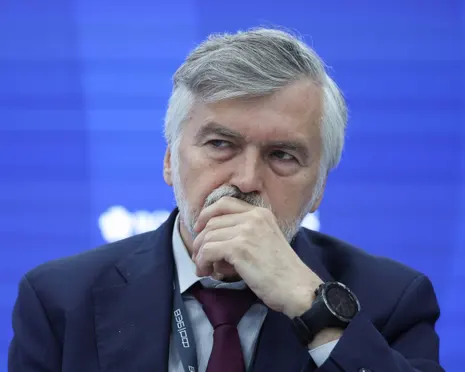
Table of Contents
Russia’s Top Development Bank Ousts Chief Economist After Blunt War-Economy Warnings
Wanderstayfinder.com – Andrei Klepach, who had led the economics division at VEB — the state-controlled development bank that ranks second in size among Russian lenders — has been removed from his post after publicly arguing that Moscow’s wartime economy is deteriorating faster than the Kremlin admits. His departure, confirmed within days of a May address to a gathering of fellow economists, marks one of the most visible cracks yet in the Kremlin’s effort to project economic confidence during a conflict that has now stretched well past four years.
The Speech That Cost Him His Job
In remarks delivered to a closed circle of economists in May, Klepach laid out a picture of a Russian economy that he described as losing ground not only to the United States and China but, in certain metrics, to Ukraine itself. He warned that the cumulative strain of wartime expenditure would eventually trigger what he called a “social crisis” arriving at a moment no one would anticipate.
“We will not win this competition in a war of attrition with Ukraine. We have an illusion that everything will collapse there. It hasn’t collapsed, and it won’t. Our costs are growing.”
Those words ran directly counter to the narrative Vladimir Putin has maintained since ordering the full-scale invasion of Ukraine in February 2022 — namely, that Moscow is absorbing Western sanctions with ease and that Kyiv’s economy is on the verge of exhaustion. Klepach, who had occupied the VEB role continuously since 2014, offered no such reassurance. Instead, he characterized expectations of an imminent Ukrainian economic collapse as misplaced and framed the ongoing standoff as a contest Russia was likely to lose over time.
Kremlin Orders and the Loyalty Test
VEB issued no explanation for the dismissal. A person close to Klepach told a Russian business publication that his exit was “connected to his personal, harsh assessments of the country’s economic and political development, which cannot possibly align with the corporation’s position.” Separately, an independent Russian outlet, citing unnamed sources inside the decision-making chain, stated that the firing came on direct instruction from the Kremlin and was tied specifically to the May address.
The episode fits a broader pattern documented over the past two years: a tightening of ideological conformity among senior technocrats and economic managers. Reports have circulated that Putin has increasingly populated his inner circle with officials who rarely, if ever, challenge his strategic assumptions. Klepach’s removal, by an economist widely regarded as one of Russia’s most capable macro analysts, underscores how little tolerance remains for dissent at the upper echelons of state finance.
Expert Reaction
Alexandra Prokopenko, a former adviser to the Russian central bank and a fellow at the Carnegie Russia Eurasia Center, characterized Klepach as a respected macroeconomist who had never flinched from publishing views at odds with the official line.
“Klepach’s dismissal – he is one of Russia’s best macroeconomists – is unlikely to delay the looming crisis he has been warning about.”
She added that his forecasts were “based on assessments of reality rather than a desire to please anyone” and tended to run more pessimistic than the figures released by government statisticians. In practical terms, his departure removes one of the few senior voices inside the state banking apparatus who had been articulating downside scenarios with specificity.
The Numbers Behind the Rhetoric
The economic backdrop Klepach described is not speculative. Russia’s fiscal position has entered its most strained phase since the invasion began. In the first four months of 2026 alone, the federal budget deficit reached 5.87 trillion roubles — roughly $81 billion — against an annual target of just 3.79 trillion roubles. In other words, the state burned through more than a year’s planned deficit in under five months.
Two sources familiar with closed-door discussions said that several of Putin’s closest economic advisers have privately cautioned him that the current trajectory of wartime spending is becoming unsustainable. The pressure is compounded by Western sanctions that continue to constrain access to capital markets and technology, and by Ukraine’s expanding capacity to strike at Russian oil and gas infrastructure deep inside the country.
Recently, Ukrainian drone and missile attacks have struck dozens of warehouses operated by Wildberries, Russia’s largest e-commerce platform, destroying billions of dollars of inventory. The incidents have raised questions about the retailer’s own financial resilience and have dealt a severe blow to thousands of independent sellers who rely on the platform for their livelihoods — a reminder that wartime disruption now reaches ordinary commercial activity, not just strategic targets.
Where the Money Comes From
Putin has shown no sign of scaling back military expenditure or narrowing the scope of the war. Instead, the Kremlin has turned to fiscal extraction: raising tax burdens on smaller businesses and applying direct pressure on oligarchs to contribute additional funds toward the war effort. A partial offset has come from this year’s spike in global oil prices, driven in part by the United States’ military campaign in Iran, which has delivered billions of dollars in windfall revenue to Moscow and cushioned — though not eliminated — some of the mounting fiscal pressure.
Whether that temporary reprieve is sufficient to bridge the gap between wartime outlays and sustainable revenue remains the central question Klepach was apparently no longer permitted to answer publicly. His firing suggests the Kremlin prefers silence over specificity, even as the deficit figures continue to accumulate.
Related Reading
Frequently Asked Questions
What is Senior Russian banker fired after scathing?
Senior Russian banker fired after scathing is the main topic of this guide. The article explains the context, practical details, and next steps readers should understand.
Why does Senior Russian banker fired after scathing matter?
Senior Russian banker fired after scathing matters because readers are looking for a useful answer, not just a short summary. Good content should match search intent and help them decide what to do next.