Play puts spotlight on Kenya’s crisis of gender-based violence
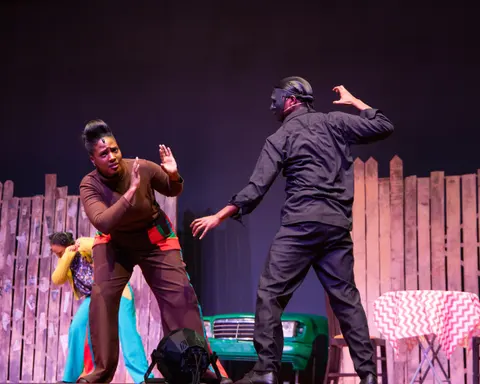
Play puts spotlight on Kenya s crisis – Audible gasps ripple through the crowd in Nairobi’s auditorium as a husband delivers a series of violent blows to his wife, pushing her to the ground. The moment, from the play *Free Me*, captures the raw emotion of a domestic conflict, echoing the struggles of many Kenyan women. “I wish I could spare you this,” the wife says to the audience, her voice trembling. “My husband treated me like we were in a bar fight. Except, in a bar, someone fights back.” The scene, part of an autobiographical production by Gathoni Kimuyu, a renowned Kenyan theatre and TV producer, is a powerful depiction of gender-based violence (GBV) that has gripped the nation in recent years.
The Story Behind the Stage
*Free Me* traces the life of its protagonist, Gathoni Kimuyu, from her teenage years in Nairobi’s eastern outskirts to her present-day journey of empowerment. The play is divided into four acts, each portrayed by different actors to reflect the protagonist’s evolving experiences. In one segment, a youthful, spirited 16-year-old navigates the complexities of growing up, while a 21-year-old, newly married, faces the harsh realities of abuse. The narrative continues through the challenges of motherhood and the eventual decision to leave a toxic relationship, culminating in the protagonist’s resilience and determination to rebuild her life.
Kimuyu, known professionally as Queen Gathoni, has been a key figure in Kenya’s cultural scene, contributing to landmark productions like the children’s TV drama *Machachari* and the historical series *Too Early for Birds*. She explained that the play’s resurgence this month is driven by its relevance to ongoing conversations about GBV. “The numbers are staggering,” she said, emphasizing the persistent rise in femicide and sexual abuse cases. “Women are being harmed at an alarming rate, and the problem isn’t slowing down.”
A National Conversation Ignited
Since its premiere in November, *Free Me* has sparked a wave of public discourse. This month, hundreds of women gathered in Nairobi’s streets to demand action against GBV, a movement that has gained momentum over the past year. The protests were preceded by a series of marches in 2024 and amplified by online campaigns such as #StopKillingUs, #EndFemicideKe, and #TotalShutDownKe. These efforts culminated in January 2025 when the Kenyan government established a technical working group to analyze the root causes of GBV and femicide.
The working group’s report highlighted a complex mix of factors contributing to the crisis, including deeply entrenched patriarchal norms and systemic gender inequality. It recommended legal reforms, such as defining femicide as a distinct offense under Kenyan law, and urged the president to officially declare GBV a national emergency. Despite these proposals, the government has yet to fully implement the changes, and cases of violence continue to dominate headlines. “The situation is dire,” Kimuyu remarked, “and it keeps getting worse.”
Art as a Catalyst for Change
Mugambi Nthiga, the play’s director and co-writer, described *Free Me* as a mirror to Kenyan society. “It’s not just a story,” he said, “but a reflection of the daily realities faced by countless women. Every day, someone doesn’t get the ending we see on stage.” The director emphasized that the play’s impact lies in its ability to humanize victims and challenge stereotypes. “We’re showing that the perpetrator could be anyone—your neighbor, your colleague, or even your family member.”
Renee Gichuki, who portrays Kimuyu at 16, noted the play’s timeliness. “This is a story that resonates with so many people,” she said. “It’s not an isolated case anymore. GBV has become a crisis that affects everyone.” Her words underscore the play’s role in educating audiences about the prevalence of violence. “We’re trying to create awareness and spark conversations that lead to real change,” she added.
The Weight of Representation
Tobit Tom, the actor playing the husband, shared the emotional toll of embodying the aggressor. “It’s heavy to bring that character to life,” he said, “especially when it’s based on real experiences.” He acknowledged the responsibility men have in perpetuating GBV and stressed the need for collective action. “We have to show that this violence is happening and that it’s something we can’t ignore,” Tom explained. “It’s not just a personal issue—it’s a societal one.”
Wambui Njeri, a 24-year-old businesswoman, expressed how the play deepened her understanding of GBV after watching it. “It made me realize that the victims are ordinary people,” she said. “They’re just like us—working, dreaming, and fighting for their rights.” Her friend Patrick Muchiri, 40, a communications professional, echoed her sentiments. “As men, we need to step up,” he said. “We hold positions of power, but that doesn’t mean we should be the ones causing harm.”
Broader Implications and Future Steps
The play’s success highlights the growing urgency to address GBV in Kenya. While the government has taken initial steps by forming the working group, advocates argue more must be done to translate policy into action. Kimuyu, who also serves as the play’s producer and marketing head, stressed that the show’s revival is a call to arms. “We’re not just performing this play for entertainment,” she said. “It’s about pushing for the changes we need as a nation.”
As the nation grapples with the crisis, *Free Me* stands as a testament to the power of art in shaping public opinion. The play’s ability to blend personal narrative with societal critique has made it a vital tool in the fight against GBV. With each performance, it brings the issue to the forefront, urging both men and women to recognize their roles in the struggle. “This is a story of survival,” Nthiga said, “but it’s also a story of hope.” The continued relevance of the play underscores the fact that the conversation about gender-based violence is far from over.
Sign up to *The Long Wave* for insights from Nesrine Malik, Micha Frazer-Carroll, and the team as they explore the biggest Black stories from around the world. The play’s impact is a reminder that art can be a catalyst for change, even in the face of ongoing challenges. As the audience leaves the theatre, the hope is that they carry the message forward, contributing to a safer and more equitable future for all Kenyans.