‘No one believed it’: how a YouTube video accidentally proved Libya’s sand cat really does exist
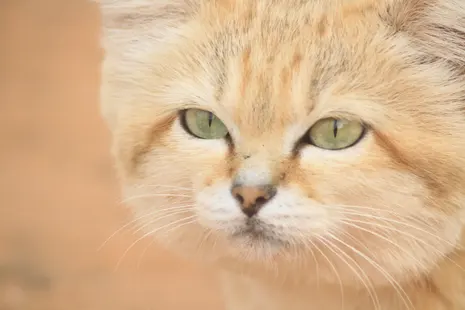
No one believed it – In 2017, a wildlife photographer named Mohammed Almuntasir shared a 18-second clip on YouTube showing a small, pale feline digging a burrow in the arid dunes of south-west Libya. At the time, the footage seemed like a simple snapshot of nature, but it would later become the first tangible proof of the sand cat’s presence in the country. This elusive creature, known scientifically as Felis margarita, is the sole feline species fully adapted to harsh desert environments. Almuntasir’s video, uploaded without much fanfare, sparked skepticism among experts, who dismissed the idea that Libya could host such a rare animal. “When I posted it, nobody believed it had been filmed in Libya,” he recalled. “Everyone denied it, but I kept insisting the cat is here, in several places; one of them was only 70km (43 miles) from Zintan, where I live.”
A Decade of Discovery
Nearly a decade after the initial video, researchers began to acknowledge the significance of Almuntasir’s work. The footage, though brief, hinted at a larger truth: south-western Libya might be a hidden haven for sand cats. This region, long overlooked in ecological studies, has no established protected areas, limited camera trap networks, and minimal scientific documentation. Firas Hayder, a zoologist specializing in small carnivores and a postdoctoral researcher at Sol Plaatje University in South Africa, became one of the first to take the claim seriously. “He convinced me we should collaborate on a study to document the return of this animal to Libya and add it to the list of native species,” Almuntasir said.
Hayder’s research revealed that prior to Almuntasir’s footage, no scientific sources had provided concrete evidence of sand cats in Libya. “I reviewed every reference that mentioned the sand cat in Libya and found none with reliable coordinates or proof,” Hayder explained. The Tuareg communities, who have lived in the area for generations, were key to confirming the cat’s presence. “They know the desert better than anyone,” Almuntasir noted. “They’d tell me where to find signs of the cat, and I’d use GPS to map those locations.”
Challenges of the Desert
Exploring Libya’s south-west is no easy task. The region’s rugged terrain, combined with its proximity to smuggling routes, makes fieldwork dangerous. “Smuggling networks are active here, so the area isn’t safe,” Almuntasir said. “We once came under gunfire during a trip, which forced us to flee quickly.” Despite these risks, Almuntasir and his guides persisted, often tracking paw prints for days to locate burrows. Once a site was identified, they’d set up a tent and wait patiently for the cats to emerge. “It’s like hunting for ghosts,” Hayder joked, reflecting on the process.
The collaboration between Almuntasir and Hayder began in earnest after their initial meeting. Over eight years, Hayder taught Almuntasir field research techniques, including how to record precise GPS data and document sightings with photographs or video. “I showed him how to use scientific tools to verify each encounter,” Hayder said. “He applied those methods across the desert, gathering stories from locals who had seen the cats for years.” Almuntasir, who grew up in the Nafusa Mountains, had long been familiar with Hamada al Hamra, a vast rocky desert plateau in south-west Libya covering 84,000 sq km. This knowledge proved invaluable in navigating the region’s challenges.
Unveiling a Hidden Sanctuary
The joint efforts led to a breakthrough in February 2026, when a peer-reviewed study published in the Journal of Arid Environments detailed the sand cat’s presence at 13 locations across the Libyan Sahara. The research also confirmed the Saharan striped polecat at eight new sites, seven of which lay outside its previously recognized IUCN range. “A high proportion of the sand cat sightings, 15 out of 36, were concentrated in Wadi Armet,” Almuntasir said. “This isolated valley, about 1,000km south-west of Tripoli, is vast and largely unexplored because of its difficult terrain. Animals migrate there in summer, drawn by the availability of water. Many come from the Tassili n’Ajjer reserve in Algeria.”
Wadi Armet’s significance extends beyond its size. It serves as a critical corridor for desert-adapted species, offering refuge from human encroachment and environmental pressures. The study’s findings suggest that the sand cat is more widespread and in better condition in Libya than previously thought. “This region might represent a strong stronghold for desert species,” Hayder said. “It’s a place where nature still thrives, despite the challenges of conflict and smuggling.”
The Broader Implications
The sand cat is just one of several mammals facing threats in Libya. Alongside it are the cheetah, dama gazelle, and sand gerbil, all of which have seen population declines due to habitat loss and hunting. However, the discovery of the sand cat in south-west Libya offers hope. “It’s a reminder that even in places where we assume biodiversity is low, there are still secrets waiting to be uncovered,” Hayder said. The study also highlights the importance of local knowledge in conservation efforts. “The Tuareg have lived here for centuries and know the desert’s rhythms better than any scientist,” Almuntasir added.
Libya’s south-west remains a frontier of scientific exploration. Its lack of formal protected areas means that many species are underreported, their existence often dismissed as folklore. Almuntasir’s work, initially dismissed as a curiosity, has now become a cornerstone of research on the region’s wildlife. “When I first posted the video, I thought it was just a random capture,” he said. “But it turned into a catalyst for uncovering something much bigger.”
As the study’s results gain traction, conservationists are reevaluating Libya’s role in the global ecosystem. The sand cat’s presence in the country challenges long-held assumptions about its range and population. “This is a rare case where a citizen scientist’s work outperformed formal research,” Hayder observed. “It shows that the power of observation can sometimes rival the methods of academia.”
With more evidence emerging, the focus is now on protecting these habitats. “We need to establish conservation zones and train local teams to monitor the cats,” Almuntasir urged. “If we don’t act now, we risk losing this hidden sanctuary to desertification and human activity.” The journey from a single video to a landmark study underscores the unpredictable paths of discovery in ecology. What began as a 18-second clip has now transformed into a testament to resilience, both of the sand cat and the researchers who refused to let its existence be doubted.
A New Chapter in Libyan Conservation
The study’s implications extend beyond the sand cat. It has sparked renewed interest in Libya’s ecological diversity, prompting discussions about the need for more comprehensive surveys. “There’s still so much to learn about the country’s wildlife,” Hayder said. “This is just the beginning.” For Almuntasir, the work is a personal vindication. “I always believed the cat was here,” he said. “Now, people are starting to see what I saw.”
As the desert continues to shape and shelter life, the story of the sand cat in Libya stands as a symbol of persistence. It reminds us that in the vast, uncharted expanses of the world, nature still holds its own mysteries. What once seemed like a fleeting moment captured on video has become a beacon for conservation efforts, proving that even the most elusive creatures can find their place in the light of scientific inquiry.