Papua Separatists Kill American Pilot in ‘Message’ to US and Indonesia
Attack in Yahukimo Sparks Controversy Over Regional Tensions
Papua separatists kill American pilot in message – Separatist rebels in Indonesia’s easternmost region of Papua have killed an American pilot and ignited a civilian aircraft in what a representative of the West Papua National Liberation Army (TPNPB) described as a symbolic strike against the U.S. and Indonesian governments. The incident occurred in the Yahukimo district of Highland Papua province, where the pilot, Nicholas F Gosselin, was reportedly shot after his plane landed. According to Sebby Sambom, a TPNPB spokesperson, the attackers set the aircraft ablaze following the pilot’s death, framing the act as a clear statement of defiance against the continued presence of foreign forces and Indonesian military operations in the area.
Sambom claimed the plane had been “frequently dropping Indonesian military personnel and violating the TPNPB’s ultimatum.” He emphasized that the attack was intended to signal the rebels’ frustration with the lack of progress toward resolving the conflict between the Indonesian military and the separatist movement. The TPNPB, a guerrilla group advocating for Papua’s independence, has long targeted infrastructure and transportation routes to disrupt government control and draw global attention to their cause.
The Indonesian government has yet to confirm the exact circumstances of the attack. Yusuf Sutejo, a spokesperson for joint police-military operations in Papua, stated that a plane with one pilot and seven passengers was discovered burned at an airport in Yahukimo. However, he noted that the cause of the fire and the pilot’s death remained under investigation. All the passengers, he added, were Papuan nationals, underscoring the local impact of the conflict.
Historical Context of the Papua Independence Movement
The conflict in Papua dates back over five decades, with the region’s indigenous population engaged in an insurgency against Indonesian rule since the 1960s. Following the departure of Dutch colonizers, a contentious agreement emerged between Papuan leaders, the Netherlands, and Indonesia. The United Nations played a key role in endorsing Indonesia’s temporary administration through the 1969 “Act of Free Choice,” a referendum in which 1,026 selected West Papuan representatives voted to remain part of Indonesia. Critics, including international observers, have consistently argued that the process was undemocratic, lacking genuine representation and influenced by coercion.
Despite the 1969 resolution, the movement for independence has persisted. Indonesia maintains that the decision validated its sovereignty over the region, but separatists continue to assert that the vote was not a true reflection of the people’s will. Over the years, the conflict has escalated into a protracted struggle, with rebels employing guerrilla tactics to challenge Indonesian military dominance. The violence has resulted in an estimated half a million deaths, alongside thousands of arrests, injuries, and the destruction of villages, according to separatist accounts.
Recent years have seen the movement gain traction among regional allies. Countries like Vanuatu, Tuvalu, and the Marshall Islands have expressed solidarity with the West Papuan cause, though support remains limited in broader international circles. A notable development was the 2017 independence petition, which gathered 1.8 million signatures and was submitted to the UN’s decolonization committee. However, the initiative was deemed outside the committee’s authority, leading to its rejection. This has fueled ongoing debates about the legitimacy of the conflict and the need for further international intervention.
Escalating Violence and Strategic Targeting
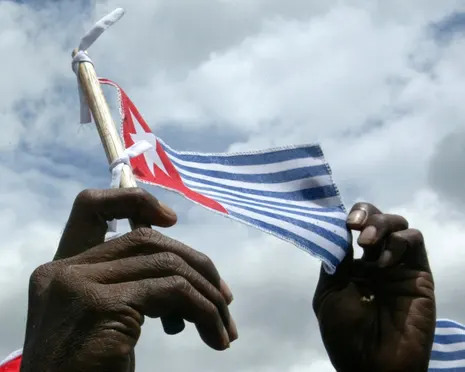
The attack on Nicholas F Gosselin marks another escalation in the conflict’s tactics. Rebels have increasingly targeted civilian infrastructure, including transportation hubs, to weaken the Indonesian government’s grip on the region. According to a video released by the TPNPB, fighters brandishing guns and axes raised the Morning Star flag—a symbol of Papuan independence—during the assault. The video served as both a warning and a declaration of their intent to continue operations against what they view as foreign encroachment.
Indonesia’s transportation ministry confirmed that the aircraft, operated by PT AMA, had flown from Wamena to Yahukimo. The company, which specializes in delivering food, fuel, and mail to remote areas, has been a key lifeline for communities in the region. Its planes are often seen as neutral carriers, yet the attack suggests that even these logistical routes are now perceived as threats by separatists. PT AMA has not yet responded to inquiries about the incident, leaving questions about the event’s aftermath unanswered.
The incident follows a similar attack in February 2023, when Papuan rebels kidnapped New Zealand pilot Phillip Mehrtens after he landed a small commercial plane in the mountainous Nduga region. Mehrtens was released in September 2024, but the event highlighted the rebels’ growing willingness to target foreign individuals. These actions have drawn attention to the broader geopolitical tensions in the region, where separatists accuse Indonesia of perpetrating human rights abuses, including arbitrary arrests and forced displacement. The government has consistently denied these allegations, attributing the violence to “unrest” and “local grievances.”
As the conflict continues, the killing of an American pilot has intensified scrutiny on Indonesia’s relationship with the U.S. The incident is seen by some as a direct challenge to foreign involvement in Papua’s affairs. While the U.S. embassy in Jakarta has not yet issued a formal statement, the event has raised questions about the role of American military and diplomatic support in the region. Analysts suggest that the attack may be part of a larger strategy to pressure both Indonesia and its international allies into negotiating a resolution to the long-standing dispute.
Regional Implications and Future Outlook
The attack has also reignited discussions about the strategic importance of Papua to neighboring countries. The region shares an island with Papua New Guinea, creating a complex web of territorial and political interests. While Indonesia has historically maintained control, separatist groups argue that the conflict has been exacerbated by the presence of foreign military forces and economic exploitation of Papua’s natural resources. The Indonesian military’s ongoing operations in the area have been a point of contention, with rebels accusing them of using excessive force and ignoring local aspirations for self-determination.
Despite the violence, the movement for independence remains a critical issue in regional geopolitics. The TPNPB and other groups have called for the international community to recognize Papua as a separate entity, citing the legacy of colonial rule and the 1969 referendum as evidence of historical injustice. The recent attack on Gosselin, combined with earlier incidents involving foreign pilots, underscores the growing risk of the conflict spilling beyond the region’s borders. As the situation evolves, the question of whether the U.S. and Indonesia will take stronger measures to address the root causes of the conflict—such as economic inequality, political representation, and military presence—remains a pressing concern for both governments and the Papuan people.
With the incident in Yahukimo, the separatists have sent a clear message to both the Indonesian and U.S. administrations: their demands for autonomy and independence cannot be ignored. The attack serves as a reminder of the enduring nature of the conflict and the potential for further escalation. As the region’s tensions continue to mount, the international community faces the challenge of balancing support for Indonesia’s sovereignty with the growing calls for self-rule in Papua.