Europe Heatwave Live: Millions in the Grip of Sweltering Temperatures
Europe heatwave live – As the continent braces for an unprecedented heatwave, European nations are facing extreme weather conditions that have pushed millions into the sweltering range of 35 degrees Celsius or higher. According to AFP estimates, at least 94 million individuals are expected to feel the searing heat today, with France and Spain emerging as the most affected regions. This staggering figure underscores the severity of the situation, as over 350 million people will encounter temperatures above 30C—nearly two-thirds of Europe’s population—just weeks into June.
Heatwave Impact on Power Supply
The sweltering conditions have already begun to strain critical infrastructure. In France, the nation’s nuclear power output dipped by 4.1 gigawatts, or 7%, on Wednesday, as high temperatures reduced the availability of water essential for cooling reactors. Data from French utility EDF highlights the challenges posed by the heatwave, which is sweeping through western Europe and gradually extending its reach eastward. This decline in power generation is a stark reminder of how climate extremes can disrupt energy systems, even in countries traditionally reliant on stable power sources.
Record-Breaking Heat in the UK
Meanwhile, the United Kingdom is experiencing a climate milestone of its own. Temperature records for June, which had stood for five decades since the summer of 1976, are being shattered. Campaigners are urging the incoming Prime Minister to maintain current climate policies, emphasizing that the escalating frequency of extreme weather events demands unwavering action. Greenpeace UK’s political campaigner, Angharad Hopkinson, warned that the summer of ’76 is “being overtaken by even more terrifying heatwaves,” stressing that reducing fossil fuel dependence is the only way to break the cycle of escalating temperatures.
“The summer of ’76 may be seared into the nation’s memory, but it’s quickly being replaced by heatwaves that feel like a living nightmare. Our next prime minister must act on the evidence right in front of them and heed the advice of scientists to keep climate commitments on track,” said Hopkinson.
Global Leaders and Local Responses
Even the Pope has joined the effort to raise awareness about the dangers of extreme heat. During his weekly general audience, Pope Leo was seen drinking water, a simple yet symbolic act to highlight the importance of hydration. This gesture resonates with the broader message of preparedness, especially as temperatures in cities like Nantes, France, soared to 41C—making it one of the hottest spots in Europe. In Bordeaux and Bilbao, Spain, heat reached 39.3C, while Toulouse and Paris recorded 37C. Stuttgart and London also experienced temperatures above 33C, with the British capital remaining in the heatwave’s shadow.
Pet Safety in Extreme Heat
Amid the rising temperatures, animal welfare organizations have issued urgent alerts. The RSPCA has recommended immediate adjustments to routines for pet owners, advising that pets should be kept in shaded areas with access to fresh water. Lauren Bennet, a dog welfare expert at the RSPCA and former veterinary nurse, likened the situation to a “temporary lockdown” for animals, urging owners to avoid exposing their pets to strenuous activities. “This isn’t the time for walks, chasing the ball, or playing fetch,” Bennet explained. “It’s far better for dogs to miss a few walks completely than to suffer from heatstroke or overheating.”
“During a red weather warning, think of it like a temporary lockdown for your pets. For the next 24 to 48 hours, routines need to change immediately. Exposing animals to energy-intensive exercise can lead to life-threatening consequences,” Bennet added.
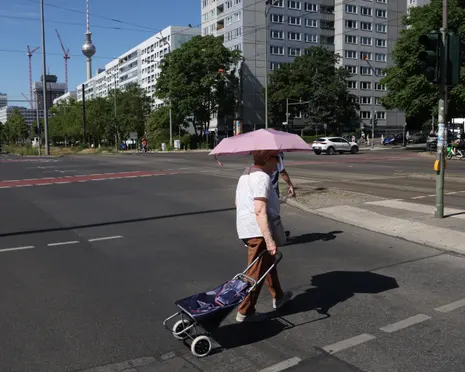
Complementary guidance has been provided by the Dogs Trust in the UK, reinforcing the need for vigilance. As the heatwave spreads, even central and eastern Europe—once considered less vulnerable—are set to feel its impact. Berlin, for example, is expected to hit 40C on Sunday, while Prague and Warsaw will both see temperatures reach 39C. This eastward movement of the heatwave ensures that no part of the continent will remain untouched.
A Personal Story of Climate Change
The heatwave’s effects are not just statistical; they’re felt in everyday lives. Maria*, a 43-year-old self-employed sewing teacher from Spain now living in Amsterdam, decided to cancel a six-hour class in Utrecht, the Netherlands, on Friday due to extreme conditions. Teaching in a former shop unit with large windows, no blinds, and no air conditioning, she faced temperatures forecasted to reach 40C. “It was really hard for me because I’m a people pleaser,” Maria shared. “I felt bad saying, ‘I’m sorry, but this is too much for my body.’ But I stuck with that feeling and I’m proud of myself for that.”
Maria’s decision to prioritize her health over income highlights the growing pressure on individuals to adapt to climate change. As a freelancer, her absence meant a loss of earnings, but she emphasized the importance of self-care. “If you’re self-employed and you don’t take care of your health, nobody else will,” she said. Her perspective underscores a broader concern: many in northern Europe may still underestimate the pace of climate change, even as its effects become increasingly apparent.
With the heatwave showing no signs of abating, experts warn that the situation will intensify over the coming days. The scientific consensus is clear—such extreme weather is not an anomaly but a warning of the changes ahead. As cities across Europe struggle to cope, the message is simple: hydration, shelter, and vigilance are key. The coming weeks will test the resilience of both people and systems, but the urgency of action is undeniable. The world is watching as Europe experiences this unprecedented heat, and the response will shape the path forward for global climate efforts.