You’re History Itself: The Power of Arab World Cup Commentators
You re history itself – The 2026 World Cup has become a stage where Arab commentators don’t just narrate matches—they craft emotional narratives that echo through the region’s sports culture. With the presence of multiple Middle Eastern teams, the broadcasts are steeped in fervor, where every call is a declaration of national pride and historical resonance. The phrase “You’re history itself!” has emerged as a hallmark of this dynamic, encapsulating the way Arabic commentary transforms football into a deeply personal and poetic experience. For fans, it’s not just about the game; it’s about the language that breathes life into the moment.
The Art of Emotional Storytelling
Amer al-Khudhiri, a prominent voice on BeIN Sports, exemplifies this unique style when he exclaimed, “Allllllllaaaaaaah!!!!” during Cristiano Ronaldo’s goal against Uzbekistan. His words, laced with reverence and dramatic flair, turned a single moment into a cultural milestone. “I knew you were coming for revenge,” al-Khudhiri later reflected, “I knew you would answer everyone, the world, the doubters, those who have lost their memory.” This kind of commentary isn’t just entertainment—it’s a language of passion, where players become symbols of collective dreams and the past intertwines with the present.
“The language does more than heighten the drama; it somehow stretches time. A two-second sequence becomes a full paragraph. The anticipation becomes the thing you are consuming, not only the goal,” said Hazar al-Kilani, a public relations manager in Doha. Her insight underscores how Arabic commentary elevates the game beyond mere action, embedding it in a narrative that resonates with the region’s rich literary heritage.
Cultural Resonance in Every Word
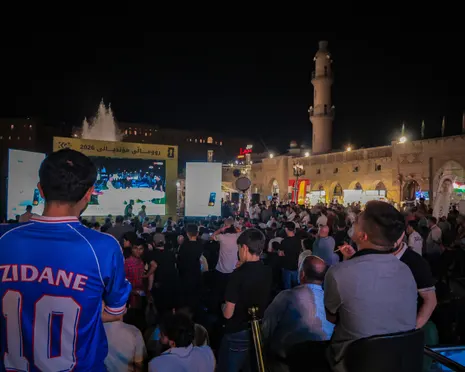
Arabic commentary transcends translation, becoming a genre that celebrates the rhythm and poetry of the region’s linguistic traditions. Whether in Lebanon’s bustling cafes or the elegant dining halls of Gulf nations, the commentators’ voices serve as the heartbeat of the matches. Their ability to weave metaphors and invoke poetic imagery transforms football into a living story, one that mirrors the oral traditions of Arab literature. “Even if you don’t understand football, hearing this beautiful commentary that basically sounds like a love letter to the game, you’re bound to get excited,” noted Cherly Abou Chabke, a Lebanese TV reporter, highlighting the universal appeal of such expressions.
Rooted in the classical art of eloquence, Arabic commentary blends historical depth with modern performance. The term “balagha”—a literary concept emphasizing rhetorical excellence—is often invoked by analysts to describe this craft. “A missed chance feels like a sorrowful stanza,” al-Kilani explained, while “a goal is a triumphant chorus.” This duality creates a powerful emotional framework, allowing fans to connect with the game on a visceral level. The language doesn’t just report events; it redefines them, turning every match into a chapter of shared history.
The influence of traditional poetry is unmistakable in the way Arab announcers frame their calls. For instance, when Messi scored his 17th World Cup goal, Yemeni commentator Hassan al-Aidarous delivered a moment that felt like a literary masterpiece. “Let history open its arms. Let the world bear witness to this moment. Let glory be etched for ever into eternity,” he said. “I do not call you Leo, I call you history itself! For if glory has a king, then you are the king of glory.” Such phrases are not mere embellishments—they are a deliberate homage to the language’s historical role in shaping national identity.
As the World Cup progresses, the interplay of Arabic language and football commentary continues to captivate. The phrase “You’re history itself!” has become a recurring motif, resonating with fans who see their heroes as more than athletes but as cultural icons. This phenomenon isn’t just about performance—it’s about preserving and evolving a legacy that has long been tied to the region’s poetic traditions. In the Arab world, football is not just a sport; it’s a living narrative, and the commentators are its storytellers.