Trump Claims Venezuelan Gang Leader Killed in US Strike
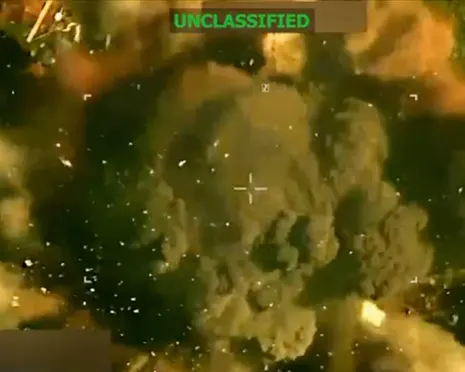
Wanderstayfinder.com – On Friday, former President Donald Trump declared that the United States military had eliminated Hector Rusthenford Guerrero Flores, a key figure in the Venezuelan criminal group Tren de Aragua, with the assistance of the Venezuelan government. The announcement came as part of a broader narrative framing the gang as a major threat to American security, with Trump emphasizing the significance of the operation. “At my direction, the United States Southern Command delivered a swift and lethal kinetic strike to successfully execute Niño Guerrero, the infamous leader of Tren De Aragua, one of the most bloodthirsty Terrorist Organizations on Planet Earth,” he stated on Truth Social. The post also featured a video purportedly depicting the strike, which Trump claimed was conducted in coordination with Venezuela, a key ally in his campaign against the country’s leadership.
US and Venezuela Collaboration Confirmed
Venezuela’s Ministry of Communications validated the death of the gang’s leader during a “joint operation,” confirming that Guerrero Flores was “neutralized” in clashes with members of the group. “There were clashes with members of these criminal structures, in which Hector Rusthenford Guerrero Flores, alias ‘Nino Guerrero,’ was neutralized,” the ministry said in a statement. This collaboration between the US and Venezuela marks a shift in their relationship, as the two nations have often been at odds over political and security issues. However, the operation underscores a shared interest in targeting Tren de Aragua, which has been implicated in a range of violent activities across the Americas.
“This action was coordinated closely with our friends in Venezuela, with whom we are working very well,” Trump wrote, highlighting the partnership as a sign of progress in the fight against organized crime. The video accompanying his message appeared to show a precision strike on a small boat, a tactic the administration has repeatedly used to accuse Tren de Aragua of smuggling drugs into the United States.
Gang Labeled as Terrorist Organization
The US government has designated Tren de Aragua as a terrorist organization, a classification that has fueled its aggressive campaign against the group. Guerrero Flores, who was charged in a New York federal court with racketeering conspiracy and other crimes, including supporting terrorism, has been linked to acts of violence, extortion, and drug trafficking that spanned over a decade. Authorities revealed in December that the gang’s activities had extended to North America, South America, and Europe, with US Attorney Jay Clayton stating that it was responsible for numerous attacks that “raped, maimed, and murdered American citizens with total impunity.”
Clayton, who was nominated by Trump to head the National Intelligence Director’s office on Thursday, has been a vocal advocate for targeting Tren de Aragua. His remarks during the December announcement underscored the gang’s role in fueling drug addiction and violence in US cities, a claim that has drawn both support and skepticism. Critics, including some members of the Venezuelan diaspora, have questioned the accuracy of these assertions, pointing to a declassified US intelligence assessment that contradicted Trump’s assertion that the gang operated under President Nicolás Maduro’s control.
Political Backing and Rewards for Information
Trump’s administration has taken a series of dramatic measures against Tren de Aragua, including missile strikes on vessels accused of transporting drugs. The operation that led to Guerrero Flores’s death was part of this strategy, which the White House has framed as a necessary response to the gang’s alleged invasion of the United States. In January, the US government moved Maduro to face drug trafficking charges, a move that Trump celebrated as a bold action against corruption.
To incentivize information leading to Guerrero Flores’s capture, the US State Department had previously offered a reward of up to $5 million. This reward reflects the perceived importance of the gang leader in the broader context of the administration’s war on drugs. The effort to track and eliminate him has been part of a larger campaign to link Venezuelan leadership to transnational criminal networks, a narrative that has shaped Trump’s rhetoric throughout his presidency.
“Before I returned to office, Joe Biden opened our Southern Border to millions of Illegal Criminals, and allowed this foreign army to rape, maim, and murder American Citizens with total impunity,” Trump wrote, using the Friday announcement to criticize his predecessor. The reference to the gang’s alleged role in US cities tied directly to the administration’s claim that Maduro’s regime had enabled these activities, a point that has been challenged by some analysts.
Debates Over Gang’s Allegiances
While the US has consistently portrayed Tren de Aragua as a rogue entity operating independently, evidence suggests a more complex relationship between the gang and Venezuelan leadership. The declassified intelligence assessment, which Trump’s team has cited as proof of the gang’s autonomy, has been dismissed by some as an attempt to undermine Maduro’s government. Critics argue that the gang’s operations are deeply embedded in Venezuela’s political and economic systems, with ties to state-sanctioned criminal activities.
Despite these debates, the recent strike has been celebrated as a victory for US-Venezuela cooperation. However, the operation has also reignited discussions about the role of the Venezuelan government in supporting the gang. The Ministry of Communications’ confirmation of the leader’s death, while aligning with Trump’s claims, does not address the broader question of whether Tren de Aragua remains an independent force or a tool of Maduro’s regime. This ambiguity has led to mixed reactions, with some praising the action as a step toward reducing cross-border crime and others questioning its impact on Venezuela’s sovereignty.
Legacy of the Tren de Aragua
Tren de Aragua, which translates to “Train of the River,” has been a symbol of organized crime in Venezuela for years. The gang’s activities have included bombings, kidnappings, and drug trafficking, with its influence stretching from Caracas to the United States. The death of Guerrero Flores, an alias used by the group, marks a significant blow to its leadership. However, the gang’s reach and resilience have been a source of concern for policymakers and security experts, who warn that its operations could continue under new leadership.
As the US and Venezuela continue their collaboration, the focus on Tren de Aragua serves as a reminder of the interconnected nature of global criminal networks. The strike, while a military success, also highlights the political dimensions of the operation, as it is used to bolster Trump’s narrative of a “war on terror” and to criticize his predecessor’s policies. The broader implications of this action, however, remain unclear, with experts noting that the gang’s activities are likely to persist unless its root causes are addressed at the national level.
In the aftermath of the strike, attention has turned to the next steps in the fight against Tren de Aragua. With Guerrero Flores out of the way, the administration may now shift its focus to other high-profile targets, including members of the gang who have been implicated in drug trafficking and violence. The operation also sets a precedent for future joint efforts between the US and Venezuela, potentially reshaping the dynamics of their relationship in the coming years.
As the media and public digest the details of the strike, the debate over the gang’s true allegiance and the effectiveness of US-Venezuela cooperation will continue. The action has been both a political statement and a military operation, reflecting the complex interplay between security and diplomacy in the region. Whether it marks a turning point in the fight against Tren de Aragua or simply another chapter in a long-standing conflict remains to be seen.