Home Office could be blocked from deporting trafficking victims to Albania

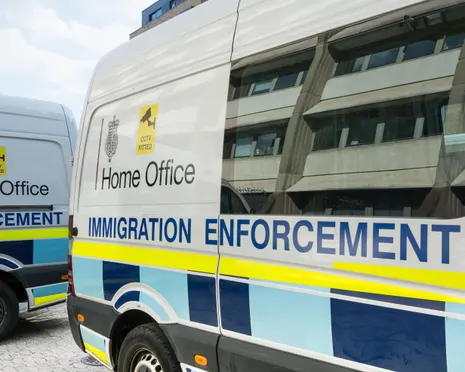
Table of Contents
Upper Tribunal Ruling Forces Home Office to Reconsider Deporting Albanian Trafficking Survivors
Wanderstayfinder.com – A landmark decision by three senior judges in the upper tribunal of the immigration court has effectively placed a legal barrier in front of the government’s plan to send young Albanian men back to their home country after they have been identified as victims of trafficking. The ruling, which arrived on 21 August 2026, obliges the Home Office to issue fresh country guidance before it can authorise any further removals of male survivors from Albania, and it signals that the department’s assumption that these men can safely return home no longer holds up under judicial scrutiny.
The Case Behind the Judgment
The legal challenge was brought by a 21-year-old Albanian man whose ordeal began at age 16, when he travelled to Belgium with his father and was seized by an Albanian organised-crime network. He was subsequently sold to a second gang, which transported him to Britain and compelled him to tend cannabis plants in indoor growing operations. After managing to escape his captors, he was formally recognised as a trafficking victim. Yet his asylum application was rejected on the grounds that Albania would be a safe destination for his return.
The tribunal panel overturned that decision. The judges concluded that even though five years had elapsed since his initial exploitation, the young man still faced a “real risk” of being recaptured by his former traffickers. They determined that he could not be expected to relocate safely within Albania and granted his asylum claim.
Country Guidance and Its Consequences
Alongside the individual ruling, the judges issued new country guidance directed at the government. The Home Office must now factor this guidance into every future decision about whether to repatriate male trafficking survivors to Albania. The tribunal found that while the Albanian state has made measurable strides against corruption, the problem remains widespread and entrenched. Crucially, the judges noted that no dedicated shelters exist for adult male trafficking victims in Albania, and that the probability of a returned survivor being re-trafficked is substantial.
For a government actively pursuing higher removal targets, the judgment lands as a significant setback. Albanian nationals have constituted the single largest nationality group subject to enforced returns from Britain over the past five years. Government figures show that 2,247 Albanians were deported in the twelve months ending March 2026, representing roughly one quarter of all enforced removals during that period.
Shifting Demographics of Albanian Trafficking
Court-disclosed data reveals a dramatic reversal in who is being trafficked from Albania into the UK. Historically, Albanian women were the predominant victims, funnelled into the British sex industry. That pattern has been overtaken by males — predominantly boys and young men — who are drawn into the drugs economy, either to distribute illicit substances or to labour as so-called “gardeners” in cannabis cultivation facilities.
The scale of the shift is stark. In 2022, UK services received referrals concerning 4,107 Albanian males over potential trafficking, compared with just 502 women. By 2023 the figures stood at 3,463 males and 588 females. The male-to-female ratio now exceeds eight to one, underscoring how the trafficking pipeline has pivoted toward younger men and boys.
Documented Practices of the Trafficking Networks
Islington Law Centre, a firm with deep experience representing Albanian trafficking survivors, drew the tribunal’s attention to a catalogue of abusive practices employed by the gangs. These include deliberately filming sexual abuse — including rape of child victims — and threatening to publish the footage on social media platforms unless compliance is maintained. The networks also show young captives video recordings of their relatives back in Albania, demonstrating that they know exactly who the families are and using that knowledge as leverage. Physical injuries, including broken bones inflicted on children and adolescents, are routinely administered to enforce obedience.
Legal Response
Esme Madill, a solicitor at Islington Law Centre who specialises in representing young Albanian trafficking survivors, commented on the outcome:
“This measured judgment has been reached by a court which had the benefit of significant and detailed evidence as to the worrying issue of trafficking of boys and young men by organised Albanian criminal networks. The profiles of trafficking survivors and the risks recognised in the judgment accord strongly with what we see in our work with deeply brutalised and traumatised young survivors every week.”
Home Office sources indicated that the department was weighing whether to seek permission to appeal the tribunal’s decision. No timeline for such an application has been confirmed.
Broader Implications
The ruling intersects with a wider political context in which successive UK governments have sought to accelerate the pace of immigration removals. By establishing that male Albanian survivors face ongoing, specific dangers at home, the tribunal has introduced a substantive legal hurdle that the Home Office must clear before processing further cases. Until new country guidance is published and applied, the department’s ability to process removals of this cohort is constrained.
For the thousands of young Albanian men currently in the UK system — many of whom entered through the drugs-trade pipeline described above — the judgment offers a degree of protection that did not previously exist. It also places the burden of proof on the government: rather than presuming safety of return, the Home Office must now demonstrate, case by case, that a particular survivor will not face retrafficking, retaliation, or absence of shelter upon arrival in Albania.
Related Reading
Frequently Asked Questions
What is Home Office could be blocked?
Home Office could be blocked is the main topic of this guide. The article explains the context, practical details, and next steps readers should understand.
Why does Home Office could be blocked matter?
Home Office could be blocked matters because readers are looking for a useful answer, not just a short summary. Good content should match search intent and help them decide what to do next.