Footage shows clash with French police on beach as dinghy tries to leave for UK

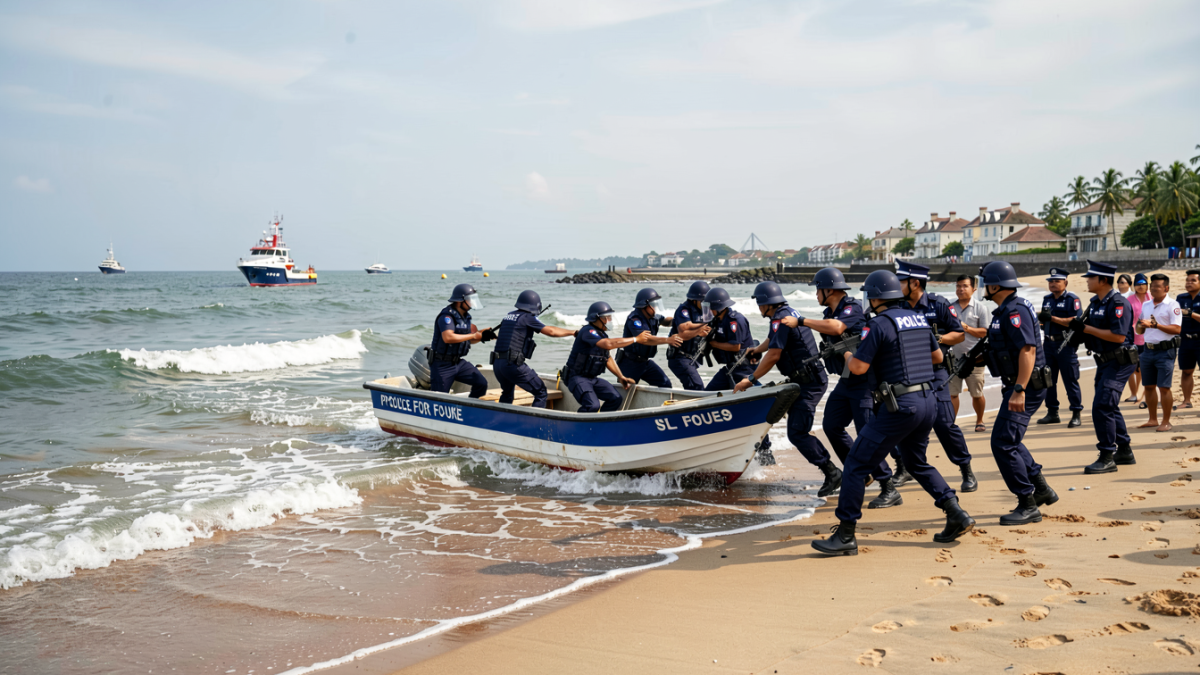
Table of Contents
Footage Shows Clash with French Police on Beach
Wanderstayfinder.com – Footage shows clash with French police officers exchanging blows and thrown objects with men in lifejackets along a northern French shoreline. The video captures the moment authorities moved to prevent an inflatable craft from slipping into the English Channel. The confrontation escalated when officers deployed Pava spray — a milder alternative to conventional pepper spray — before one officer sliced the dinghy open with a knife, ending the crossing attempt before it reached open water.
The clip emerged just as the French interior ministry was publicising results from a sweeping new arrangement with London. Officials reported that 185 “small boat crossing events” had been thwarted in the three months following the signing of a £660 million bilateral deal in April. Under that framework, a “small boat event” covers halting a launch, confiscating vessels, outboard motors, and lifejackets, and detaining members of smuggling networks.
Tightening the Net Along the Channel Coast
Since the April agreement took effect, additional police units have been stationed along the Channel shoreline. Among them is a 50-strong riot squad deployed specifically to manage beach-level interventions. The UK Home Office confirmed that operations have included both shoreline interceptions and at-sea stops. Twelve so-called “taxi boats” — larger craft used to ferry migrants along the coast before they board smaller dinghies — have been immobilised since March, preventing them from collecting additional passengers further up the shoreline. Extra resources have also been allocated to seizing boats and engines before they can be deployed in the Channel.
Smuggling operators, facing tighter enforcement, appear to have adapted by packing more passengers into single vessels. This month set a record: 230 people were aboard one craft attempting the crossing. The shift toward overcrowding raises obvious safety questions, particularly given the narrow width of the Channel at its closest point and the frequency of rough weather in late summer and autumn.
Charities Warn of Rising Danger
While ministers emphasise that successful crossings are declining, humanitarian organisations warn that the intensifying police presence is placing asylum seekers in greater danger. Utopia 56, a charity operating near Dunkirk, documented 35 CS gas canisters discharged by riot police toward migrants attempting to reach a small boat just three weeks before the latest footage emerged. The organisation’s statement at the time was blunt:
“We can see police pressure on the beach is putting more people at risk. We saw it last week and we are seeing it now and we have seen it for some time. It is terrible.”
The charity’s account underscores a tension at the heart of the new enforcement regime: the same tactics designed to deter crossings — crowd dispersal agents, physical barriers, and now blade work on inflatable hulls — can create panic, injury, and chaos among people who are often already exhausted from overland journeys through Europe.
What the Numbers Say
As of the latest available data, 15,897 migrants have completed the Channel crossing this year. That figure represents a 43 per cent drop compared with the same period last year and an 18 per cent decline from the equivalent point in 2024. Government ministers have seized on these statistics to argue that the bilateral framework is delivering measurable results.
The UK home secretary, Shabana Mahmood, framed the enforcement surge as a sustained campaign against organised crime:
“Our new UK-France deal is already having a real impact, stopping crossings before they happen and disrupting the criminal gangs behind them.”
“People smugglers should be in no doubt, we’re taking down their operations, seizing their equipment and breaking their business model for good.”
“Through our joint work with France, we have stopped over 47,000 small boat crossing attempts since the election and we will not let up.”
Separately, the Reform UK party has floated a plan to deploy Royal Navy vessels to intercept Channel crossings and transport passengers back to French or Belgian shores, branding the scheme a humanitarian intervention. Paris responded swiftly and firmly, stating the proposal “would be a violation of French sovereignty as well as a violation of maritime law and international law.” The rebuff highlights how tightly the two governments’ respective legal postures constrain even modest operational innovations.
Charlie Eastaugh, who leads Border Security Command, offered a broader defence of the joint enforcement posture, arguing that the coordinated approach — combining shoreline interdiction, at-sea stops, and asset seizure — represents the most effective structure available to both governments within existing legal frameworks.
Frequently Asked Questions
What happened in the beach confrontation captured on video? Footage shows clash with French police officers using Pava spray and a knife to stop an inflatable dinghy from launching into the Channel. Men in lifejackets exchanged blows and thrown objects with officers before the craft was cut open.
What is the £660 million UK-France deal? It is a bilateral agreement signed in April that funds additional police resources along the Channel coast, including a 50-strong riot squad and expanded at-sea interception capacity. Its stated aim is to disrupt smuggling networks before crossings occur.
How many crossings have been stopped under the new arrangement? The French interior ministry reported 185 “small boat crossing events” thwarted in the first three months after the deal took effect. The UK government claims over 47,000 attempts have been stopped since the election.
Is the Channel crossing becoming more dangerous? Charities such as Utopia 56 report increased use of crowd-dispersal agents and physical force on beaches. Smugglers have responded by overloading vessels — one craft carried 230 people this month — raising safety concerns in a narrow, often rough waterway.