
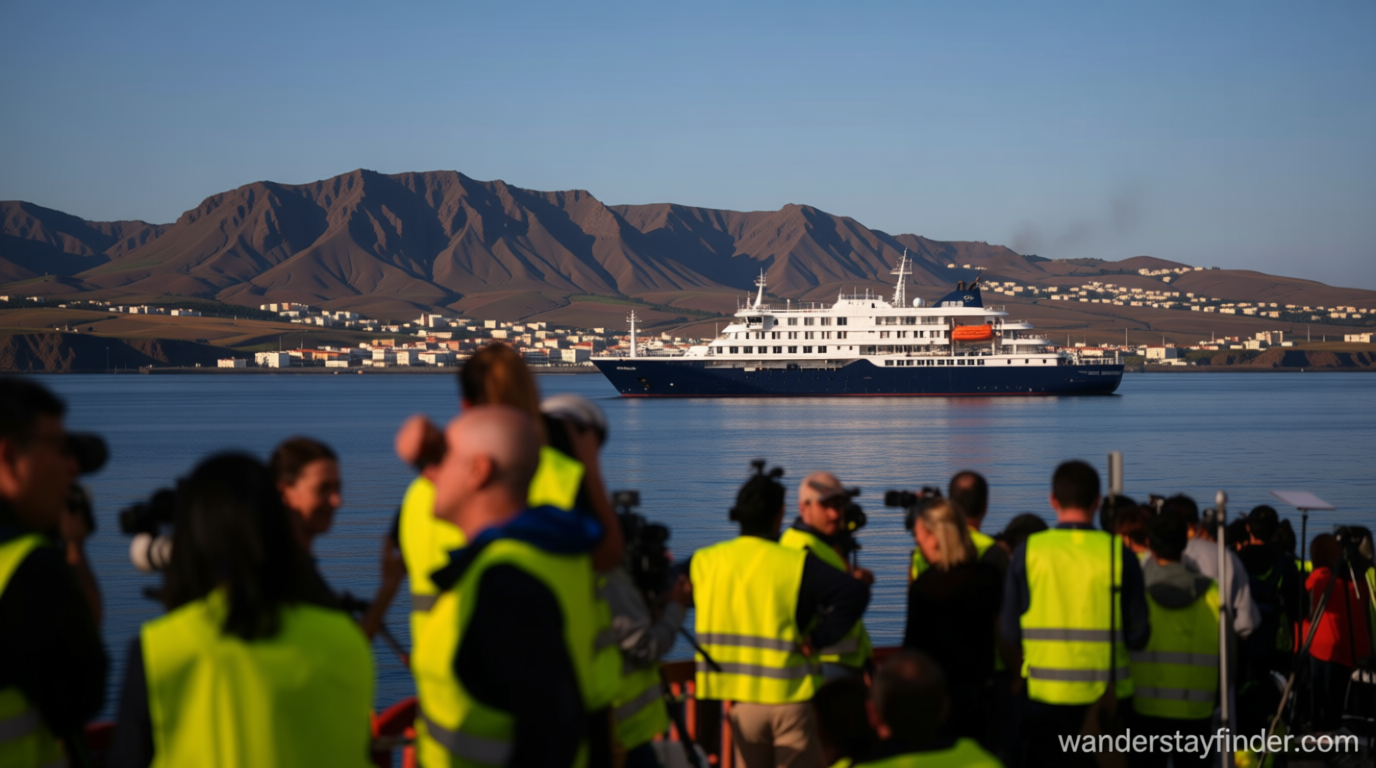
They were on the trip of a lifetime. Now they’re quarantined as health officials work to contain a hantavirus outbreak
They were on the trip – When the MV Hondius set sail from Buenos Aires, Argentina, last month, its passengers were eager for an extraordinary journey. The expedition promised to showcase remote islands and rare wildlife, offering a rare opportunity for adventure. However, six weeks later, the ship has become a hub of concern, with many of its American travelers isolated in modest accommodations at the National Quarantine Unit in Omaha, Nebraska. The situation has left them in prolonged isolation, raising questions about the virus’s spread and the measures in place to contain it.
The outbreak on the Hondius, operated by Oceanwide Expeditions, has sparked a global repatriation effort. As of Tuesday morning, 122 individuals—87 passengers and 35 crew members—had been evacuated, with most returning to their home countries. Among them, five Australians and one New Zealander remain in the Netherlands, awaiting repatriation. The remaining 27 crew members and two medical staff are set to arrive in Rotterdam, where the ship will undergo thorough disinfection. This week’s arrival in the port city marks the next phase of the containment strategy, according to Oceanwide’s schedule.
Since April 11, three passengers have succumbed to the virus, while several others have tested positive or are suspected cases. The World Health Organization (WHO) confirmed that the Andes strain of hantavirus is responsible, emphasizing that the risk to the general public remains minimal. “We are currently tracking 11 cases, including the three fatalities,” said Dr. Tedros Adhanom Ghebreyesus, the WHO Director-General, during a briefing. “Nine have been definitively diagnosed, while two are classified as probable.” The virus’s transmission on the ship has been linked to human-to-human spread, adding complexity to the response.
“Hopping back on for a second to let everyone know I’m okay and feeling well,” passenger Jake Rosmarin wrote in a post to Instagram on Monday, accompanied by a smiling selfie. “The repatriation flight was smooth, and I safely made it to the National Quarantine Unit in Omaha. It’s been a very long few days, but hopefully I can start giving more updates again soon.”
As the health crisis unfolds, the focus has shifted to monitoring the affected individuals. In the US, 17 Americans and one British dual-national are being observed at medical facilities, including the University of Nebraska Medical Center. The group’s ages range from late 20s to early 80s, with older travelers and those with preexisting conditions facing greater risks. At the Nebraska facility, 16 of the 18 people are currently in quarantine or biocontainment units, though all remain asymptomatic, as reported by the US Department of Health and Human Services.
Dr. Mara Jana Broadhurst, a clinical laboratory director at the University of Nebraska Medical Center, highlighted the challenges of managing the situation. “Decisions about balancing in-person monitoring and home-based observation are still being discussed,” she explained at a briefing by the College of American Pathologists. “The clinicians and the individuals involved work together to determine the best course of action based on their specific circumstances.” This personalized approach aims to optimize resources while ensuring safety.
Meanwhile, two individuals have been transferred to Atlanta’s Emory University for additional care. These patients, a couple, are being monitored in a biocontainment unit due to capacity constraints at the Nebraska facility. One of them, who showed mild symptoms, has tested negative for the Andes strain. This development underscores the importance of continued testing and evaluation in managing the outbreak.
The WHO has reiterated that the Andes strain, while rare, poses a serious threat to those in close contact. “We are working closely with local health authorities to track all cases and prevent further spread,” Dr. Tedros stated. The agency’s guidance has been critical in shaping the quarantine protocols, ensuring that the isolation period extends until at least June 21 for those exposed on May 10. This timeline reflects the virus’s incubation period and the need for sustained monitoring.
As the crisis continues, the remaining 27 individuals aboard the ship are being prioritized for repatriation and decontamination. Their arrival in Rotterdam on Sunday evening signals the end of the voyage but the beginning of a new phase of testing and analysis. Health officials are now preparing to assess the ship’s environment to identify potential sources of contamination, a process essential for preventing future outbreaks.
In the US, the National Quarantine Unit in Omaha has become a central location for tracking the virus’s impact. Patients here are being monitored for symptoms, with daily evaluations to determine their health status. “We are conducting in-depth interviews with each passenger to understand their interactions with confirmed cases,” said Nebraska Medicine, a key partner in the response. This step is crucial for mapping the virus’s transmission patterns and ensuring no new cases emerge during the quarantine period.
The outbreak has also prompted a reevaluation of safety protocols for similar expeditions. With 18 passengers and crew members still under observation, health officials are closely analyzing the ship’s operations to identify any lapses in hygiene or ventilation that may have contributed to the spread. The Andes strain, known for its high fatality rate, has been a particular focus of concern. While the virus’s pathogenicity remains a factor, the WHO’s low-risk assessment has provided some reassurance to the public.
For the passengers, the experience has been both memorable and unsettling. Jake Rosmarin’s Instagram post captured a glimpse of life in the quarantine unit, where modest rooms now serve as temporary homes. The presence of an exercise bike in each room suggests a focus on maintaining physical health during isolation. Despite the inconvenience, the passengers’ resilience has been evident, with many expressing hope for a swift resolution to their situation.
As the days pass, the uncertainty surrounding the virus’s long-term effects lingers. The 42-day monitoring period is a key component of the containment plan, with decisions on home versus facility-based quarantine being made based on individual risk factors. This process, though ongoing, aims to protect both the passengers and the broader community. With the global repatriation efforts continuing, the story of the MV Hondius remains one of resilience, vigilance, and the delicate balance between exploration and safety.
Impact on the Cruise Industry and Public Health Strategies
The hantavirus outbreak has cast a shadow over the cruise industry, which has been a cornerstone of international travel for decades. Oceanwide Expeditions, the operator of the MV Hondius, faces scrutiny as it works to implement enhanced safety measures. The incident highlights the vulnerability of enclosed spaces to respiratory pathogens, prompting a review of ventilation systems, onboard hygiene practices, and passenger interactions. For travelers, the experience of being quarantined halfway across the Atlantic has become a cautionary tale about the unpredictability of global health threats.
Public health officials have emphasized the importance of collaboration in managing the outbreak. The National Quarantine Unit in Omaha is working alongside federal partners to ensure rigorous tracking of symptoms and exposure risks. This partnership has enabled real-time updates, such as the recent confirmation that all 18 US cases remain asymptomatic. However, the possibility of new cases or symptoms emerging in the coming days keeps the situation dynamic.
As the ship’s disinfection in Rotterdam progresses, the focus will shift to evaluating its role in the outbreak. Environmental samples and equipment checks are expected to provide further insights into the virus’s spread. This step is vital for understanding how the Andes strain might have been transmitted in such a confined setting. The results could influence future travel guidelines and reinforce the need for continued vigilance in healthcare and transportation sectors.
Despite the challenges, the response to the outbreak has been marked by coordination and adaptability. The evacuation process, though complex, has ensured that affected individuals receive timely care. The repatriation of Australians and New Zealanders to the Netherlands, for instance, demonstrates the international cooperation necessary to address such crises. Meanwhile, the remaining crew members and medical professionals are preparing for the next phase of their journey, where their health and safety will be prioritized.
As the world watches the situation unfold, the lessons from the MV Hondius will shape global health policies. The balance between protecting at-risk individuals and maintaining travel accessibility remains a central theme. With the virus’s incubation period still in play, the quarantine units in Omaha and Atlanta will serve as hubs for monitoring and decision-making, ensuring that each case is addressed with precision.
The ongoing efforts to contain the hantavirus outbreak underscore the importance of preparedness in an interconnected world. While the trip of a lifetime has turned into a period of isolation, the dedication of health professionals and the cooperation of passengers have kept the situation under control. As the next few weeks unfold, the focus will remain on preventing the spread of the virus and providing clarity for those affected. The story of the MV Hondius is a reminder of the delicate interplay between human curiosity and the ever-present risks of global health





