
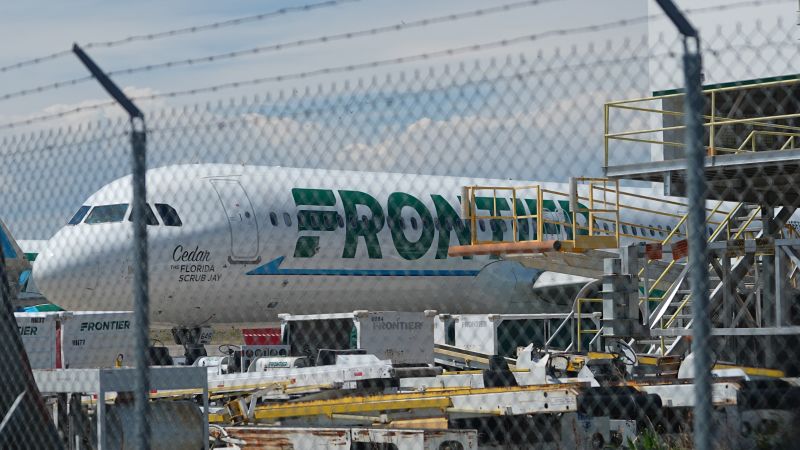
Man Hit by Frontier Airlines Plane Taking Off at Denver Airport Intended to Kill Himself, Officials Say
Man hit by Frontier Airlines plane – Denver International Airport has revealed that the 41-year-old man struck and killed by a Frontier Airlines jet during its departure was aiming to take his own life. Officials confirmed on Tuesday that the incident was classified as a suicide, according to Sterling McLaren, the city’s chief medical examiner, who identified the victim as Michael Mott. The event occurred on Friday when Mott jumped a perimeter fence, leading to his fatal encounter with the aircraft.
Flight Details and Evacuation
Frontier Flight 4345, an Airbus A321, was en route to Los Angeles when the accident happened. The airline initially reported the flight had 224 passengers and seven crew members aboard. Audio from ATC.com captured the pilot’s statement: “We’re stopping on the runway. We just hit somebody. We have an engine fire.” This prompted a rapid evacuation, as smoke quickly filled the cabin. Twelve individuals were injured during the process, with five requiring hospitalization. Four of the hospitalized have since been released, according to the airline’s statement.
The incident occurred shortly after Mott breached the airport’s security perimeter. Despite the presence of ground detection sensors, which activated an alarm as he approached the fence, security personnel initially missed him on camera. Officials noted that a herd of deer was spotted on the footage, diverting attention from the man’s movements. The 36-mile-long fence surrounding the airport was found intact, though the airport is conducting an incident analysis to evaluate its security program.
Security Layers and Airport Response
Denver International Airport CEO Phil Washington emphasized the multi-layered security measures in place. “Safety and security, again, is always our top priority,” he stated. The fence, which stands at 8 feet tall and features barbed wire along with an alarm system, is designed to deter unauthorized access. However, Washington acknowledged that a determined individual could still find a way to bypass it, citing previous incidents involving fence jumpers.
Washington explained that Mott’s action took approximately 15 seconds to execute. Within two minutes, the plane had already taken off, and the collision occurred. The CEO noted the airport’s size, which spans 53 square miles, making it larger than the city of San Francisco. He highlighted that the airport’s security team and Denver police regularly patrol the airfield, reinforcing the need for continuous vigilance. “Even if the fence were taller, we believe a motivated individual could find a way to penetrate it,” he added.
Denver police are continuing their investigation into Mott’s motivations. The circumstances surrounding his decision to jump the fence remain under scrutiny, with officials searching for answers about why he targeted the aircraft. The incident has raised questions about the effectiveness of security measures and the potential risks of human error or oversight in such a large facility.
Broader Implications and Support Resources
The tragedy has sparked a broader discussion about the balance between airport security and the safety of passengers. While the fence was intact, the fact that Mott was able to jump it without detection underscores the challenges of monitoring vast areas. Airport officials are now reviewing their perimeter security program to identify any gaps that may have contributed to the incident.
Washington also mentioned that the airport has encountered similar situations in the past, but this event highlights the importance of refining protocols. “We don’t want our fence to be deadly,” he said. “That is why we have many layers of security.” The CEO’s remarks reflect the airport’s commitment to preventing such occurrences while maintaining operational efficiency.
Following the incident, the 988 Suicide & Crisis Lifeline has been highlighted as a critical resource for individuals in distress. The hotline, which provides free and confidential support 24/7, offers assistance to those experiencing suicidal thoughts or helping someone in crisis. This connection underscores the significance of mental health resources in addressing incidents like Mott’s.
The airport’s response includes a comprehensive review of its security systems, with an emphasis on improving detection capabilities. Officials are analyzing how the alarm system and camera footage could have been more effective in identifying Mott earlier. While the fence was not breached, the incident has prompted calls for enhanced monitoring technologies and additional personnel training.
Legacy of the Incident
As the investigation continues, the event serves as a stark reminder of the unpredictable nature of security threats. Mott’s actions, though deliberate, resulted in a collision that left a lasting impact on the airport and its passengers. The airline and authorities are working together to ensure such incidents are minimized in the future, even as they acknowledge the complexity of managing a massive airport with stringent safety standards.
The case has also prompted a reevaluation of the psychological factors that may drive individuals to take such extreme risks. While the exact trigger for Mott’s decision remains unclear, experts are pointing to the availability of resources like the 988 Lifeline as a potential safeguard. “We need to make sure people know they can reach out for help,” said Washington, emphasizing the role of community support in crisis prevention.
With its sprawling layout and high volume of daily activity, Denver International Airport faces unique challenges in maintaining a secure environment. The incident has prompted a renewed focus on integrating advanced technologies with human oversight to address vulnerabilities. As the airport continues to assess its security protocols, the story of Michael Mott serves as both a cautionary tale and a call to action for improving safety measures across the nation’s largest transportation hubs.





