UK Parents Advised to Exercise Caution with Sharing Children’s Images Online
UK parents warned over posting images – In response to escalating concerns about the misuse of artificial intelligence in generating child sexual abuse material, the National Crime Agency (NCA) and Internet Watch Foundation (IWF) have issued updated guidelines to help families protect their children’s digital presence. The guidance underscores how AI tools now enable predators to transform ordinary photos into convincing explicit content, posing a significant threat to children’s privacy and safety. Parents are urged to take proactive steps to prevent their images from being exploited, as the technology has made it easier for criminals to manipulate visual data without consent.
AI-Generated Content Expands Online Risks
Recent data from the IWF shows a 14% increase in AI-created child sexual abuse material (CSAM) over the past year, with 8,029 realistic images and videos identified in 2025 alone. These materials are produced through advanced algorithms that can alter photos to depict explicit scenarios, often without the child’s knowledge. The NCA highlights that even fully-clothed selfies can be repurposed into extreme pornography, emphasizing that the risk is no longer limited to traditional methods of exploitation. This development has prompted authorities to issue clear warnings about the dangers of sharing children’s images online.
“Parents may not realize that sharing a child’s photo on social media could lead to its transformation into CSAM,” said Lorna Sinclair, a child sexual abuse education manager at the NCA. “The issue is not just about the content itself, but the ease with which it can be manipulated by digital predators.”
The growing accessibility of AI technology has made it simpler for individuals to create and distribute harmful content. For example, a 15-year-old girl recently described how a stranger used AI to generate a “convincing” fake nude image of her, combining her face and bedroom from photos shared on Instagram. Such incidents highlight the urgency of implementing safeguards to reduce the chances of children’s images being used for malicious purposes.
Protective Measures for Safer Digital Sharing
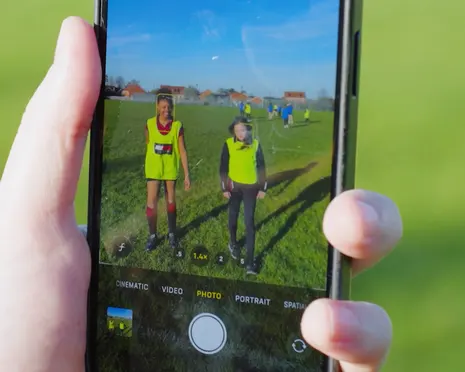
Experts recommend that parents take simple but effective steps to minimize risks. These include setting social media profiles to private, using “close friends” groups for sharing photos, and regularly reviewing their online activity. The NCA also advises revisiting consent agreements with schools or sports clubs, especially those signed before AI breakthroughs made image manipulation more feasible. By adopting these practices, families can create a safer digital environment for children.
“We encourage parents to check their privacy settings and consider who has access to their child’s images,” said Tim Wright, a senior manager at the NCA. “The guidance highlights three key actions: ensuring photos are shared only with trusted individuals, and fostering open conversations about consent and digital safety.”
The IWF’s chief technology officer, Dan Sexton, acknowledged the challenge of advising parents to limit public sharing, yet emphasized its importance. “There is no protection if images are freely accessible online,” he noted. The guidance also includes examples showing how everyday photos can be repurposed, urging families to think critically about their digital footprint and the potential consequences of sharing images of children.
Collaborative Efforts to Tackle Online Exploitation
Following reports of AI-generated CSAM being used to blackmail children, the Early Warning Working Group (EWWG) has called for educational institutions to remove identifiable images of students from public platforms. This aligns with the NCA’s broader strategy to raise awareness about digital risks, as schools and clubs often share photos of children without proper safeguards. The NSPCC has also supported these measures, urging under-18s to keep their social media profiles private to reduce exposure to predators.
Additionally, the NCA’s Report Remove service has been instrumental in addressing cases where AI tools have transformed normal selfies into explicit material. The service has documented instances where images were used for extortion, underscoring the need for prompt action. By combining technological solutions with parental vigilance, authorities aim to combat the growing threat of AI-driven sexual abuse of children online.