Australia’s ‘pioneer’ colonists profited from slavery. That truth must be acknowledged

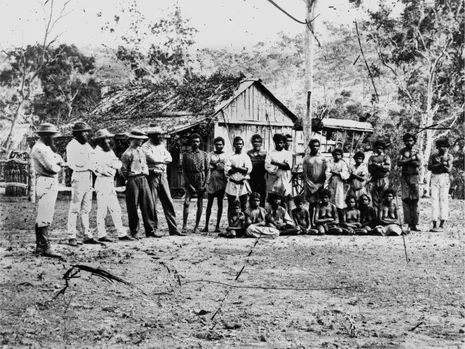
Table of Contents
Reckoning with the Past: How Townsville’s Namesake Built His Fortune on Enslaved Labor
Wanderstayfinder.com – When visitors stroll through the sun-drenched streets of Townsville, they encounter a city that proudly bears the name of Robert Towns, a nineteenth-century merchant whose legacy has long been celebrated as emblematic of colonial gentility. Yet beneath this polished surface lies a more complicated story—one that reveals how Towns, despite rarely visiting the place that carries his name, amassed considerable wealth through the exploitation of Pacific Islander laborers brought to Australia under conditions that amounted to slavery.
The Hidden History of Blackbirding
The term “blackbirding” often appears in Australian historical narratives as a distinct phenomenon, yet it shares deep roots with the broader systems of human bondage that shaped British and American history. This practice involved the recruitment—frequently through coercion and deception—of approximately 62,000 Pacific Islanders to work in Australia between 1860 and 1906. The terminology itself derives directly from the African slave trade, underscoring the continuity of forced labor systems across continents and centuries.
While Towns remains one of the most recognizable figures associated with this era, he was not alone. The Scottish merchant John Mackay, after whom another Queensland city was named, operated within the same commercial network, trafficking Pacific Islanders to support Australia’s expanding colonial economy. These men built fortunes on the backs of men and boys who were transported across vast distances to labor under harsh conditions.
Towns: Pioneer or Villain?
Historical biographies have traditionally portrayed Towns as a refined entrepreneur whose contributions to civic life earned him warm commemoration. Statues, street names, and institutional dedications have reinforced this narrative of benevolent colonialism. However, recent scholarship challenges this comfortable interpretation. Author Ryan Butta, in his comprehensive work examining colonial Sydney’s mercantile connections to the Pacific Islander labor trade, characterizes Towns as “the founding father of Australian slavery.”
The evidence supporting this assessment is substantial. Towns maintained a significant fleet of ships based in Sydney, many of which participated directly in blackbirding operations. Some vessels transported Pacific Islanders to Australian ports, while others were crewed by those same blackbirded laborers. His wharf operations, locally known as Rotten Row, depended heavily on this coerced workforce to sustain commercial activities.
The Sugar Industry’s Human Cost
One of the primary destinations for blackbirded Pacific Islanders was Queensland’s sugar plantations, where they endured brutal working conditions. Historical records indicate that approximately 15,000 Pacific Islanders perished on these plantations during the height of the blackbirding era. The sugar they cultivated was refined at facilities operated by the Colonial Sugar Refining Company, whose wharves in what is now Pyrmont, Sydney, processed vast quantities of this commodity.
The economic significance of this trade extended far beyond Queensland. Sydney’s harbourside became a hub of activity, with Towns’ wharf operations handling an extraordinary range of goods. An official plaque at Towns Place Wharf, near Sydney’s Miller’s Point, continues to celebrate him as a man who “imported and exported every commodity imaginable: sugar, rope, salt, sandalwood, horses and skins, sperm and black oil, and later wool.” This inscription, while factually accurate, omits the human labor that made such commercial success possible.
Monuments and Memory
The debate over how to commemorate colonial figures extends beyond Towns to encompass broader questions about public memory and historical truth. Towns’ statue, situated in the city’s Pioneer’s Walk, was unveiled in 2005 with inscriptions that made no reference to his involvement in the blackbirding trade. Similarly, the statue of Governor Lachlan Macquarie in central Sydney, dedicated in 2013, carries benign text despite Macquarie’s well-documented role in ordering the 1816 massacre of First Nations people at Appin, New South Wales, and the subsequent removal of Indigenous children.
In 2020, Towns’ statue became the target of vandalism when someone daubed its hands in red paint, symbolizing blood. While such acts of defacement may not represent the author’s preferred method of historical correction, they signal a growing public awareness of the darker aspects of colonial history. The author advocates for a more nuanced approach: rather than removing monuments entirely, adding explanatory plaques and complementary statues could transform these sites into portals for understanding complex historical narratives.
Seeking Balance in Commemoration
Townsville has occasionally demonstrated efforts to protect Towns’ reputation, at one point insisting that he had not “personally condoned or was involved in blackbirding.” Such claims, however, contradict the documentary evidence that Butta’s research brings to light. The broader pattern of shielding colonial figures from full historical accountability appears widespread across Australian cities and towns.
Proposals for additional commemorative measures include placing permanent plaques near existing statues and erecting new monuments honoring figures such as Bonita Mabo, a lifelong activist for South Sea Islander and Australian First Nations rights. These additions would not erase the past but would enrich the public understanding of it.
The question of whether to rename colonial cities remains open. The author suggests that while renaming is unnecessary, the existing nomenclature should serve as a starting point for deeper engagement with history. Townsville, like many Australian urban centers, has the opportunity to acknowledge its full heritage—celebrating achievements while confronting the injustices upon which those achievements were built.
As Australia continues to grapple with its colonial legacy, the story of Towns and blackbirding offers a compelling case study in how public memory can evolve. The sugar wharves that once bustled with activity now form a beautiful harbourside park, a fitting setting for reflection on the labor and lives that shaped this nation’s commercial foundations. The challenge ahead lies in ensuring that such spaces of beauty also become spaces of truth.
Related Reading
Frequently Asked Questions
What is Australia s pioneer colonists profited?
Australia s pioneer colonists profited is the main topic of this guide. The article explains the context, practical details, and next steps readers should understand.
Why does Australia s pioneer colonists profited matter?
Australia s pioneer colonists profited matters because readers are looking for a useful answer, not just a short summary. Good content should match search intent and help them decide what to do next.