Ebola Outbreak in DRC the Fastest Growing in History
Wanderstayfinder.com – The Ebola outbreak in DRC the fastest growing in recorded history has now reached 3,360 confirmed cases across five eastern provinces. With 1,487 deaths documented, the case fatality rate stands at approximately 45%, according to Congolese health authorities. Armed conflict in several affected regions continues to severely hamper response efforts and containment strategies.
Unprecedented Spread and Community Impact
Deborah Nzuva, a mother of four residing in Rwampara, expressed deep concern about the situation. “I fear that at some point, life may come to a standstill here in our province of Ituri,” she said. “We were already in a precarious situation before the Ebola virus disease, which continues to claim its victims.”
“Here in Ituri, we have the issues of insecurity, mining and high population density, which make the current outbreak more complex than previous ones,” said Prof Pierre Akilimali from the National Public Health Institute.
Officially declared on 15 May, the Bundibugyo strain has outpaced all 16 previous DRC outbreaks. The current numbers are approaching the devastating 2018-2020 epidemic, which infected 3,470 people. Prof Akilimali, who leads the national response, emphasized that determining when the outbreak will peak remains challenging.
Containment Measures and International Support
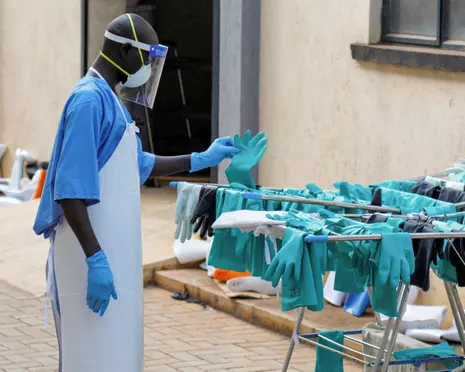
Authorities have implemented multiple strategies to curb transmission. These include deploying community liaison officers for enhanced surveillance, constructing over 20 Ebola treatment centers, and establishing local diagnostic laboratories. “The public must also play their part by seeking medical advice at the slightest suspicion of infection,” Akilimali advised.
Weekly new infections range between 100 and 150, primarily in the Bunia and Rwampara health zones. Annabelle Nissi, a clothing merchant in Bunia, shared her perspective: “This outbreak is causing us great distress. Our hope lies solely in God’s hands. It continues to disrupt our lives and has brought our development projects to a standstill.”
Dr Justus Nsio, field incident manager for the Africa Centres for Disease Control and Prevention, noted that experts agree the outbreak was detected too late. “When detection is delayed, we have to work hard to make up for what we missed earlier in order to contain the disease,” he explained. “What is certain is that, with the commitment of the movement and our partners, the outcome will be favourable.”
Clinical trials for a Bundibugyo strain vaccine commenced in early July, addressing the lack of standard treatment options. Prof Placide Mbala, head of laboratory operations, reported that approximately 20 participants have been enrolled so far, with trials potentially lasting four months. Meanwhile, Uganda—having declared its own outbreak over just 12 days after the last case—has dispatched specialists to assist in border regions including Tchomia and Kasenyi.
Frequently Asked Questions
What makes this Ebola outbreak in DRC the fastest? The current outbreak has surpassed all previous DRC epidemics in terms of case accumulation rate since its declaration on 15 May. The Bundibugyo strain’s rapid transmission, combined with challenging security conditions and high population density in Ituri province, has accelerated spread beyond historical benchmarks.
How many provinces are currently affected? Five eastern provinces of the Democratic Republic of the Congo have reported confirmed cases, with Ituri, North Kivu, South Kivu, Tanganyika, and Haut-Katanga being the most significantly impacted regions.
What treatment options are available? While no standard treatment exists for the Bundibugyo strain, clinical trials for a specialized vaccine began in July 2026. Supportive care remains the primary approach, alongside experimental therapeutics being tested in the ongoing trials.
Is international assistance being provided? Yes. Uganda has sent medical experts to collaborate with Congolese health workers, particularly in border areas. The Africa Centres for Disease Control and Prevention, through Dr Justus Nsio’s team, continues monitoring and coordinating response efforts across affected zones.