Uganda Calls for Travel Restrictions to Be Lifted
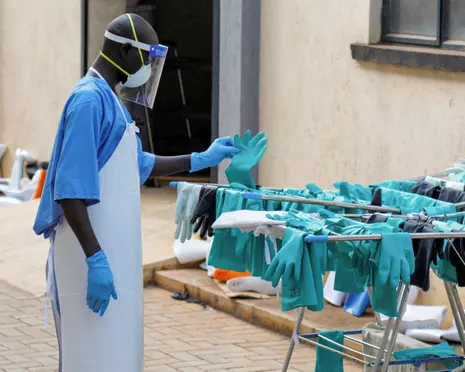
Uganda calls for travel restrictions to be lifted after its last Ebola patient was discharged from the Mulago national referral hospital in Kampala. The Congolese citizen left the isolation facility on Thursday, beginning a mandatory 42-day monitoring period set by the World Health Organization. If no new infections occur during this countdown, Uganda will receive official Ebola-free status.
The domestic outbreak involved twenty people and claimed two lives. Despite effective containment efforts, fifteen countries have kept travel limitations in place—either fully or partially. Government officials say these measures have hurt tourism, trade, and business activities across the nation.
Economic Impact and Travel Advisories
The United States has raised Uganda to a level four travel advisory, advising against all travel due to the Ebola situation. This top warning level also covers nations such as North Korea, Somalia, Afghanistan, and Russia.
“As we make progress in managing this disease, we are engaging and asking those countries with a view to opening up so that the economy does not get injured,” Uganda’s health minister, Dr Chris Baryomunsi, said after the discharge ceremony.
Dr Baryomunsi noted that Uganda has not yet been declared Ebola-free. Under WHO guidelines, countries must complete two consecutive twenty-one-day incubation periods without new cases before an outbreak is officially over.
“This is an imported outbreak. We remain on high alert because what we are celebrating here is different from what is happening in the Democratic Republic of the Congo,” he added.
Regional Context and Outbreak Data
On the same day, the Democratic Republic of the Congo reported two thousand seventy-three confirmed cases and seven hundred ninety-six deaths as of July 14. Uganda’s outbreak, caused by the Bundibugyo viral strain, was first declared by the WHO on May 17.
The Ugandan experience has been notably better than previous Ebola emergencies in the region. Among twenty confirmed infections—fifteen Congolese citizens, four healthcare workers, and one driver—only two deaths were recorded. Dr Kasonde Mwinga, the WHO’s representative in Uganda, credited the positive outcome to sustained investment in epidemic preparedness.
“The case fatality rate of less than 10% is among the lowest recorded in Ebola outbreaks because the lowest has always been 30%. That is not by luck. It is because people invested in preparedness,” she explained.
Vaccine Progress and Regional Cooperation
Dr Mwinga pointed out that Uganda had already established treatment centers, trained response teams, and stockpiled medical supplies before the outbreak began. This readiness allowed for quick action when cases appeared. The crisis also accelerated efforts to develop a vaccine specifically for the Bundibugyo strain, for which no approved immunization currently exists.
Dr Ronnie Bahatungire, Uganda’s clinical services commissioner, revealed that the country conducted trials with experimental treatments during the outbreak and plans to join future vaccine research.
“We will participate at whatever point in time when an opportunity arises,” Dr Bahatungire said.
This week, Oxford University’s Vaccine Group launched the world’s first Phase I clinical trial for BD-Ebov, a vaccine candidate for the Bundibugyo strain, with the first patient already enrolled. Officials stressed that cross-border risks remain despite Uganda’s progress.
Dr Baryomunsi announced that Presidents Yoweri Museveni of Uganda and Félix Tshisekedi of the DRC agreed to enhance cross-border cooperation and signed a bilateral memorandum of understanding. Under the agreement, Uganda has sent health specialists to the DRC to help contain the outbreak and prevent Congolese citizens from traveling to Uganda for medical treatment.
“We have so far sent 50 health workers with four laboratories and these have been set up in four different locations. We ag