Dolphins Increasingly Rely on Trawlers for Food in Overfished Adriatic, Say Scientists
Study Reveals Dolphins’ Shift in Feeding Behavior
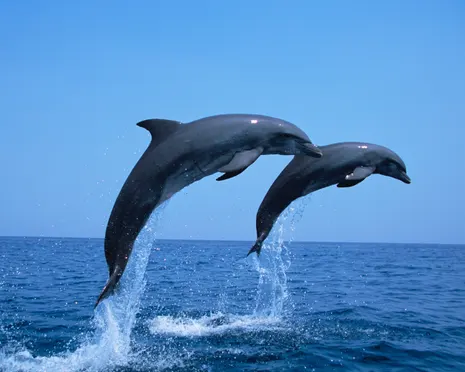
Dolphins increasingly rely on trawlers for food – A new study highlights a growing trend among bottlenose dolphins in the Adriatic Sea, where these marine mammals are increasingly following trawler vessels to scavenge for food. Researchers have observed that juvenile dolphins are learning to exploit this resource through their interactions with adult counterparts. “In recent times, the simplest method to locate bottlenose dolphins has been by tracking trawler vessels,” remarked Giovanni Bearzi, a co-author of the study and president of Dolphin Biology and Conservation in Italy. “Many of these dolphins now accompany trawlers, taking advantage of the bycatch and discarded organisms that accumulate in their wake.”
Fishing Pressure in the Mediterranean
The Mediterranean Sea, which faces one of the highest fishing intensities globally, has seen its natural ecosystems strained beyond recovery. According to the study, the level of fishing pressure in the region exceeds sustainable limits by a factor of two, as defined by the FAO. This overexploitation has left natural prey populations dwindling, forcing dolphins to adapt their foraging strategies. “Dolphins are drawn to trawlers because their usual prey is increasingly scarce,” Bearzi explained. “The trawling activity creates a predictable source of food, even if it’s not ideal.”
Methodology and Findings
Over a 148-day period, scientists conducted 859 inspections across two distinct regions of the Adriatic, monitoring various types of trawler operations. While dolphins have historically followed fishing boats, the study suggests that the frequency and persistence of this behavior have grown significantly. In the 1990s, only 10% of trawlers in the area were observed by dolphins, but the latest research found that 76% of trawlers now had these marine mammals trailing them. This shift indicates a more pronounced reliance on human activities for sustenance, a trend that could have long-term ecological consequences.
Broader Implications for Marine Life
The study notes that animals facing depleted prey stocks often turn to human-altered environments for survival. Polar bears, for instance, are known to scavenge in landfills when natural food sources are insufficient. Similarly, dolphins in the Adriatic are adapting to a changing landscape by exploiting trawler bycatch. “Trawlers serve as a critical lifeline in an ecosystem that has lost much of its natural abundance,” the researchers stated. “This behavior may be a survival tactic, but it also exposes dolphins to new risks.”
Risks of Trawling on Dolphin Populations
While dolphins are opportunistic feeders, the study warns that their dependence on trawlers comes with trade-offs. Dr. Randall Reeves, a co-author of the research and chair of the Committee of Scientific Advisors at the US Marine Mammal Commission, emphasized the dangers of trawling. “Dolphins are frequently injured or killed by trawl gear, and foraging behind trawlers can disrupt their natural diets and social structures,” he said. Additionally, chronic exposure to trawler noise may lead to hearing impairments, further complicating their ability to navigate and communicate in the wild.
Cultural Transmission of Scavenging Behavior
The study underscores that this adaptive behavior is being passed down through generations of dolphins. “Young dolphins observe their mothers and learn to follow trawlers as a feeding strategy,” Bearzi noted. “This is a form of cultural learning, not just instinct.” The researchers observed that calves often remain close to their mothers while they scavenge, mimicking their actions and absorbing the technique. This intergenerational knowledge transfer suggests that dolphins are not merely reacting to environmental changes but actively reshaping their survival strategies.
Decline of Common Dolphins in the Adriatic
The findings also shed light on the decline of common dolphins in the Adriatic. “Common dolphins are no longer as prevalent as they once were,” Bearzi said. “In most parts of the sea, they’ve become nearly extinct, with only a few isolated areas still supporting their populations.” This decline serves as a warning sign of broader ecological imbalances. “The disappearance of entire dolphin communities is a clear indicator of the damage caused by unsustainable fishing practices,” he added.
Call for Sustainable Fishing Practices
To address this crisis, the researchers advocate for a reduction in destructive fishing methods and a shift toward more sustainable alternatives. “If we eliminate harmful trawling techniques, marine resources could rebound rapidly,” Bearzi stated. “Dolphins would once again be able to thrive on their natural prey, as they have for centuries in this region.” The study’s authors argue that the current trajectory threatens not only dolphin populations but also the overall biodiversity of the Adriatic. “Fish less, and fish in less damaging ways,” Bearzi urged. “This is the key message we want to convey to policymakers and the fishing industry.”
Study Publication and Researcher Contributions
The research, titled *Bottlenose Dolphin Reliance on Trawlers in Prey-depleted Adriatic Sea Regions*, was published in the journal *Frontiers*. It was conducted by a team led by Bearzi, alongside Silvia Bonizzoni, Nathan B. Furey, and Randall R. Reeves. The group has spent decades studying Mediterranean dolphin populations, documenting the ecological shifts caused by industrial fishing. “The data we’ve collected over the years shows a clear pattern: as prey disappears, dolphins become more dependent on human activities,” Reeves explained. “This is a critical point for conservation efforts.”
Ecological Warning and Conservation Urgency
The study highlights a broader ecological concern: the Adriatic’s marine life is being pushed to the brink by relentless fishing. “The dolphins’ reliance on trawlers is a symptom of a larger problem,” Bearzi said. “Their behavior reflects the strain on the ecosystem, and if we don’t act, this pattern will continue.” The researchers stress that protecting dolphins requires a holistic approach to marine conservation, including reducing trawling intensity and restoring prey populations. “By prioritizing sustainable fishing, we can ensure that dolphins and other species have the resources they need to survive,” they concluded.
As the Adriatic continues to face unprecedented fishing pressure, the dolphins’ adaptation to trawlers underscores the urgent need for change. Their survival now hinges on the balance between human activity and the health of the ocean. The study serves as both a scientific report and a call to action, urging stakeholders to rethink their approach to marine resource management before the ecosystem’s decline becomes irreversible.