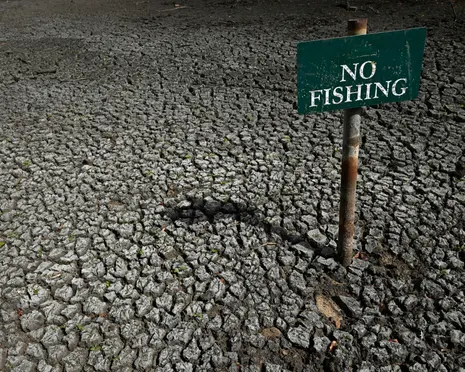
Australia’s marine parks protect ‘places no one goes’ rather than fragile coastal zones, scientists say

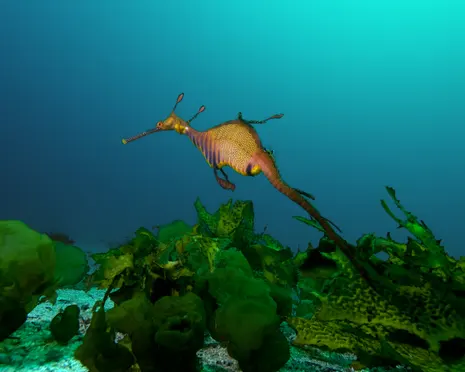
Table of Contents
Marine Scientists Urge Australia to Shift Protection Toward Its Most Vulnerable Coastal Waters
Wanderstayfinder.com – A once-in-a-decade review of Australia’s marine park system is about to begin, and with it comes a pointed challenge from the country’s own scientific community. More than 270 marine researchers affiliated with 84 institutions have sent a joint statement to Environment Minister Murray Watt, arguing that the existing network of highly protected zones has been drawn in the wrong places. Their central complaint: the strictest safeguards sit in vast, remote offshore waters where few vessels ever operate, while the ecologically rich and heavily pressured coastal shelves around the mainland remain largely exposed.
The Scale of What Is at Stake
Australia’s maritime domain stretches from warm tropical reef systems in the north to frozen Antarctic shelf waters in the south. It encompasses six UNESCO World Heritage marine areas and shelters at least 33,000 described marine species. Many of those species are endemic — found nowhere else on Earth. The waters simultaneously face ocean warming driven by climate change, industrial fishing, seabed mining, and a growing footprint of commercial and recreational use.
Prof Jessica Meeuwig, who directs the Marine Futures Lab at the University of Western Australia and co-authored the scientists’ letter, framed the stakes in blunt terms:
“If we don’t protect them here, it’s not like we can expect somebody else to do the job, they’re lost for ever.”
Where the Protections Actually Sit
Roughly one quarter of Australian waters currently carry the highest protection designation — so-called “no-take” zones where extraction of any kind is prohibited. Yet the statement notes that these zones cluster overwhelmingly in distant offshore and territorial waters. The waters hugging the mainland coast, by contrast, receive minimal coverage. In several marine bioregions, including those off New South Wales, south-east Queensland, Western Australia, western South Australia, and the Northern Territory, only between one and seven percent of the ocean area is under the strictest regime.
“In some of our regions, there’s only 1% to 7% of the oceans that are highly protected, and the rest is open slather,” Meeuwig said.
The scientists’ letter calls for at least 30 percent of every marine bioregion to be placed under the highest protection tier, accompanied by blanket bans on industrial trawling, long-lining, and seabed mining across all parks. It also insists that no existing protections be rolled back during the review process.
The Temperate East: A Case Study in Urgency
One of the five bioregions slated for review is the temperate east, a stretch running from the southern boundary of the Great Barrier Reef down to Bermagui on New South Wales’s south coast. Prof David Booth, a marine ecologist at the University of Technology Sydney, described the region as “incredibly biodiverse.” Around Sydney alone, fishers and researchers record six to seven hundred species of fish — a number far exceeding what latitude alone would predict, owing to a convergence of tropical and temperate lineages carried by the East Australian Current. Underwater seamounts and deep canyons add further habitat complexity.
Booth also flagged the region as a climate-change hotspot. Temperate fish species, many of them popular on dinner plates, are shifting southward as waters warm. Layered on top of that biological turnover are pressures from urbanisation, industrial discharge, and commercial fishing.
“It’s an area of rapid change, with very little protection at the moment,” he said.
Government Response and the 30 Percent Target
Minister Watt responded that the Albanese government is “well on the way to meeting” its pledge to highly protect 30 percent of Australia’s ocean by 2030. He pointed to a proposed expansion of marine parks around Lord Howe Island and Norfolk Island as a measure that would bring the national target forward of schedule. The review, he added, would offer “further opportunities to better protect key ocean habitats” while preserving room for sustainable use and conservation.
Why Location Matters More Than Percentage
Associate Professor Carissa Klein, who leads the Centre for Biodiversity and Conservation Science at the University of Queensland, argued that the geographic placement of existing no-take zones is the core problem. She described the current distribution as “biased towards places that no one goes,” meaning the zones shield habitats of low immediate use value while leaving the most species-rich, most pressured waters open.
“We’re not actually protecting the diversity of life that we have in the ocean,” she said. “Every bioregion is unique and distinct, and has different animals and plants. We want them to get to 30% of every one. We want a representative network of protected areas all around Australia.”
Economic and Global Implications
The scientists stressed that a properly distributed protection network would not come at the expense of fishing communities. Meeuwig cited research showing that roughly 80 percent of coral trout harvested in open-fishing sections of the Great Barrier Reef were originally born inside highly protected zones — a spillover effect that strengthens, rather than weakens, commercial catches. Tourism and broader environmental health would also benefit, she noted.
The review is framed by the authors as a “tremendous opportunity” with consequences well beyond Australia’s borders. As a nation controlling one of the largest maritime zones on the planet, Australia’s choices set a de facto benchmark for other coastal states.
“When Australia leads, it keeps the bar high. When we set the bar low, it gives permission to everybody else to do a bad job. If Australia flounders at this opportunity, it will have ramifications across other places,” Meeuwig said.
The decade-long review cycle means that decisions made in the coming months will shape the legal and ecological landscape of Australian waters for the next ten years. For the scientific community that has spent decades cataloguing the region’s extraordinary biodiversity, the question is no longer whether protection is needed, but whether it will finally be placed where the ocean’s most fragile and irreplaceable life actually lives.
Related Reading
Frequently Asked Questions
What is Australia s marine parks protect places?
Australia s marine parks protect places is the main topic of this guide. The article explains the context, practical details, and next steps readers should understand.
Why does Australia s marine parks protect places matter?
Australia s marine parks protect places matters because readers are looking for a useful answer, not just a short summary. Good content should match search intent and help them decide what to do next.