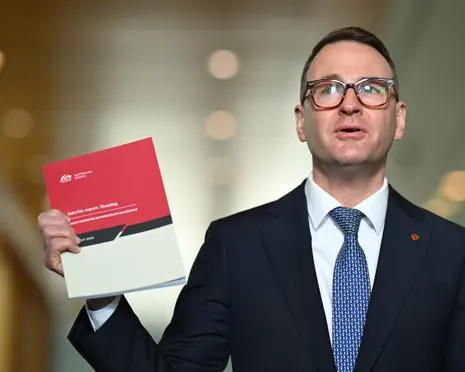
‘Pent-up demand’: First home buyers chase more loans as property investors step back, data shows

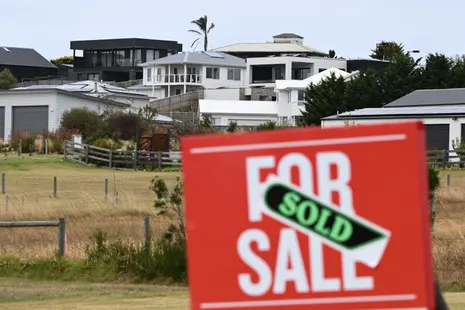
Table of Contents
Investor Retreat Opens a Window for First-Time Buyers in Australia’s Housing Market
Wanderstayfinder.com – The dynamics of Australia’s mortgage market have shifted in a way that few observers predicted when the Labor government moved to dismantle negative gearing for most investment purchases and pushed interest rates higher through three consecutive rate hikes. With investor appetite contracting sharply, first-time home buyers have emerged as the sole segment still expanding its borrowing — a trend now visible in weekly application data from mortgage broker Loan Market.
According to Loan Market’s latest figures, new entrant applications fell by 3% during July before rebounding 10% into the first fortnight of August on a weekly-average basis. Every other cohort — existing owner-occupiers seeking to refinance or move, and investors seeking new purchase finance — registered broadly flat activity in August relative to June. In other words, first-timers are the only group pulling in a different direction from the rest of the market.
The Broader Credit Picture
The Australian Bureau of Statistics recorded a broad-based contraction in home-loan demand by June, with total applications down 5.4% against the preceding quarter. Within that decline, however, the composition mattered. Investor loans contracted by 8.6%, while first-time buyer mortgages shed only 2.9% on a seasonally adjusted basis — a resilience that underscores how much of the marginal demand now flows through government-backed entry pathways rather than conventional investor leverage.
Geographically, first-home purchases in New South Wales and the Australian Capital Territory still ran above year-earlier levels. South Australia and Tasmania posted their strongest first-home-buyer activity since 2021, suggesting the effect is not confined to the two largest capital-city markets.
Sentiment and the Policy Pivot
Peter Esho, chief executive of property-finance firm 13x, framed the shift as a reversal of market psychology rather than a simple supply-and-demand adjustment.
“First home buyers, I think, now feel like the sentiment has swung in their favour, and investors feel like the sentiment swung against them,” Esho said. “There’s been a lot of buyers on the sideline for a long time … so that pent-up demand is going to keep it for the next few years and policy is obviously a big driver.”
Prime Minister Anthony Albanese has described the negative-gearing abolition as intended to “level the playing field” for first home buyers. The practical effect has been to remove the tax advantage that allowed investors to deduct rental losses against other income, thereby reducing the structural demand advantage that had kept investor borrowing elevated through previous cycles.
The 5% Deposit Scheme as a Demand Magnet
Esho noted that application activity is concentrating around properties priced near the eligibility ceilings of the government’s 5% deposit guarantee scheme. Under the program, first-time buyers can borrow up to 95% of a property’s value, with the government guaranteeing the loan and thereby waiving lenders’ mortgage insurance (LMI) — a cost that can run into tens of thousands of dollars on a typical purchase.
The price caps vary by region: $1.5 million for New South Wales cities, $1 million for south-east Queensland, $950,000 for Melbourne and Geelong, $850,000 for Perth, $900,000 for Adelaide, and $700,000 for Hobart. Labor expanded the scheme and eliminated income caps for applicants in October 2025, widening the pool of eligible buyers considerably.
Data from property-analytics firm Cotality indicates that homes falling within the guarantee’s price bands have experienced slower price declines than comparable properties outside the scheme — a signal that guaranteed demand is providing a floor under those segments even as broader markets soften.
Scale of the Scheme and Its Fiscal Footprint
Housing Australia, the agency administering the guarantee, has reported that more than 320,000 Australians have become homeowners through the scheme since its inception in 2020. For the median deposit paid on the median home purchased under the program, applicants have typically saved more than $15,000 in LMI costs that would otherwise have been payable.
Housing Minister Clare O’Neil told Guardian Australia that participants had collectively saved more than $2.5 billion in LMI charges by the end of July.
“We know that for too long the housing market has been stacked against young people and without this scheme many wouldn’t be able to enter the market at all,” O’Neil said.
Monthly guarantee issuance has exceeded 5,000 new approvals every month since February. July slipped marginally below that threshold, yet the figure still surpassed any monthly total recorded before Labor’s expansion of the scheme.
Industry Disruption and Bank-Level Effects
The scheme’s growth has had measurable consequences for the LMI industry. Helia, Australia’s largest mortgage-insurance provider, estimated that the expansion cost it nearly $9 million worth of first-home-buyer business in the first half of 2026. Its remaining customer base now skews toward buyers purchasing above the price caps or borrowing from banks that do not participate in the guarantee, a spokesperson confirmed.
At the bank level, ANZ — which began offering the 5% scheme in March — was the only member of the big-four group to sustain a steady value of mortgage applications through the June quarter. The inflow of scheme-backed first-home buyers offset declines in lending to other segments. Scheme participants now represent roughly one in every 20 new loan applications at ANZ, a share that would have been negligible before the program’s expansion.
The net effect is a market in which the centre of gravity for new borrowing has migrated from leveraged investors to government-guaranteed first-time buyers. Whether that migration proves durable will depend on interest-rate trajectories, the pace of investor re-entry, and whether the guarantee’s price caps continue to track actual market valuations as property prices adjust.
Related Reading
Frequently Asked Questions
What is Pent up demand?
Pent up demand is the main topic of this guide. The article explains the context, practical details, and next steps readers should understand.
Why does Pent up demand matter?
Pent up demand matters because readers are looking for a useful answer, not just a short summary. Good content should match search intent and help them decide what to do next.