Global oil markets see sharp decline as Hormuz reopening prospects boost optimism
Wanderstayfinder.com – Following a significant drop in oil prices, global stock markets experienced a surge as renewed optimism emerged about the potential reopening of the Strait of Hormuz. This critical waterway, through which a substantial portion of the world’s oil flows, was at the center of international concern after Iran’s military actions disrupted its operations earlier this year. The prospect of a U.S.-Iran peace deal has now reignited hopes that the supply bottleneck could be resolved, sending ripples through financial markets and easing fears of prolonged energy shortages.
Trump’s announcement sparks market reaction
President Donald Trump declared on Sunday that a deal with Iran was “now complete,” a statement that immediately bolstered investor confidence. Despite recent Israeli airstrikes in Beirut, which had cast doubt on the stability of the negotiations, Trump’s declaration signaled a shift in the geopolitical landscape. His social media post emphasized the anticipated reopening of the Hormuz Strait, declaring:
“I hereby fully authorize the toll free opening of the Strait of Hormuz, and, simultaneously herewith, authorize the immediate removal of the United States Naval blockade. Ships of the World, start your engines. Let the oil flow!”
The president later clarified that the strait would open following the signing of the agreement on Friday, adding that “oil will flow on both ends again for the Region, and the World!”
While the peace deal has been hailed as a turning point, its details remain murky. Questions linger over the precise timeline for the strait’s reopening, the entity responsible for ensuring safe passage, and any conditions that might accompany the agreement. Iranian officials have indicated a 60-day negotiation window to address broader issues, including nuclear program concerns and sanctions relief, before the pact is finalized in Switzerland on June 19.
Market dynamics shift with oil price declines
As the new trading week began in the Asia-Pacific region, the price of Brent crude plummeted by 4%, falling below $84 per barrel. This marked the lowest level since early March, when the conflict effectively cut off Gulf oil exports through the strait. At the outbreak of the war in late February, Brent crude had already dipped to just under $73 per barrel, highlighting the severity of the disruption.
Global stock markets responded positively to the news, with the UK’s FTSE 100 rising 0.8% and European counterparts like the Cac 40 and Dax each climbing 1.8%. However, shares of oil companies such as BP and Shell faced early declines, reflecting uncertainty about the long-term stability of the market. In Asia, where reliance on oil imports is high, Japan’s Nikkei and South Korea’s Kospi both surged by 5%, while China’s CSI300 index gained 1.9%.
Supply chain adjustments and hidden oil flows
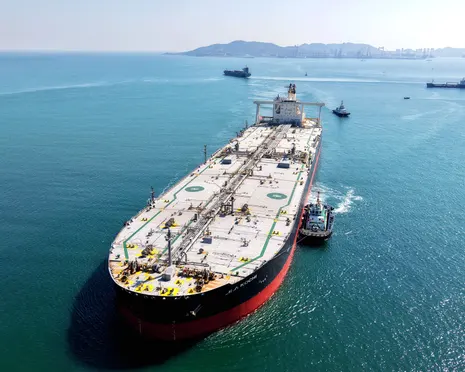
Throughout the Iran war, oil prices have remained lower than anticipated, with Gulf producers managing to redirect approximately 5 million barrels per day via alternative pipelines. This effort, combined with covert U.S. military operations, helped maintain some flow through the strait. Recent weeks saw an additional 2 million barrels daily transported through “dark tankers”—unmarked vessels that bypassed detection to deliver cargo to waiting ships in the Gulf of Oman.
Despite these measures, the conflict left 20 million barrels per day—roughly a fifth of the global supply—effectively removed from the market. The Japanese Shipowners’ Association reported that 38 vessels linked to Japan were still stranded in the Hormuz Strait, underscoring the region’s vulnerability to supply chain interruptions. The association expressed a desire to “wait a little longer for more concrete information” before fully committing to the deal’s outcomes.
Broader economic factors influence the trend
While the U.S.-Iran deal is a major factor, other elements have also contributed to the market’s recovery. The International Energy Agency (IEA) released emergency reserves at a rate of 2.5 million barrels per day, injecting much-needed liquidity into the market. Simultaneously, demand for oil has decreased due to reduced activity at Asian petrochemical refineries, with China cutting imports by an estimated 4 million barrels per day. This decline, driven by the country’s decision to draw from its record-high inventories, has narrowed the global supply shortfall.
Analysts have noted that the deal may serve as a catalyst for replenishing depleted stockpiles. Tony Sycamore of IG commented that countries would likely use the strait’s reopening to rebuild strategic reserves. However, he acknowledged the complexity of the negotiations, particularly around nuclear issues, and cautioned that “crude falling much further from here in the near term” seems unlikely. The agreement’s success will depend on its ability to address Iran’s regional ambitions while securing lasting relief for global energy markets.
Long-term implications and lingering challenges
As the situation stabilizes, the focus shifts to the long-term implications of the U.S.-Iran peace deal. The 60-day negotiation period provides a window for resolving broader disputes, but the immediate economic benefits have already begun to take shape. The reduction in oil prices could lower energy costs for consumers and industries, easing inflationary pressures. However, the deal’s effectiveness will hinge on its implementation, with experts closely monitoring whether the strait’s reopening translates into sustained market equilibrium.
Meanwhile, the strategic importance of the Hormuz Strait remains evident. Its closure not only threatened global oil supplies but also highlighted the fragility of international trade routes in times of geopolitical tension. The reopening, if realized, could signal a new era of cooperation, but challenges such as maintaining safe passage and ensuring compliance with the deal’s terms will persist. For now, the combination of diplomatic progress, emergency reserves, and reduced demand has created a window of opportunity for the energy market to stabilize.
Analysts warn that while the immediate outlook is positive, the path forward is not without obstacles. The strait’s reopening will require coordinated efforts between Iran and the U.S., with oversight mechanisms yet to be fully defined. Additionally, the long-term impact of the deal will depend on its ability to address underlying tensions, particularly regarding Iran’s nuclear program. As the June 19 signing date approaches, the global community watches closely, hoping for a resolution that ensures energy security and economic stability for years to come.